Claire’s and The Original Factory Shop Enter Administration – What Went Wrong?
 • January 6, 2026
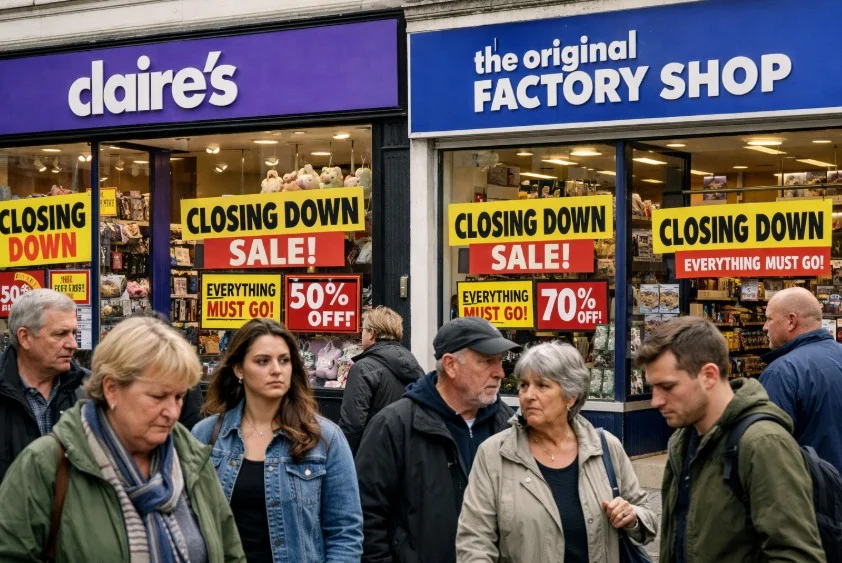
I never thought I’d witness two household names on the British high street fall into administration almost simultaneously, but here we are. Claire’s and The Original Factory Shop (TOFS), both owned by Modella Capital, are now undergoing insolvency proceedings, putting over 2,500 jobs at risk.
As someone who’s observed the UK retail sector’s highs and lows, this feels like another stark reminder of the shifting landscape.
Key points covered in this blog:
- What triggered the downfall of both chains
- How Modella Capital fits into the story
- Government fiscal policies and consumer behaviour’s impact
- What happens next for staff, customers, and stores
- Lessons from another major high street collapse
Why Have Claire’s and The Original Factory Shop Entered Administration?
Claire’s and TOFS have officially entered administration following months of financial turbulence. The move comes after poor trading figures during the 2025 Christmas season, which further weakened already vulnerable businesses. According to Modella Capital, which owns both chains, the high street conditions have become “extremely challenging,” leaving administration as the only viable option.
Both companies had been struggling long before Modella’s involvement. Claire’s, known for its accessories and tween-targeted fashion, had already been through a previous administration. Meanwhile, TOFS faced its own set of problems, including logistical inefficiencies and a costly restructuring effort that failed to turn things around.
The collapse highlights the fragility of mid-market UK retail, where a combination of rising operational costs and falling footfall have pushed even long-standing brands to the brink.
What Is the Role of Modella Capital in This Retail Crisis?
Modella Capital is a private equity firm that has become increasingly active on Britain’s high streets. In 2025, it acquired both Claire’s and TOFS in separate deals. Claire’s was picked up just six weeks after a prior administration, while TOFS had already been struggling and was sold early in the year.
A Pattern of High-Stakes Acquisitions
Modella’s strategy has been to buy undervalued or distressed retail brands, including WH Smith’s high street arm and Hobbycraft. While such acquisitions may promise quick turnarounds or asset stripping opportunities, they come with high risks, especially when pre-existing weaknesses haven’t been addressed.
“In both cases, the legacy effects of trading prior to our ownership left them highly vulnerable,” said a spokesperson for Modella Capital.
Restructuring Without Recovery
Post-acquisition, Modella attempted to restructure both chains. Claire’s saw around 1,000 job losses and over 145 store closures as part of its recovery attempt. TOFS moved its head office from Burnley to Bolton, cut store rents, and shifted logistics providers, none of which proved sufficient.
How Did Economic Pressures and Consumer Trends Contribute?
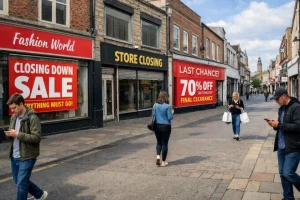
The broader economic environment has created a perfect storm for retail. Consumers across the UK are grappling with inflation, higher energy and food bills, and stagnant wage growth. These pressures have severely impacted spending, particularly for non-essential items, like the fashion and homeware goods offered by Claire’s and TOFS.
Additionally, consumer footfall dropped dramatically during the 2025 pre-Christmas season. According to various reports, footfall on UK high streets saw one of its sharpest declines in years.
The Digital Shift
The trend towards online shopping has continued to accelerate. Large retailers like Next and Marks & Spencer, with their robust e-commerce platforms, have absorbed much of the market share lost by physical stores. Brands like Claire’s, with minimal digital infrastructure, struggled to compete.
“It’s a simple fact that if retailers can’t make money, they risk having to close – and jobs across the country are lost.”
Could the Collapse Have Been Prevented?
The answer is complex. On one hand, Modella Capital made substantial efforts to revive both brands. On the other, many of the challenges were structural and deeply rooted.
- Claire’s had already collapsed once before its most recent purchase.
- TOFS had ongoing operational issues and was haemorrhaging money.
- Despite restructuring efforts, both chains continued to post losses.
Claire’s was affected when a major concession partner pulled out just weeks after the Modella acquisition, limiting its retail footprint further. Meanwhile, TOFS struggled with a problematic transition to a new third-party logistics provider.
Here’s a summary of key indicators before the collapse:
| Indicator | Claire’s | TOFS |
|---|---|---|
| Store Count | 154 | 140 |
| Staff at Risk | 1,355 | 1,220 |
| Recent Losses | Previous admin (2025) | £5.6m pre-tax loss (FY 2024) |
| Major Operational Changes | Store closures, lost partner | HQ move, rent cuts |
Efforts to turn things around simply couldn’t keep pace with the deteriorating economic conditions and internal structural weaknesses.
What Impact Will This Have on Jobs and Local Communities?
With over 2,500 jobs at risk, the administration of Claire’s and TOFS marks another blow to Britain’s already weakened high street workforce. Redundancies will hit not only store staff but also regional managers, distribution workers, and head office employees.
This development is particularly devastating for small towns where TOFS stores serve as key local employers and shopping destinations. In many cases, these outlets are among the few remaining high street retail chains in such areas.
Here are the potential socio-economic effects:
- Loss of employment for full-time and part-time workers
- Reduced footfall for nearby shops and small businesses
- Local economic decline in retail-dependent towns
- Fewer options for affordable fashion and homeware
Are Government Policies Making It Harder for Retailers to Survive?
Many in the business community believe that recent government policies have worsened the retail crisis.
Rising Operating Costs
New fiscal measures, including tax hikes and an increase in employer National Insurance contributions, have squeezed margins across the sector. Small and medium-sized retailers, in particular, find it increasingly difficult to meet these obligations while also absorbing rising supplier and wage costs.
In a real-world example, a London pub owner recently revealed that increased taxes and NI contributions added £22,000 to his annual costs, forcing a reconsideration of his business’s viability.
Pressure from Landlords and Regulations
Landlords, sensing the opportunity to reclaim or repurpose properties, are becoming less lenient on lease negotiations. Combined with tightening regulations and inflation, this is putting unprecedented pressure on retail businesses to survive.
For more detailed background on how policy shifts have impacted retail operations, you can read this overview of fiscal changes and their effect on high street retailers.
What Happens Next for Claire’s and The Original Factory Shop?

Both companies have filed for administration, which offers a 10-day protection period from creditors. This time allows administrators to assess options, which may include selling parts of the business or full liquidation.
Claire’s administration will be handled by Kroll, while Interpath has been appointed for TOFS. These firms are likely to continue trading operations temporarily while evaluating restructuring or sale options.
Here’s a summary table outlining what the next steps could look like:
| Step | Description |
|---|---|
| Administration Filing | Legal protection begins for 10 days |
| Appoint Administrators | Kroll for Claire’s; Interpath for TOFS |
| Continue Trading? | Some stores may stay open during review |
| Seek Buyers | Partial or full sale possible |
| Liquidation | If no buyer is found, assets may be sold off |
Employees and customers are advised to keep an eye on announcements from the administrators regarding store closures, redundancy procedures, and gift card policies.
Final Thoughts
I’ve watched the retail sector evolve over the years, but the back-to-back collapses of Claire’s and The Original Factory Shop feel particularly symbolic of the challenges facing the British high street.
It’s not just about poor management or one bad Christmas season, it’s a culmination of economic hardship, policy pressures, and shifting consumer habits. As we move further into 2026, the survival of many retail businesses will depend on how quickly they can adapt, or whether policymakers offer the sector the support it desperately needs.
Frequently Asked Questions
What does administration mean for customers holding gift cards?
Customers holding gift cards may find their usability limited or temporarily suspended. The appointed administrators will determine whether existing cards can still be redeemed and under what conditions.
Who are Kroll and Interpath, and what is their involvement?
Kroll and Interpath are insolvency specialists. Kroll is overseeing Claire’s administration, while Interpath is managing TOFS. Their role is to stabilise operations, assess finances, and explore rescue or liquidation options.
How many times has Claire’s entered administration?
Claire’s has now entered administration at least twice in the UK, with the latest preceding its September 2025 acquisition by Modella Capital. It had also filed for bankruptcy in the US previously.
Are other UK retailers at risk of administration in 2026?
Yes, several other retailers, especially mid-tier brands and those with heavy brick-and-mortar presence, are vulnerable. Rising costs and shifting consumer trends continue to pose risks.
How does administration affect store operations?
Stores may continue operating temporarily while the business is reviewed. However, closures are common if no buyer is found or cost-cutting is needed.
What is the financial performance history of The Original Factory Shop?
TOFS posted a £5.6 million pre-tax loss for the year ending March 2024, with sales dropping despite high inflation. Attempts to cut rent and restructure logistics did not improve profitability.
Why is the UK high street facing so many closures?
A mix of online shopping dominance, consumer caution, rising operating costs, and government policy changes has made it increasingly difficult for traditional retailers to survive.