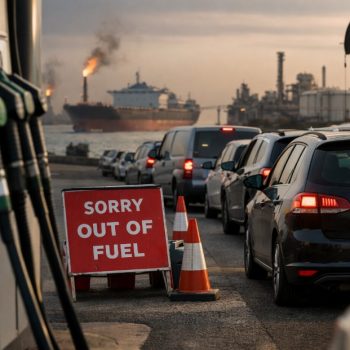
Are Gas Prices Going Up Because of Iran in the UK?
 • March 3, 2026
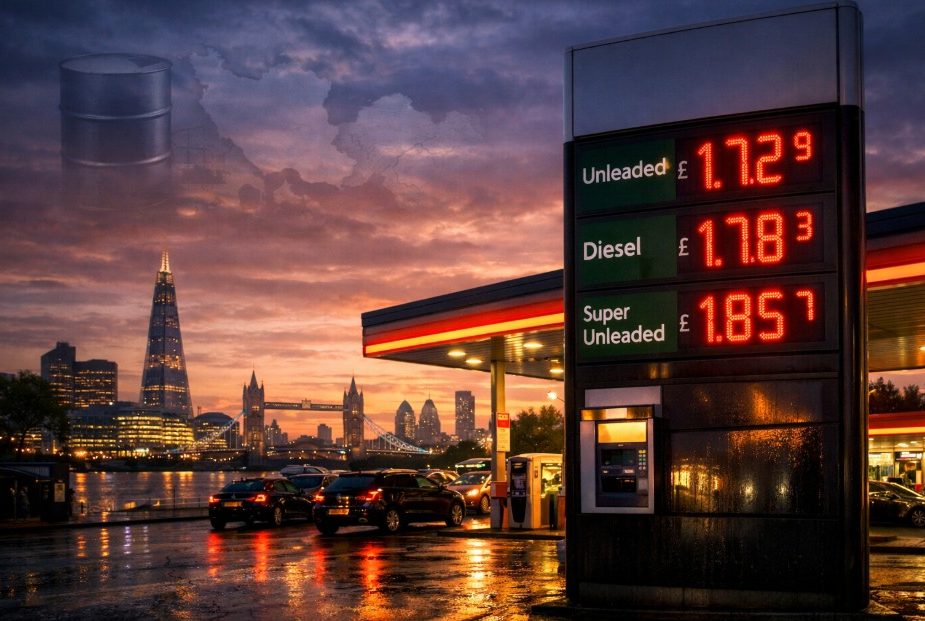
⚠️ ENERGY MARKET ALERT – WHAT RISING GAS PRICES IN THE UK REALLY MEAN
Higher crude. Tighter supply. Rising forecourt prices.
Gas prices in the UK are climbing as Brent crude reacts to escalating tensions involving Iran and disruptions near the Strait of Hormuz.
Even without a full supply shutdown, global markets are pricing in risk — and that pressure is beginning to filter through to London petrol stations.
📌 Why Are Gas Prices Increasing?
- Brent crude recently surged above $80 per barrel (£63+)
- Nearly 20% of global oil passes through the Strait of Hormuz
- Shipping delays and tanker risks tightening supply expectations
- OPEC+ output increase too small to offset large disruptions
- Weak pound increasing UK import costs
🔎 Who Could Feel the Impact First?
London commuters, delivery drivers, small businesses, taxi operators, and households already facing elevated living costs may notice gradual pump price increases within days or weeks.
📅 What Happens Next?
- If tensions ease, oil could stabilise around $60–$70 (£47–£55).
- If disruptions persist, Brent may approach $100 (£78+) or higher.
- Sustained increases could push UK petrol prices noticeably upward.
💬 Market Insight:
“Oil markets react to risk first and supply second — and that reaction is already influencing UK gas prices.”
With rising volatility in global energy markets, understanding how geopolitical tensions influence gas prices can help you prepare for potential cost increases.
Monitoring Brent crude movements and currency shifts may offer early signals of changes at the pump.
Why Are Gas Prices Rising in London Right Now?
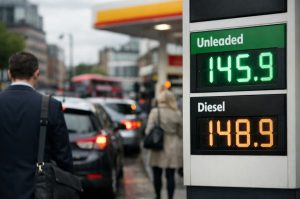
Gas prices in London are influenced primarily by global oil markets rather than purely domestic conditions.
In recent days, Brent crude, the international benchmark used to price oil in Europe, surged by more than 6–10% in a single trading session, briefly climbing above $80 per barrel. At one point, it spiked over $82 before stabilising.
When crude prices rise this sharply, the wholesale cost of refined petrol and diesel also increases. Retail forecourts may not adjust prices immediately, but upward pressure builds quickly.
Several recent developments have contributed to higher gas prices:
- Military strikes involving Iran and its regional counterparts.
- Attacks on energy infrastructure in Saudi Arabia and Qatar.
- Tanker incidents near the Strait of Hormuz.
- Shipping firms avoiding high-risk waters.
- A surge in European natural gas prices (up nearly 40–50% intraday at one stage).
As Edmund King, President of the AA, warned:
“The turmoil and bombing across the Middle East will surely be a catalyst to disrupt oil distribution globally, which will inevitably lead to price hikes.”
The magnitude and duration of those increases will depend largely on how long the conflict persists and whether oil supply is materially disrupted.
Are Gas Prices Going Up Because of Iran’s Role in Global Oil Markets?
Iran plays a far greater role in global oil markets than many realise. It is one of the world’s top oil producers and holds approximately 13% of global proven oil reserves, making it the third-largest reserve holder globally, according to OPEC data.
Below is a comparison of major oil reserve holders:
| Country | Proven Oil Reserves (Billion Barrels) |
|---|---|
| Venezuela | 303 |
| Saudi Arabia | 267 |
| Iran | 209 |
| Iraq | 145 |
| UAE | 113 |
| Kuwait | 102 |
| Russia | 80 |
Iran produces more than 3 million barrels per day, and its geographic position gives it influence over a critical energy chokepoint: the Strait of Hormuz.
Energy strategist Clayton Seigle explains:
“Since oil is a global, fungible commodity, a disruption anywhere affects prices everywhere.”
Even if the UK does not directly import large volumes from Iran, any threat to Iranian production or export routes affects global pricing benchmarks, and therefore UK gas prices.
How Do Gas Prices React When Conflict Breaks Out in the Middle East?
Oil markets tend to react swiftly when geopolitical tensions rise, particularly in energy-rich regions. Traders do not wait for confirmed Petrol supply shortages; they respond to risk expectations. As soon as supply appears threatened, prices move.
When conflict escalates:
- Oil futures rise immediately.
- Wholesale petrol prices follow.
- Retail forecourts adjust gradually.
- Broader inflation concerns increase.
Recent market data shows:
| Event | Brent Crude Reaction |
|---|---|
| Initial strikes | +6% intraday |
| Escalation fears | +10–12% peak |
| Post-ceasefire (previous conflict example) | Sharp decline |
Jim Reid, an analyst at Deutsche Bank, noted that although recent price spikes are significant, they are not yet at historic extremes compared to past energy shocks. However, sustained disruption could change that quickly.
Why Do Gas Prices Spike When the Strait of Hormuz Is Under Threat?
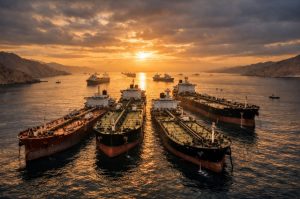
When headlines mention the Strait of Hormuz, energy markets react quickly because it is one of the world’s most important oil routes. Even the threat of disruption can push oil prices higher due to uncertainty alone.
Although it may seem far from London, any instability there can affect global crude markets, wholesale fuel costs, and ultimately the prices drivers see at UK petrol stations.
The Importance of the Strait of Hormuz to Global Energy Supply
The Strait of Hormuz is a narrow waterway between Iran and Oman, just 20 miles wide at its narrowest point. Around 20 million barrels of oil per day, roughly one-fifth of global daily production, pass through it.
In 2025 alone, nearly one-third of the world’s seaborne oil exports moved through this corridor.
How Shipping Disruptions Influence Wholesale Gas Prices?
Even without a formal closure, risk can halt traffic. Insurers increase premiums, shipping companies reroute vessels, and tankers anchor offshore awaiting clarity. Recent data showed vessel traffic falling from more than 50 ships per day to single digits.
Homayoun Falakshahi from Kpler remarked:
“Because of Iran’s threats, the strait is effectively closed.”
When shipping slows:
- Supply expectations tighten.
- Traders bid up crude futures.
- Refiners face uncertainty.
- Wholesale gas prices rise.
This is one of the most direct pathways through which Iran-related tensions can drive gas prices higher in London.
How Does an Increase in Brent Crude Affect Gas Prices in the UK?
Brent crude is priced in US dollars, and UK refiners purchase crude based on that benchmark. The transmission from crude to forecourt involves multiple stages:
| Stage | Description |
|---|---|
| Crude Purchase | Refineries buy oil at Brent-linked prices |
| Refining | Oil converted into petrol/diesel |
| Wholesale Market | Fuel sold to distributors |
| Retail Forecourt | Prices set including duty & VAT |
A commonly cited rule of thumb in global markets suggests that a $1 increase in crude oil can translate into a 1–2p per litre increase over time, though this varies.
In the UK, fuel duty and VAT account for a large portion of pump prices, which somewhat dampens percentage swings. However, persistent crude increases still filter through.
Patrick De Haan, a petroleum analyst, observed:
“Oil will move first. Gasoline will follow — but gradually.”
How Quickly Do Higher Oil Costs Translate Into Higher Gas Prices at London Forecourts?
Typically, London drivers may begin noticing higher prices within several days to two weeks after a sustained crude surge.
Factors influencing timing include:
- Existing inventory purchased at lower prices.
- Supply contracts locked in earlier.
- Competitive dynamics among petrol stations.
- Regional distribution costs.
Historically, during the 2022 Ukraine crisis, UK petrol prices rose from around 150p per litre to over 190p within weeks as Brent surpassed $100 per barrel.
While current levels remain below those crisis peaks, analysts warn that a prolonged disruption in Hormuz could push Brent toward $100 or higher.
What Other Factors Besides Iran Are Driving Gas Prices Higher?
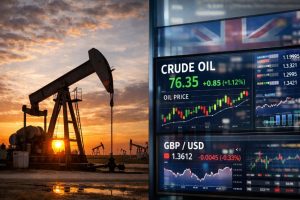
While tensions involving Iran are a major headline driver, gas prices are shaped by a broader mix of global supply decisions, currency movements and domestic tax structures.
Even without geopolitical escalation, these underlying forces can push prices higher, or prevent them from falling as quickly as expected.
Understanding these additional factors helps explain why gas prices in London sometimes rise even when international tensions appear to stabilise
OPEC+ Production Decisions and Their Effect on Gas Prices
OPEC+ recently agreed to increase output by approximately 206,000 barrels per day. While this additional supply may help moderate price spikes, analysts caution that such increases are relatively modest compared with the scale of global daily consumption, which exceeds 100 million barrels per day.
If a significant portion of supply were disrupted due to conflict, OPEC+ spare capacity might not fully offset the shortfall.
Exchange Rates, UK Fuel Duty and VAT Impact on Gas Prices
Oil is priced globally in US dollars. Therefore, if the pound weakens against the dollar, UK refiners effectively pay more for the same barrel of oil. Currency movements can either amplify or soften crude price increases.
Additionally:
- Fuel duty is fixed per litre.
- VAT is applied at 20% on top of the total price.
- Retail margins vary depending on competition and operating costs.
These structural factors mean that gas prices in London are influenced not only by global oil markets but also by domestic fiscal policy and currency performance.
Could Gas Prices Fall Again If Tensions Ease?
Yes, gas prices could fall again if tensions ease, as history shows oil markets often reverse quickly after ceasefires or diplomatic breakthroughs.
During previous short-lived conflicts in the Middle East, Brent crude surged sharply amid supply fears, only to retreat once hostilities paused and shipping routes stabilised. Analysts outline several possible scenarios.
A quick resolution could see oil return to around $60–$70 per barrel (approximately £47–£55). A prolonged standoff may keep prices in the $90–$100 range (£70–£78).
In a severe disruption scenario, prices could exceed $120 (around £94+). For now, markets expect limited duration, though uncertainty remains high.
How Would Prolonged Conflict Affect Gas Prices Across the UK?
If tensions persist for several weeks or expand geographically, the implications could extend beyond immediate forecourt prices.
Natasha Kaneva of JPMorgan warned:
“Our base case assumed that an unprecedented disruption would remain improbable. That assumption failed.”
Potential prolonged impacts include:
- Brent above $100 per barrel.
- European gas prices rising sharply.
- UK inflation increasing by up to 0.4 percentage points per $10 oil rise.
- Reduced GDP growth globally.
Such conditions would likely push gas prices higher across the UK and keep them elevated for an extended period, adding pressure to households and businesses alike.
What Do Rising Gas Prices Mean for London’s Cost of Living?
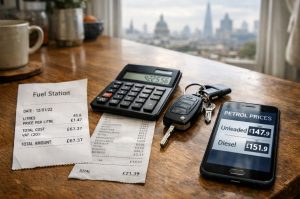
London households already contend with higher housing, transport and utility costs compared with much of the UK. Rising gas prices compound these pressures.
Higher fuel costs can lead to:
- Increased commuting expenses for drivers.
- Higher delivery charges for goods and groceries.
- Rising taxi and ride-share fares.
- Greater operating costs for small businesses.
- Broader inflationary pressure across supply chains.
Jess Ralston of the Energy and Climate Intelligence Unit cautioned:
“With many households still carrying debt from the last gas crisis, the spike in prices is a worrying sign.”
Sustained energy price increases can also complicate monetary policy decisions. The Bank of England must weigh inflation risks against economic growth, and higher fuel costs can make that balancing act more challenging.
What Can You Do in London If Gas Prices Continue to Increase?
Although global oil markets are beyond individual control, London drivers can take practical steps to reduce the impact of rising gas prices.
- Compare local forecourt prices before filling up.
- Avoid refuelling at motorway service stations where prices may be higher.
- Maintain proper tyre pressure to improve fuel efficiency.
- Use public transport for central London travel when feasible.
- Plan routes efficiently to minimise unnecessary mileage.
Even modest behavioural adjustments can reduce fuel consumption by approximately 5–10%, helping offset some of the financial strain caused by higher gas prices.
While uncertainty remains, staying informed about global developments and understanding how they translate into UK pump prices can help you make more confident decisions in a volatile energy environment.
Conclusion
Yes, Iran-related tensions are a significant driver behind recent increases in global crude prices, which in turn are placing upward pressure on gas prices in London. However, the situation involves multiple interconnected factors including shipping routes, OPEC decisions, refinery disruptions, currency movements and market psychology.
If tensions ease, prices may stabilise. If conflict escalates or shipping routes remain effectively restricted, gas prices could rise further.
For now, London drivers are watching global headlines, and the numbers at the pump, with renewed attention.
FAQs About Gas Prices Rise Because of Iran
Do UK gas prices depend more on global oil markets or domestic supply?
UK gas prices are primarily influenced by global crude benchmarks like Brent rather than domestic production alone. Even if UK North Sea output remains stable, international market movements drive pricing.
Why do some petrol stations increase gas prices faster than others?
Stations may hold older inventory purchased at lower wholesale costs. Independent retailers sometimes adjust more quickly than supermarket chains depending on supply agreements.
Does the UK import oil directly from Iran?
The UK does not rely heavily on direct Iranian crude imports, but global market pricing means Iranian supply disruptions still affect UK gas prices.
How much of the UK pump price is made up of tax?
Fuel duty and VAT together account for over 50% of the pump price in many cases, which moderates percentage swings but does not eliminate price rises.
Can the UK government control sudden gas price increases?
The government can adjust fuel duty or release strategic reserves, but it cannot directly control global crude oil prices.
Why do gas prices sometimes rise even when oil prices fall?
There can be delays in transmission, currency fluctuations, refining bottlenecks, or retailer margin adjustments that prevent immediate price reductions.
Are diesel prices affected in the same way as petrol prices?
Yes, diesel follows similar wholesale trends, though refinery output balances and European demand patterns can cause slight differences.