Top 15 Unique Business Ideas Not Yet Implemented in 2026 | Untapped UK Market Opportunities
 • October 25, 2025
What Makes a Business Idea Truly “Not Yet Implemented”?
A genuinely untapped business idea is not simply something unusual. It is a concept that either does not yet exist in the UK or exists only in a limited way despite growing demand.
Many entrepreneurs confuse “new” with “successful.” Some ideas sound innovative but fail to solve real problems, while others already exist in different markets but have not yet reached the UK.
A strong untapped business idea usually has a few key traits:
- It faces little direct competition
- It solves a real and growing problem
- It aligns with current consumer behaviour
- It can be tested with low initial investment
For example, AI-powered micro-counselling and sustainable packaging subscriptions address clear gaps in the UK market, making them strong untapped opportunities.
| Idea Type | Description | Market Potential |
|---|---|---|
| New invention | Completely original product or service | High risk, high reward |
| Untapped niche | Existing concept adapted to a new market | Lower risk |
| Improved version | Better, cheaper or more convenient solution | Moderate to high |
Ultimately, a truly untapped business idea is one that identifies a real gap in the market and delivers a practical solution before competitors recognise the opportunity.
Why Is London the Best Place to Launch Untapped Business Ideas?

London remains one of Europe’s strongest cities for launching new business ideas. It offers a large population, high spending power and a strong willingness to try new products before the rest of the country.
Consumers in London are early adopters, often paying more for eco-friendly services, smart technology and premium convenience. This makes the city an ideal testing ground for unique, not yet implemented ideas.
The city is especially strong in:
- Artificial intelligence and digital services
- Sustainable and green businesses
- Property technology and flexible workspaces
- Personalised health and wellness
London’s Growing Demand for Sustainability
London consumers are increasingly focused on sustainability, including reducing waste and improving air quality. This creates opportunities for ideas like air-purifying curtains and eco-friendly packaging services.
At the same time, high digital adoption is driving demand for AI-powered automation tools for small businesses.
As Michael Porter notes, “Small businesses now focus on how quickly they can adopt AI without losing their human touch.”
Ultimately, London’s mix of innovation, demand and openness makes it one of the best places to launch untapped business ideas.
How Can You Tell Whether a Unique Business Idea Will Actually Work?
To know whether a unique business idea will actually work, you need to look beyond whether it sounds exciting or innovative. The most successful businesses are usually built around a clear problem that people already want solved.
A business idea becomes far more likely to succeed when there is visible demand, a gap in the market and evidence that customers are willing to pay for a solution.
Before investing large amounts of time or money, it is important to test whether the idea meets a real need and has the potential to grow.
Signs There Is Real Demand
Before launching any business, you need evidence that customers actually want it. The strongest business ideas usually begin with a recurring frustration or unmet need.
For example, many London renters struggle to visit multiple properties in person. This makes virtual reality property showrooms a practical and valuable solution.
Likewise, homeowners often find it difficult to repair smart home devices because traditional electricians do not specialise in them. That creates an opportunity for a mobile smart home repair service.
Useful signs of demand include:
- High search interest online
- Repeated complaints on social media or forums
- Existing services with poor reviews
- Growing popularity in other countries
How to Test an Idea Before Investing Money?
You do not need to spend thousands of pounds to see whether a business idea will work. In fact, small tests are often the best approach.
You could create a simple website explaining your service and run low-cost adverts to measure interest. You could also collect email sign-ups or offer a limited trial to a small group of customers.
For example, if you wanted to launch a sustainable packaging subscription service, you could start by approaching ten local online shops and offering a trial box. If several agree, you already have evidence that the market exists.
Common Mistakes People Make When Chasing “The Next Big Thing”
The biggest mistake is focusing on what sounds exciting rather than what solves a problem. Some entrepreneurs spend months building a complicated business without checking whether customers would pay for it.
Other common mistakes include underestimating costs, targeting too broad an audience and trying to launch too many features at once.
| Mistake | Why It Causes Problems | Better Approach |
|---|---|---|
| Building too quickly | Wastes money if demand is low | Test with a small pilot |
| Ignoring customer feedback | Product may not solve the real issue | Ask customers early |
| Trying to appeal to everyone | Weakens the business idea | Focus on one niche first |
Ultimately, a strong business idea succeeds by solving a real problem in a practical and profitable way. Testing early and validating demand helps reduce risk and ensures smarter decisions before launch
Which Industries Are Creating the Most Untapped Business Opportunities in 2026?
The biggest opportunities in 2026 are emerging in industries where consumer behaviour is evolving rapidly. Businesses that adapt to these changes early can tap into growing demand and face less competition.
| Industry | Why It Is Growing | Example Idea |
|---|---|---|
| AI and automation | Saves time and reduces costs | AI workflow integration |
| Sustainability | Consumers want greener options | Eco-friendly car detailing |
| Health and wellness | Demand for personalisation is rising | AI meal delivery |
| Property technology | Renting is becoming more digital | VR property showrooms |
| Flexible work | More people work remotely | Pop-up co-working pods |
As these industries continue to expand, entrepreneurs who identify gaps early and offer practical solutions will be best positioned to succeed in competitive markets.
Top 15 Unique Business Ideas Not Yet Implemented in 2026
Below are 15 innovative and under-explored business ideas that show strong potential for the UK market in 2026. Each combines uniqueness, current trends, and untapped demand.
1. Air-Purifying Curtain Boutique

An air-purifying curtain boutique could become one of the most promising unique business ideas not yet implemented in 2026.
The business would sell stylish curtains made from special bio-coated or plant-based fabrics that trap dust, smoke, pollen and airborne pollutants.
In cities such as London, where air quality is a growing concern, these curtains could appeal to homeowners, offices, schools and landlords looking to create healthier indoor environments.
Key Features:
- Decorative curtains with built-in air-filtering technology
- Custom sizes and designs for homes, offices and commercial spaces
- Optional installation, cleaning and replacement services
- Eco-friendly branding using sustainable fabrics and packaging
The business could start online with made-to-order products and later expand through partnerships with interior designers and property developers.
Potential Revenue Streams:
| Service | Price Range | Revenue Type |
|---|---|---|
| Standard curtain set | £120–£250 | One-time sale |
| Premium custom curtains | £400–£800 | High-margin order |
| Installation service | £50–£150 | Add-on service |
Why This Model Works?
This idea works because it combines two fast-growing trends: healthier homes and sustainable interior design. Unlike traditional air purifiers, the curtains do not use electricity, make noise or take up extra space.
A small design business in Hackney recently tested a similar concept and reportedly gained more than 80 enquiries within three months, showing there is already demand for practical products that improve both air quality and home décor.
2. Zero-Waste Food Delivery Unboxing Service

A zero-waste food delivery unboxing service would provide locally sourced meals or recipe ingredients without single-use plastic or unnecessary packaging.
Instead of cardboard boxes and plastic trays, customers would receive their order in reusable glass jars, metal containers or fabric bags that are collected, cleaned and reused after delivery.
The service would combine sustainability with a premium “unboxing” experience, making it feel more exclusive than standard takeaway or meal-kit services.
Key Features:
- Reusable containers collected and cleaned after delivery
- Locally sourced and organic food options from nearby farms and suppliers
- Subscription plans for families, professionals and fitness customers
- Premium branding focused on sustainability, convenience and quality
Potential Revenue Streams:
| Service | Price Range | Revenue Type |
|---|---|---|
| Weekly meal subscription | £40–£80 | Recurring income |
| Premium family box | £90–£150 | High-value order |
| Container deposit scheme | £5–£10 | Reusable revenue |
Why This Model Works?
Consumers are becoming more conscious of packaging waste, particularly in London where sustainability strongly influences buying habits.
A founder in Islington recently trialled a similar concept with 20 local households and found that most customers were willing to pay more for a service that removed plastic completely.
The combination of convenience, healthier food and reduced waste makes this a strong long-term opportunity.
3. Urban Rooftop Biodiversity Consultancy
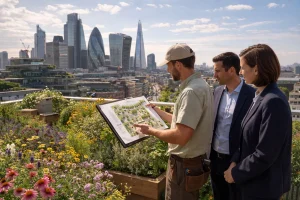
An urban rooftop biodiversity consultancy would help offices, apartment blocks and commercial buildings transform unused roof space into gardens, pollinator zones and green areas.
These spaces could include flowers, herbs, vegetable beds and even bee-friendly habitats, helping businesses improve both their environmental impact and the appearance of their property.
Key Features:
- Rooftop gardens, edible plants and pollinator-friendly spaces
- Advice on planning permission, building regulations and sustainability targets
- Ongoing maintenance packages and seasonal updates
- Partnerships with property developers, offices and housing associations
The business could begin with small rooftop projects and later expand into larger commercial developments.
Potential Revenue Streams:
| Service | Price Range | Revenue Type |
|---|---|---|
| Initial consultation | £200–£500 | One-time fee |
| Rooftop design package | £2,000–£10,000 | Project income |
| Maintenance contract | £100–£300 monthly | Recurring income |
Why This Model Works?
Many companies are under pressure to improve environmental performance and meet sustainability targets. Green rooftops can reduce energy costs, improve staff wellbeing and even attract more tenants to office buildings.
As more councils and businesses focus on greener spaces, this could become one of the most valuable untapped service businesses in the UK.
4. Community-Owned Tool Library and Workshop
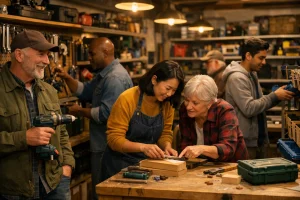
A community-owned tool library and workshop could become one of the most useful unique business ideas not yet implemented in 2026.
The business would allow local residents to borrow expensive tools instead of buying them. Members would pay a monthly subscription and gain access to equipment such as drills, ladders and saws.
In cities where many people live in smaller homes or flats, this idea could save money while creating a stronger sense of community.
Key Features
- Membership-based access to tools and equipment
- DIY, repair and home improvement workshops
- Community space for learning, networking and sharing resources
- Lower-cost and more sustainable alternative to buying tools
The business could start in one neighbourhood and later grow into multiple locations across London.
Potential Revenue Streams:
| Service | Price Range | Revenue Type |
|---|---|---|
| Monthly membership | £10–£25 | Recurring income |
| Workshop sessions | £15–£50 | Event revenue |
| Tool hire for non-members | £5–£20 per day | Additional income |
Why This Model Works?
Many people living in London flats do not have the space or budget to own a full set of tools. A community group in South London recently tested a similar idea and attracted more than 100 members in the first month.
By combining practical value with a strong community feel, this business could generate both recurring income and local loyalty.
5. Re-Glamping Site Design Service

A re-glamping site design service would transform gardens, rooftops and unused outdoor areas into luxury glamping spaces.
The business could create everything from stylish tents and outdoor seating areas to decorative lighting, eco-friendly heating and weatherproof furniture. It would appeal to homeowners, boutique hotels and Airbnb hosts looking to make their property more unique.
Key Features
- Bespoke glamping designs for small urban spaces and rooftops
- Eco-friendly materials, lighting, heating and furniture
- Optional installation, styling and maintenance packages
- Target market includes hotels, Airbnb hosts and homeowners
The business could begin with small residential projects and later expand into hospitality and tourism.
Potential Revenue Streams:
| Service | Price Range | Revenue Type |
|---|---|---|
| Design consultation | £150–£400 | One-time fee |
| Full glamping installation | £2,000–£8,000 | Main project income |
| Maintenance package | £50–£150 monthly | Recurring income |
Why This Model Works?
The popularity of staycations and short-term rentals means more people are looking for memorable outdoor experiences. Even a small city garden or rooftop can become a premium feature that attracts guests and increases rental value. This makes the business suitable for both residential and commercial customers.
6. Agentic Workflow Integration for Small Businesses

An agentic workflow integration consultancy could become one of the strongest unique business ideas not yet implemented in 2026.
The business would help small companies use AI to automate repetitive tasks such as customer service, scheduling and invoicing.
As more SMEs want to save time and reduce costs, this could become a highly valuable service across London.
Key Features
- AI automation for customer enquiries, CRM and admin tasks
- Setup of scheduling, invoicing and follow-up systems
- Training and support for business owners and staff
- Suitable for small companies with limited time and resources
The consultancy could start with one industry, such as estate agents or restaurants, before expanding into other sectors.
Potential Revenue Streams:
| Service | Price Range | Revenue Type |
|---|---|---|
| Initial AI setup | £300–£1,000 | One-time project |
| Monthly support package | £50–£200 | Recurring income |
| Staff training session | £100–£500 | Additional service |
Why This Model Works?
A consultant in Croydon recently introduced simple AI tools to a local estate agency. After three months, the company reported a 40 per cent reduction in admin time.
Many small businesses are now actively looking for affordable ways to improve efficiency, making this one of the strongest technology-based business ideas for 2026.
7. Deepfake Verification and Protection Agency

A deepfake verification and protection agency could become one of the most important unique business ideas not yet implemented in 2026.
The business would help companies identify fake videos, audio recordings and manipulated digital content before it damages their reputation.
This service could be particularly valuable for brands, executives and public figures.
Key Features:
- Verification of suspicious video, audio and online content
- Reputation management and crisis response support
- Training for companies, executives and media teams
- Ongoing monitoring for high-risk brands and public figures
The business could begin by serving local companies and later expand into corporate and public sector clients.
Potential Revenue Streams:
| Service | Price Range | Revenue Type |
|---|---|---|
| Content verification report | £200–£500 | One-time fee |
| Monthly monitoring package | £100–£500 | Recurring income |
| Corporate training session | £300–£1,000 | Event revenue |
Why This Model Works?
As AI-generated scams and fake content become more common, businesses need reliable ways to protect themselves.
Few agencies currently specialise in this area, which means competition remains low despite growing demand.
This business could become especially valuable for public figures, large brands and businesses operating online.
8. AR Try-Before-You-Buy Agency for Retailers

An AR try-before-you-buy agency could become one of the most profitable unique business ideas not yet implemented in 2026. The business would help retailers create augmented reality tools that allow customers to see products in their home or on themselves before making a purchase.
This could be especially useful for furniture, fashion and home décor brands.
Key Features:
- Virtual try-on tools for websites, apps and online shops
- Affordable packages designed for smaller retailers
- Custom AR features for furniture, clothing, beauty and home décor
- Improved customer confidence and fewer product returns
The agency could begin with small retailers and later expand into larger online stores.
Potential Revenue Streams:
| Service | Price Range | Revenue Type |
|---|---|---|
| Basic AR setup | £500–£1,500 | One-time project |
| Premium custom solution | £2,000–£5,000 | High-value service |
| Monthly maintenance | £50–£200 | Recurring income |
Why This Model Works?
This idea works because customers are more likely to buy when they can visualise a product before ordering it.
Many smaller retailers want this technology but cannot afford large AR agencies. Providing a more affordable version could create a strong gap in the market.
9. AI-Powered Personalised Meal Delivery Service
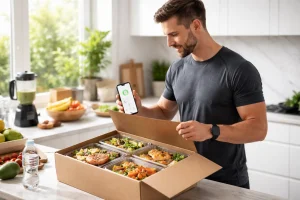
This service would create meal plans based on DNA results, allergies, fitness goals, dietary preferences or health conditions. Instead of offering the same meals to everyone, the business would provide food tailored specifically to each customer’s body and lifestyle.
Customers could complete a short health questionnaire or connect fitness apps to receive more accurate recommendations.
Key Features
- Personalised meal plans and ingredients based on health data
- Subscription options for fitness, weight loss and general wellbeing
- Integration with health, fitness and wearable apps
- Premium pricing for a highly tailored and convenient service
The business could begin with online subscriptions and later expand through partnerships with gyms, nutritionists and corporate wellness programmes.
Potential Revenue Streams:
| Service | Price Range | Revenue Type |
|---|---|---|
| Weekly personalised meals | £60–£120 | Recurring income |
| DNA testing add-on | £50–£100 | Extra service |
| Corporate wellness package | £200–£500 | Business contract |
Why This Model Works?
A small nutrition company in South London recently tested personalised meal boxes for office workers. The founder found that customers were willing to pay more for meals tailored to their fitness and health goals.
As more people look for customised health solutions, this business could become a strong premium subscription model.
10. Mobile Smart Home Repair Service
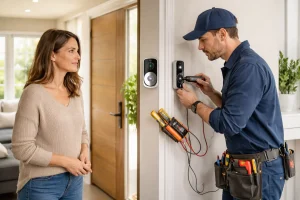
A mobile smart home repair service could become one of the most practical unique business ideas not yet implemented in 2026.
The business would help homeowners repair devices such as smart thermostats, security cameras, video doorbells and connected lighting systems. Traditional electricians often do not specialise in these products, leaving many people without suitable support.
As smart home technology becomes more common across the UK, demand for this type of specialist service is likely to grow quickly
Key Features:
- On-demand repairs carried out at the customer’s home
- Support for multiple smart home brands and systems
- Emergency repair, installation and troubleshooting service
- Subscription plans for regular maintenance and updates
The business could start with local call-outs in one area and later expand into maintenance contracts with landlords and property developers.
Potential Revenue Streams:
| Service | Price Range | Revenue Type |
|---|---|---|
| Standard repair visit | £50–£120 | One-time service |
| Emergency call-out | £100–£200 | Premium service |
| Monthly maintenance plan | £10–£30 | Recurring income |
Why This Model Works
As more homes adopt smart devices, demand for repairs and support will continue to increase.
A local technician in North London recently began offering specialist smart home repairs and found that many customers were willing to pay for faster, more knowledgeable service than a traditional electrician could provide.
11. AI-Powered Mental Health Micro-Counselling Platform

An AI-powered mental health micro-counselling platform could become one of the most valuable unique business ideas not yet implemented in 2026.
The business would offer short, affordable mental health sessions supported by AI and supervised by qualified professionals.
Rather than replacing traditional therapy, it would provide extra support between appointments or for people who need quick, low-cost help.
This idea could appeal particularly to students, busy professionals and remote workers.
Key Features:
- Short mental health sessions available through an app or website
- AI support combined with qualified professionals and therapists
- Lower-cost alternative to full therapy sessions
- Subscription model for students, professionals and businesses
The platform could begin with individual users and later expand into corporate wellbeing packages for employers.
Potential Revenue Streams:
| Service | Price Range | Revenue Type |
|---|---|---|
| Single micro-session | £10–£20 | One-time purchase |
| Monthly subscription | £20–£50 | Recurring income |
| Corporate wellbeing package | £100–£300 | Business contract |
Why This Model Works?
Demand for mental health support is rising, but many people cannot afford regular therapy or face long waiting lists.
This model provides faster and more accessible support, particularly for busy professionals, students and remote workers looking for immediate guidance.
The combination of AI convenience and professional oversight also helps the business stand out from standard wellbeing apps.
12. Virtual Reality Property Showrooms for UK Lettings

A virtual reality property showroom business could become one of the most useful unique business ideas not yet implemented in 2026.
The business would create immersive virtual tours for landlords and letting agents, allowing renters to explore properties without travelling across the city.
In London, where many tenants need to move quickly or view properties from overseas, this could become a highly valuable service.
Key Features:
- High-quality virtual tours for rental properties and developments
- Faster and more convenient for tenants and landlords
- Particularly useful for overseas renters and busy professionals
- Helps landlords stand out in a competitive property market
The business could begin by working with small letting agencies before expanding into larger property companies and developers.
Potential Revenue Streams:
| Service | Price Range | Revenue Type |
|---|---|---|
| Single property VR tour | £150–£400 | One-time project |
| Monthly agency package | £300–£1,000 | Recurring contract |
| Premium interactive features | £100–£300 | Add-on income |
Why This Model Works?
A letting agent in Canary Wharf recently tested virtual tours for overseas tenants. According to the company, viewing times dropped by almost half while enquiries increased.
As the rental market becomes more digital, this could become an essential service for letting agents.
13. Eco-Friendly Mobile Car Detailing Service
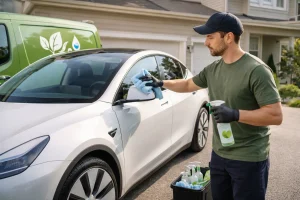
This business would clean and detail cars at the customer’s home or workplace using low-water or waterless products. It would appeal to drivers who want a more convenient and environmentally friendly alternative to traditional car washes.
Key Features:
- Mobile service that travels directly to homes or offices
- Eco-friendly products with reduced water usage
- Membership plans and repeat bookings for regular customers
- Particularly suitable for electric vehicle owners and busy professionals
| Service | Price Range | Revenue Type |
|---|---|---|
| Standard car detail | £30–£60 | One-time service |
| Premium detailing package | £80–£150 | High-value sale |
| Monthly membership | £20–£50 | Recurring income |
Why This Model Works?
As environmental concerns grow, more drivers want greener alternatives to traditional car washes. A mobile approach also makes the service far more convenient.
Customers can have their vehicle cleaned while they work or relax at home, which increases the value of the service.
14. Pop-Up Co-Working Pods in Public Parks
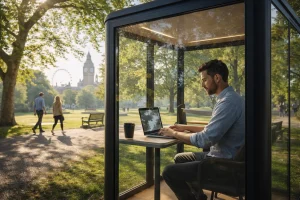
This business would place small weatherproof co-working po in parks and outdoor spaces. Each pod would include Wi-Fi, power sockets, heating and comfortable seating, creating a more enjoyable workspace for remote workers.
Key Features:
- Outdoor workspaces with internet, charging points and seating
- Bookable by the hour, day or through a membership
- Suitable for freelancers, students and remote workers
- Unique alternative to cafés and traditional offices
The service could begin with a few standard packaging options and later expand into custom-branded solutions.
Potential Revenue Streams:
| Service | Price Range | Revenue Type |
|---|---|---|
| Hourly booking | £5–£15 | Short-term income |
| Daily pass | £20–£40 | Main revenue |
| Membership package | £50–£100 monthly | Recurring income |
Why This Model Works?
A pilot project in a London park in 2025 introduced temporary outdoor work pods. The spaces were fully booked within two weeks, suggesting that remote workers want more flexible and enjoyable places to work.
This business could also partner with councils and local parks to expand quickly.
15. Sustainable Packaging Subscription Boxes for SMEs

This business would provide monthly eco-friendly packaging boxes to small businesses. Instead of buying large quantities from wholesalers, SMEs could receive the exact amount they need each month, reducing waste and storage problems.
Key Features
- Monthly subscription boxes with recyclable or compostable packaging
- Custom options for food businesses, online shops and retailers
- Lower minimum order quantities than standard suppliers
- Useful for Etsy sellers, subscription box brands and independent shops
-
Service Price Range Revenue Type Small business box £20–£50 monthly Recurring income Premium branded packaging £50–£150 monthly High-value subscription Custom design add-on £20–£80 Additional service
Why This Model Works?
Small businesses are under growing pressure to reduce plastic and improve sustainability, but many cannot afford large wholesale orders.
A subscription model makes eco-friendly packaging more affordable and convenient, giving this business strong long-term potential and recurring monthly income.
Comparison of Unique Business Ideas in Terms of Cost, Demand and Competition
| Business Idea | Startup Cost | Demand Potential | Competition Level | Ease of Scale | Best Suited For |
|---|---|---|---|---|---|
| Air-Purifying Curtain Boutique | Medium | High | Low | Medium | Interior designers and eco-focused entrepreneurs |
| Zero-Waste Food Delivery Unboxing Service | Medium to High | High | Low | Medium | Food startups and sustainability-focused founders |
| Urban Rooftop Biodiversity Consultancy | Medium | High | Low | Easy | Sustainability consultants and property specialists |
| Community-Owned Tool Library and Workshop | Low to Medium | Medium | Low | Medium | Community businesses and local entrepreneurs |
| Re-Glamping Site Design Service | Medium | Medium | Low | Medium | Property owners and hospitality entrepreneurs |
| Agentic Workflow Integration for Small Businesses | Low | Very High | Medium | Easy | Tech consultants and AI specialists |
| Deepfake Verification and Protection Agency | Medium | High | Very Low | Easy | Cybersecurity and media professionals |
| AR Try-Before-You-Buy Agency for Retailers | Medium | High | Low | Easy | Digital agencies and retail consultants |
| AI-Powered Personalised Meal Delivery Service | High | High | Medium | Medium | Nutrition experts and wellness startups |
| Mobile Smart Home Repair Service | Low | High | Low | Medium | Electricians and smart technology specialists |
| AI-Powered Mental Health Micro-Counselling Platform | Medium | High | Low | Easy | Health-tech entrepreneurs and therapists |
| Virtual Reality Property Showrooms for UK Lettings | Medium | High | Low | Easy | Property marketers and letting agencies |
| Eco-Friendly Mobile Car Detailing Service | Low | Medium to High | Medium | Medium | Car detailing businesses and eco-focused founders |
| Pop-Up Co-Working Pods in Public Parks | Medium to High | Medium | Low | Medium | Workspace businesses and local councils |
| Sustainable Packaging Subscription Boxes for SMEs | Low to Medium | High | Medium | Easy | Packaging suppliers and e-commerce entrepreneurs |
Are These Unique Business Ideas Not Yet Implemented Worth Pursuing in 2026?
The strongest ideas are not necessarily the most futuristic. They are the ones that solve real problems in a way people are willing to pay for.
If you have a limited budget, services such as AI workflow integration, eco-friendly car detailing or sustainable packaging boxes may be easier to start.
If you are looking for a larger long-term opportunity, areas such as VR property showrooms, AI-powered health services and deepfake protection could have greater growth potential.
The most important step is to choose a business idea that fits your own strengths. A technology expert may find more success with AI automation or virtual reality, while someone with a background in design or sustainability could do well with air-purifying curtains or rooftop consultancy.
Conclusion
Unique business ideas are becoming more valuable as the UK market evolves quickly. In 2026, customers want smarter, greener and more convenient solutions.
London offers an ideal testing ground with strong demand and openness to innovation. Whether it’s AI, sustainability or modern lifestyle solutions, success depends on acting early before competition grows.
The best ideas are not the most complex, but those that solve real problems and can be tested quickly. Starting now gives you a chance to build a strong position ahead of emerging trends
Frequently Asked Questions
How do you know if a business idea is genuinely untapped?
A business idea is genuinely untapped when there is little direct competition but clear signs that customers want the solution. Search trends, customer complaints and weak alternatives are all useful signs.
What is the cheapest unique business idea to start in 2026?
AI workflow integration, eco-friendly mobile car detailing and sustainable packaging subscription boxes are among the lowest-cost ideas because they require limited equipment and can start small.
Are unusual business ideas more profitable than traditional businesses?
They can be, particularly if they solve a real problem and enter the market before competitors. Less competition often means higher profit margins.
How can you test a business idea before launching it?
You can create a simple website, run social media adverts, ask customers to join a waiting list or launch a small pilot service before investing heavily.
Which industries are likely to create the biggest opportunities in London?
Artificial intelligence, sustainability, health, flexible work and property technology are expected to create the strongest opportunities in London during 2026.
Can you start one of these business ideas from home?
Yes. Several ideas, including AI workflow consulting, sustainable packaging subscriptions and mental health micro-counselling, could begin from home before expanding.
What are the biggest risks of launching a business idea that has not yet been implemented?
The biggest risks are poor market research, low demand, overspending too early and trying to create a product before proving that customers actually want it.