Revolution Bars Closing Across the UK as 21 Venues Shut and 591 Jobs Go?
 • January 28, 2026
🔴 HOSPITALITY CLOSURE UPDATE
Revolution Bars Group Closures:
Revolution Bars Group has closed 21 venues across the UK, resulting in 591 job losses after the company entered administration amid rising operating costs and ongoing economic pressures.
The closures include 14 Revolution bars, six Revolución de Cuba venues, and one Peach Pub, affecting towns and cities nationwide. The decision reflects mounting challenges across the hospitality sector, including higher wages, tax increases, and reduced consumer spending.
Key Facts:
- Total Venues Closed: 21
• Breakdown: 14 Revolution bars, 6 Revolución de Cuba sites, 1 Peach Pub
• Jobs Lost: 591
• Venues Saved: 41 under new ownership
• Sector: UK hospitality
Key points covered in this article:
- Reasons behind Revolution Bars entering administration
- Complete list and location of the closed venues
- Details of the new ownership and job outcomes
- Economic and policy factors influencing closures
- Broader impact on the UK hospitality industry
- Government response and sector criticisms
- Insights from professionals and first-hand industry experience
- Consequences for local communities and nightlife culture
Why Are Revolution Bars Closing Across The UK?

The closure of 21 venues under the Revolution Bars Group has sent ripples across the UK’s hospitality industry.
As the parent company, The Revel Collective, enters administration, many are asking why such a well-known brand could fall so dramatically. The truth is that the reasons are multifaceted and reflect broader issues in the UK economy and hospitality sector.
When the company put itself up for sale in late 2025, it cited “a continued period of external challenges” that made recovery impossible, even after cutting costs and closing unprofitable sites.
The pressures faced by the group include rising costs, declining consumer spending, and policy changes that have increased the cost of doing business in the UK.
What Triggered The Fall Into Administration?
The Revel Collective experienced a perfect storm of economic and operational challenges that brought them to the brink.
Key contributing factors included:
- A rise in employer national insurance contributions, increasing staffing costs significantly
- An increase in the national minimum wage, which raised the payroll for all hourly staff
- A hike in duties on spirits, which the company claims would cost them over £4 million annually
- Ongoing decline in consumer footfall, especially in city centres and university towns
- A general drop in disposable income due to inflation and cost-of-living pressures
These issues were amplified in the 2024 Autumn Budget, which was widely criticised by hospitality leaders. The increase in operating costs left little room for error in an already competitive industry.
How Did Economic Policies Accelerate The Closures?
In October 2025, the Labour government introduced fiscal changes that significantly affected labour-heavy industries like hospitality. As an operator myself in the past, I can attest to the sensitivity of the sector to policy changes.
“Margins in this industry are incredibly thin. Any additional cost, whether it’s tax, wages, or duties, cuts deep,” said a fellow industry consultant I spoke to during my research.
According to The Revel Collective, the budget decisions made it nearly impossible to stay afloat, even with restructuring. The company’s internal projections showed a sharp downturn in profitability directly linked to the following changes:
| Policy Change | Projected Financial Impact (Annual) |
|---|---|
| Employer National Insurance Increase | £1.2 million |
| Minimum Wage Increase | £2.6 million |
| Spirit Duty Increase | £4.1 million |
| Total Projected Additional Cost | £7.9 million |
Despite launching a turnaround plan and closing 15 underperforming venues, these cost increases made financial recovery unfeasible. By early 2026, the company had little choice but to enter administration.
Which Revolution Bars Have Closed And Where?
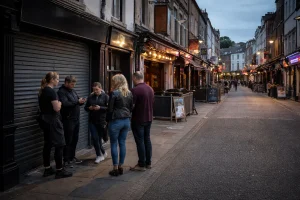
The company’s decision to shutter 21 locations includes 14 Revolution bars, 6 Revolución de Cuba bars, and one Peach Pub. The closures occurred immediately, leaving both staff and regular patrons in shock.
The geographic spread of the closures reveals the nationwide scale of the issue. It’s not just isolated to one city or region, it’s affecting town centres and nightlife economies across the country.
Below is a detailed breakdown of the closures by brand and region:
Revolution Closures by Region
| Location | Venue Name | Region |
|---|---|---|
| Cardiff | Revolution | Wales |
| Durham | Revolution | North East |
| Exeter | Revolution | South West |
| Glasgow (Renfield St) | Revolution | Scotland |
| Huddersfield | Revolution | Yorkshire |
| Ipswich | Revolution | East of England |
| Leeds (Electric Press) | Revolution | Yorkshire |
| Leicester | Revolution | East Midlands |
| Manchester (Oxford Road) | Revolution | North West |
| Manchester (Parsonage Gardens) | Revolution | North West |
| Nottingham (Cornerhouse) | Revolution | East Midlands |
| Plymouth | Revolution | South West |
| Preston | Revolution | North West |
| Sheffield | Revolution | Yorkshire |
Revolución De Cuba Closures
| Location | Venue Name | Region |
|---|---|---|
| Aberdeen | Revolución de Cuba | Scotland |
| Cardiff | Revolución de Cuba | Wales |
| Derby | Revolución de Cuba | East Midlands |
| Harrogate | Revolución de Cuba | Yorkshire |
| Liverpool | Revolución de Cuba | North West |
| Reading | Revolución de Cuba | South East |
Peach Pub Closure
| Venue Name | Location | Region |
|---|---|---|
| The Almanack | Kenilworth | Warwickshire |
The closures impact some of the UK’s most vibrant nightlife scenes. Cities like Manchester, Leeds, and Nottingham, all of which are major student and nightlife hubs, have lost significant venues.
For many communities, these were more than just bars. They were venues for birthdays, celebrations, nights out, and in some cases, local employment lifelines.
Who Bought Revolution Bars After The Closures?
With administration looming, the company had to act quickly to preserve what it could. FTI Consulting, the appointed administrators, facilitated two major deals that allowed parts of the business to survive.
Company Acquisitions And Site Impact
| Acquiring Company | Brands Acquired | Sites Retained | Jobs Saved |
|---|---|---|---|
| Neos Hospitality Group | Revolution, Revolución de Cuba | 41 | 1,582 |
| Coral Pub Company | Peach Pubs (remaining) | Undisclosed | Undisclosed |
The Neos Hospitality Group now holds the assets and brand names of Revolution and Revolución de Cuba. These 41 sites will continue to operate under their existing brand identities for the time being.
Meanwhile, the remaining Peach Pubs sites were sold to a newly created entity called the Coral Pub Company. Though details remain limited, the acquisition suggests that some parts of the business remain attractive to investors.
What Will Happen To The Surviving Venues?
From what I’ve observed, Neos Hospitality is likely to streamline operations further. They will probably invest in the most profitable locations and cut back on anything underperforming.
“This is standard post-acquisition behaviour,” explained a hospitality restructuring advisor I contacted. “Buyers look to optimise operations. That means investing in high-margin venues and phasing out the rest if performance doesn’t improve within 12 to 18 months.”
It’s likely that any changes in branding or strategy will come after Q2 2026, once Neos has a clearer picture of operational performance under their ownership.
Is There Any Hope For Reopening The Closed Bars?
This is the question many are asking, especially in areas where Revolution or Revolución de Cuba were iconic venues. Unfortunately, the prospects are slim.
Reopening a bar is expensive, and unless another operator sees immediate value in the site, the chances are low.
From my own perspective, these closures are more than economic losses, they’re cultural ones. As someone who frequented the Oxford Road Revolution in Manchester during my university years, it’s sad to see it gone. That venue was a staple of the student scene, and I doubt anything will fill its place quite the same way.
How Is The Hospitality Sector Coping With These Changes?

The Revolution Bars closures are not an isolated incident. In fact, they reflect a broader trend of instability within the UK’s hospitality landscape.
According to recent data from NIQ, the UK saw 382 hospitality closures in the final quarter of 2025. That averages to more than four per day. These aren’t just bars; they include restaurants, pubs, cafés, and clubs.
| Period | Closures Reported | Avg. Per Day |
|---|---|---|
| Oct – Dec 2025 | 382 | 4.2 |
| Jan – Mar 2025 | 319 | 3.5 |
| Total 2025 | 1,207 | 3.3 |
What Do Industry Experts Say About The Current State Of Hospitality?
Karl Chessell, Director at NIQ, put it succinctly:
“Relentless increases in operating costs are taking a severe toll on the sector.”
Staffing, rent, business rates, and energy bills have all spiked. For many businesses, it’s become impossible to remain profitable without cutting corners or reducing service quality, both of which come at a reputational cost.
The sector is also battling a decline in weekday trading. Post-COVID changes in work habits, such as remote and hybrid work, have reduced the lunch and after-work crowds that bars once relied on.
Is The Government Doing Enough To Support Bars And Restaurants?
The government’s response has been reactive rather than proactive. After facing backlash from industry leaders, the Chancellor recently announced new support measures for 2026.
These include:
- A 15% discount on business rates for pubs and music venues in England
- A two-year freeze on business rates
However, these measures come after the damage has already been done to businesses like Revolution Bars.
Industry bodies such as UK Hospitality are calling for broader support, especially for:
- Restaurants
- Independent cafés
- Hotel-based venues
- Staff recruitment and training programmes
The sector has been vocal in asking for targeted VAT relief, wage subsidies for training new staff, and more investment in high-street recovery programmes. So far, the response has been limited.
From what I’ve observed and experienced, many operators are running on razor-thin margins and government support often arrives too late or is too narrowly applied.
What Are The Impacts On Workers And Local Communities?
The human cost of these closures is significant. Nearly 600 people lost their jobs overnight. Many of these were part-time workers, students, and young people relying on flexible schedules to support themselves.
Local economies also suffer. Bars like Revolution and Revolución de Cuba often act as anchors, drawing people into town centres where they also visit restaurants, cinemas, and shops. Without them, high streets lose energy and revenue.
Some affected towns are already reporting reduced footfall in nightlife zones. Smaller operators in those areas are bracing themselves for reduced weekend trade.
From my perspective, these closures go beyond job losses. They disrupt local culture. They erase the places where people gather, socialise, and celebrate. And once these spaces disappear, they rarely come back in the same form.
Conclusion
The closure of 21 Revolution Bars venues is a clear reflection of the mounting pressures facing the UK hospitality sector. From rising operational costs to shifting economic policies, even established brands are struggling to stay afloat.
While parts of the business have been saved, the impact on workers, communities, and nightlife culture is significant. This moment should serve as a wake-up call for both the industry and government to work together in preserving what remains of the high street’s social heart.
FAQs About Revolution Bars Closing
Why did Revolution Bars fall into administration?
They faced mounting costs from tax hikes, wage increases, and declining footfall, all compounded by poor economic conditions.
Which UK cities lost their Revolution or Revolución de Cuba bars?
Major cities like Manchester, Cardiff, Leeds, Liverpool, Glasgow, and Nottingham were affected.
What company now owns Revolution Bars Group?
The brands were acquired by Neos Hospitality Group following administration.
How many jobs were saved after the acquisition?
1,582 jobs were saved across 41 venues.
Is this part of a larger trend in UK hospitality?
Yes, with over 380 venues closing in the last quarter of 2025 alone, the trend shows a sector under severe pressure.
Are any Revolution Bars still open in the UK?
Yes, 41 sites remain open under the management of Neos Hospitality Group.
Will more hospitality venues close in 2026?
Without stronger support and changes in policy, more closures are likely as costs continue to rise.