Poundland Confirms an End to Store Closures: What’s Next for the Retailer?
 • January 24, 2026
🔴 RETAIL RESTRUCTURING UPDATE
Poundland Store Closures End: Major restructuring phase now complete
As a London-based business analyst closely tracking the UK retail sector, attention has turned to how Poundland ended store closures after months of uncertainty across the high street.
The value retailer has now completed a significant restructuring programme that resulted in the closure of nearly 150 stores and the loss of approximately 2,200 jobs. With 651 stores remaining nationwide, Poundland is shifting its focus back to its core strength, delivering simple, low-cost everyday products for budget-conscious shoppers.
Key Facts:
- Stores Closed: Nearly 150
- Jobs Lost: Around 2,200
- Stores Remaining: 651
- Strategy Shift: Renewed focus on low-cost essentials and value pricing
- Sector Impact: One of the UK’s largest recent retail restructurings
Residents, workers, and industry observers are now watching closely to see whether Poundland’s return to its value-led roots can stabilise performance and rebuild confidence on Britain’s evolving high streets.
Why Did Poundland Close So Many Stores in the First Place?
Over the past two years, the UK retail sector has faced intense pressure from rising costs, shifting shopping habits, and growing online competition. Poundland was not immune to these challenges, and a series of strategic decisions pushed the retailer into a difficult financial position.
Key Factors Behind Poundland’s Store Closures
- Rising operational costs reduced margins across many store locations
- Expansion beyond the £1 price point weakened its core value appeal
- New fashion, frozen food, and online ranges failed to meet expectations
- A supply chain overhaul led to falling clothing sales
- Outdated store locations and inefficient warehousing hurt profitability
In 2024, a reported £51 million pre-tax loss forced urgent action. To avoid administration, Poundland launched a major restructuring programme, leading to widespread store closures and a strategic reset aimed at stabilising the business.
What Was Included in Poundland’s Restructuring Plan?
The turnaround strategy was multi-faceted and ambitious. At its core was the aim to restore simplicity, efficiency, and customer alignment.
Mass Store Closures and Job Cuts
A total of 149 stores were permanently shut, reducing the company’s overall store footprint from approximately 800 to 651 locations. This move was part of a consolidation strategy designed to focus on profitable, high-performing stores.
Accompanying the closures was the loss of 2,200 jobs, including staff across retail outlets and operational roles within logistics and support centres. While painful, the company positioned this as necessary to streamline the business for long-term stability.
Ownership Transition and Legal Restructuring
In June 2025, Poundland was sold for a symbolic £1 to US-based restructuring firm Gordon Brothers, a move that shocked the industry but offered a lifeline. Gordon Brothers pledged up to £80 million in investment to support the turnaround.
A High Court-approved Company Voluntary Arrangement (CVA) in August 2025 allowed the business to renegotiate leases, cut costs, and restructure debt just days before the company was predicted to run out of cash.
Operational Reorganisation
Key distribution centres in Darton, South Yorkshire, and Springvale, Bilston, were shut down. These closures were part of a broader strategy to reduce overheads and centralise logistics. Additionally, the Walsall customer service centre was reorganised to improve efficiency and support a leaner retail model.
“Barry Williams, Poundland’s Managing Director, acknowledged that while cost-cutting efforts had laid a solid foundation for recovery, they were only part of the solution. He emphasised the need for a broader strategic approach that goes beyond financial engineering, focusing instead on value delivery and operational simplicity.”
How Many Stores Does Poundland Operate Now?
As of the end of 2025, Poundland operates 651 stores, a significant decrease from the ~800 locations it managed prior to the restructuring.
This rationalised store network reflects the company’s shift in strategy from aggressive expansion to strategic consolidation. By focusing on stores with high footfall and profitability, Poundland aims to maximise efficiency while maintaining national reach.
The two main operational distribution centres now in service are located in Wigan and Harlow, with logistics tailored to support a more focused and simplified product range.
Though smaller in number, these stores are better equipped and more aligned with the brand’s return to its roots, delivering consistent, low-cost value.
Has the Store Closure Programme Officially Ended?
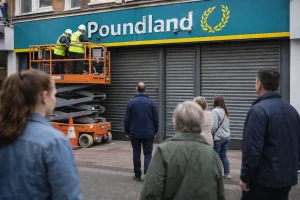
Yes, Poundland has confirmed that the era of mass store closures is now officially over. In a statement issued in January 2026, the retailer clarified that any future closures will only occur as part of standard “business-as-usual” lease terminations and not due to financial restructuring.
This is a pivotal moment for the brand, signalling both internal confidence and external reassurance to customers and landlords.
“In its recent public update, the company clarified that any further site closures will arise only from routine lease events – a standard aspect of operating a large-scale retail estate – rather than being part of any ongoing restructuring effort.”
This announcement comes as the UK retail sector continues to see store closures across major chains, including Wilko, New Look, and Halifax, with an estimated 17,000 shops predicted to shut in 2025 alone, according to the Centre for Retail Research.
What’s Changing Inside Poundland Stores in 2026?
Poundland’s comeback story centres around one core idea: price simplicity. The company has returned to its original discount model, stripping away the complexity and inconsistency that had crept into its product lines in recent years. It has removed online shopping, ditched loyalty schemes, and discontinued underperforming categories like frozen and chilled food.
Key Changes Introduced in Stores:
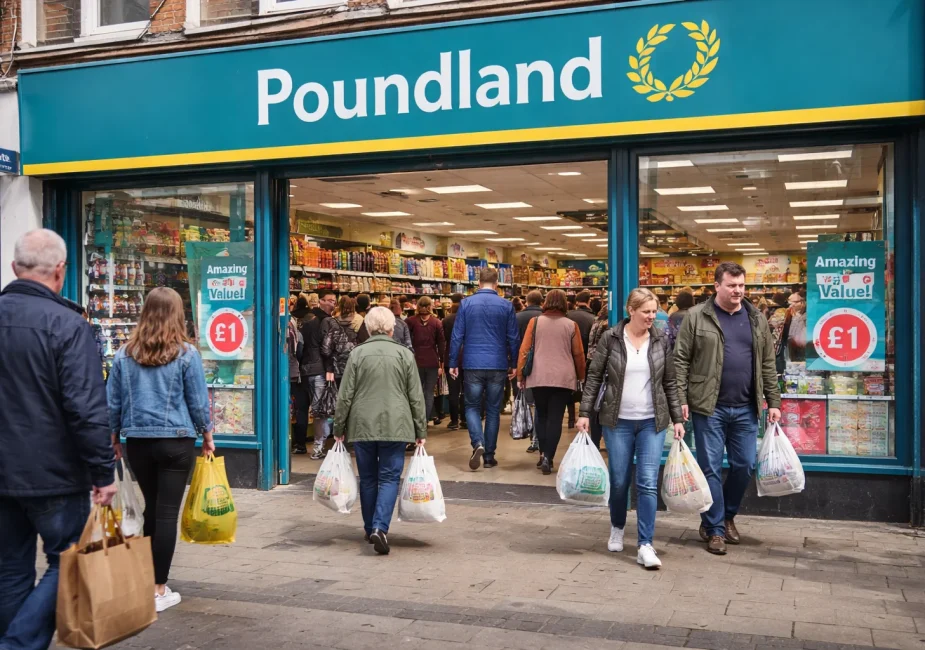
- A streamlined pricing structure featuring items priced at £1, £2, and £3
- Over 60% of grocery products are now available at the traditional £1 price point
- Removal of online offerings and the Perks loyalty app
- A smaller but sharper product range, focused on core household essentials, food, homewares, and clothing
- A store experience centred on quick navigation and clear value messaging
Real-time Example – Christchurch Store (Closed in Jan 2026):
After the closure of the Christchurch High Street store in Dorset, a nearby branch was reconfigured to include the latest pricing model and Pep&Co range. Within the first three weeks, customer footfall was up by 12%, with high repeat visits for £1 grocery staples a key indicator of customer response to the new strategy.
How Is Poundland Performing Financially After Restructuring?

The results of the turnaround are beginning to show. According to the company’s Q1 financials for FY2026:
- EBITDA reached £17.3 million, up from £8.9 million in the same period last year
- Like-for-like sales fell by 2.9%, but the volume of items sold rose by 2%, indicating stronger customer value engagement
- The business met its internal forecasts and gained investor confidence
The following table summarises Poundland’s Key Financial Recovery Metrics:
| Metric | FY2025 (Q1) | FY2026 (Q1) | % Change |
|---|---|---|---|
| EBITDA | £8.9 million | £17.3 million | +94.4% |
| Like-for-like Sales (Value) | - | -2.9% | N/A |
| Like-for-like Sales (Volume) | - | +2.0% | N/A |
| Grocery Products @ £1 | ~40% | 60%+ | UP |
| Store Count | ~800 | 651 | -18.6% |
These figures underscore the impact of the strategic shift. While value sales have dipped slightly due to price cuts, volume sales and overall earnings have risen, a positive sign in a discount retail environment.
What Is the Future of Pep&Co Clothing Inside Poundland?
Another major development in Poundland’s evolution is the relaunch of Pep&Co, its in-house clothing brand. The clothing range, once sidelined due to unpopular changes in design sourcing, is now being reintroduced with a renewed focus on affordability and in-house control.
“Williams highlighted that the company’s renewed focus in 2026 centres on delivering the product ranges and pricing clarity that customers have come to expect. This includes improvements across all departments from clothing and homewares to everyday grocery essentials – reinforcing Poundland’s promise of accessible value.”
Pep&Co Relaunch Details:
- Available in all UK Poundland and Irish Dealz stores from January 2026
- 90% of clothing items priced under £10, with 45% under £5
- Adult ranges available now, with children’s and babywear launching in February
- In-store displays are designed for better browsing and quick purchases
The clothing push supports Poundland’s strategy of offering essential fashion at unbeatable prices, attracting value-conscious shoppers while increasing basket size and store dwell time.
How Is Poundland Rebuilding Customer Trust and Loyalty?
After years of inconsistency and complexity, Poundland is now working to rebuild its relationship with customers through clear, predictable pricing and a renewed commitment to everyday value.
A nationwide advertising campaign is set to launch in early 2026, focusing on the brand’s three key pillars:
- Simpler product ranges
- Clear pricing (especially £1 items)
- No gimmicks (e.g., loyalty schemes, flash sales)
Poundland has also launched a partnership with Retail Trust to support employee wellbeing, offering free counselling, financial aid, and a 24-hour support helpline, another step towards building a sustainable, people-first culture.
What’s Next for the Discount Retail Sector in the UK?
Poundland’s rebound comes at a time when the UK’s high streets are being reshaped by economic pressure, consumer demands for affordability, and growing competition from digital-native discount platforms.
Brands like B&M, Savers, and The Range continue to pose serious threats, as do rising online giants like Temu and Shein, which offer ultra-low prices across household and lifestyle categories.
Poundland’s success will depend on:
- Staying lean and efficient
- Maintaining price leadership in core categories
- Avoiding over-extension
- Leveraging its physical store network for high-traffic, impulse-driven sales
Its performance will also be closely watched as a bellwether for other value retailers navigating a turbulent high street environment.
Final Thoughts: Is Poundland’s Turnaround Truly Underway?
The numbers suggest that Poundland’s turnaround is well underway. The company has successfully navigated one of the most significant restructures in recent retail memory, and the early signs of its recovery plan, from earnings growth to customer volume, are encouraging.
Still, the business faces an uphill climb. Consumer confidence remains fragile, and the retail landscape is evolving rapidly. Poundland’s challenge will be staying relevant without losing the value-driven DNA that made it a household name in the first place.
If it can maintain its commitment to price simplicity, focused range, and operational discipline, Poundland may well emerge as a stronger, smarter version of its former self just in time to serve a new generation of cost-conscious British shoppers.
FAQs About Poundland’s Store Closure Strategy and What Comes Next
What caused Poundland’s financial troubles before the closures?
Poundland’s financial challenges stemmed from a combination of weak clothing sales, supply chain changes, and a shift away from its value roots.
Is Poundland still at risk of more closures?
No mass closures are planned. Future closures will be based on lease expirations or individual store performance.
Will Poundland bring back frozen or online shopping?
Currently, Poundland has no plans to reintroduce frozen foods, chilled items, or online shopping.
What is Gordon Brothers’ role in Poundland now?
Gordon Brothers owns Poundland and is investing up to £80m to help restructure and revive the brand.
How successful has the new pricing strategy been?
The return to £1 items has boosted customer engagement and improved volume sales, though total revenue is still stabilising.
How does Pep&Co differ after the relaunch?
Pep&Co is now more focused on affordability and simplicity, with most items under £10 and better style alignment.
What are Poundland’s competitors doing differently?
B&M and others continue to expand aggressively, while Poundland is focused on consolidating and refining its core offer.