
Carole Wright Fined £600 for a Single Cardboard Box: What Really Happened?
 • January 24, 2026

When I first heard that an 83-year-old woman was fined £600 for a single cardboard box, I thought there had to be more to the story. But after researching everything, from council policies to media reports, I realised this wasn’t just about recycling. It was about rules vs. compassion. Here’s what really happened, and why it matters.
Key Takeaways:
- Carole Wright was fined £600 by Reading Council for alleged fly-tipping.
- The box was left beside an overflowing recycling bin.
- The council acted based on photos with her address on the box.
- Her daughter claims it caused serious distress and health decline.
- The public and media responded with outrage and concern.
Who Is Carole Wright and Why Did Her Story Spark National Outrage?
Carole Wright is not a lawbreaker. She is an 83-year-old pensioner from Reading, Berkshire, who’s lived in her community for nearly six decades. A retired secretary and former nurse, Carole is also a grandmother of four. According to her daughter Catherine, she’s never been in trouble in her life.
But her quiet life was turned upside down in October 2025 when she became the unlikely face of a national debate over waste enforcement.
Her story broke across major UK news outlets after she was issued a £600 fixed penalty notice (FPN) for allegedly fly-tipping a single cardboard box. The public saw it not as a crime, but as a council overreach that lacked common sense and compassion. The outrage wasn’t just about the fine, it was about who was being fined and why.
The incident hit a nerve with millions across the UK, many of whom have elderly family members or face similar confusion around council recycling policies.
What Happened at the Reading Recycling Site That Led to the Fine?
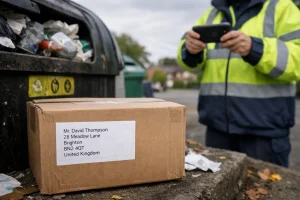
In October, Carole visited the Milestone Centre, her local recycling drop-off point, to dispose of household waste. Among the items was a cardboard box that had previously contained a kitchen pan. It had her name and address printed on the label. When she arrived, the bins were already full.
“She thought she did the right thing, just recycling. That’s all it was,” said her daughter, Catherine, in a public interview.
Believing she was acting responsibly, Carole placed the box near the bins. She assumed the council’s waste collectors would remove it during their next round. To her, this wasn’t illegal dumping, it was environmentally responsible behaviour given limited options.
Days later, she received a formal letter accusing her of fly-tipping, accompanied by photographs taken by a council enforcement officer.
Why Did Reading Council Classify It as Fly-Tipping?
Fly-tipping, under UK law, includes any waste left on public land without permission, even if it’s next to a recycling bin. This includes recyclable materials like cardboard, plastic, or glass, if they’re not placed inside the bin.
Reading Borough Council stated:
“Residents have told the Council that tackling litter and fly tipping is one of their top priorities, and we have a duty to all residents to investigate any incidences of fly tipping.”
The council followed this interpretation rigidly. According to their contractor Kingdom, a request for further information was sent to Carole, but no response was received within 30 days. A Fixed Penalty Notice (FPN) of £600 was then issued under Section 34ZA of the Environmental Protection Act 1990.
Catherine strongly disputes this:
“They said we didn’t respond. That’s not true. My brother even went to the council office in person.”
Whether or not the law was technically broken, many have questioned the moral fairness of applying it in this context.
What Evidence Was Used to Justify the £600 Fine?

The enforcement action taken against Carole Wright wasn’t arbitrary, it was built on a combination of visual evidence and procedural documentation provided by Kingdom LAS, a private firm contracted by Reading Borough Council.
The most critical piece was a photograph showing the cardboard box with Carole’s name and address clearly visible. Another photo depicted overflowing bins, showing the context of the disposal site.
Despite the logical assumption that a full bin might excuse the placement of items nearby, the council viewed this as sufficient cause for enforcement under their policies.
Evidence Type Details
Photograph of cardboard box Address label clearly visible on the side; box placed beside the full bin
Site photograph Image of overflowing bins at the Milestone Centre recycling drop-off
The council used these visuals to conclude that the box had not been disposed of correctly. Since her personal details were visible, they had grounds to issue an FPN.
Carole and her family argue that the box could have been blown out by the wind after being placed properly.
“The bins were already full, what else was she supposed to do?” said Catherine.
Despite emotional appeals and confusion over the timeline of responses, the case was not dropped.
What Are the UK Laws on Fly-Tipping and Do They Apply Here?
In the UK, fly-tipping is governed by the Environmental Protection Act 1990. It defines illegal waste disposal as leaving waste on land not designated or licensed for that purpose. The law is strict liability, meaning that intent doesn’t matter, only the act itself.
Local councils use this framework to enforce cleanliness, with penalties for breaches, even seemingly minor ones. Unfortunately, this also means that even recyclable materials, if not placed inside the bin, can lead to fines.
Legal Criteria for Fly-Tipping Does Carole’s Situation Qualify?
Waste left outside of bin Yes
Waste identifiable by name/address Yes
Overflowing bins as defence Not accepted legally
Intentional dumping Not required for enforcement
While technically within the scope of the law, critics argue this case shows the unintended consequences of over-enforcement, especially when vulnerable individuals are involved and no harm was caused.
How Has the Fine Affected Carole Wright and Her Family?

The impact on Carole Wright and her family goes far beyond the financial burden. The emotional toll has been severe and distressing, with her daughter Catherine publicly stating that her mother has struggled to eat, sleep, or function normally since the incident.
“She keeps saying she doesn’t want to go on any more. She’s just staring at walls, crying. She’s not eating.”
These aren’t just emotional responses, they’re signs of acute anxiety and mental distress, possibly worsened by the bureaucratic confusion and the coldness of the enforcement process. Catherine also revealed how believing the letter was a scam only added to the stress.
“We honestly thought it must be a scam at first.”
Her fear of being taken to court or even imprisoned has caused real and lasting worry. For a woman who has lived a law-abiding life, this fine became a terrifying ordeal that turned a simple act of recycling into a personal crisis.
Can a £600 Fly-Tipping Fine Be Appealed or Cancelled?
Yes, fly-tipping fines can be challenged, but the process is often complex and not clearly communicated to the public.
The appeals process typically requires:
- Written explanation of why the waste was not disposed of properly
- Any supporting medical, mental health, or vulnerability documentation
- Timely response within the window given (usually 14–30 days)
In this case, the council claims no response was received. Catherine says otherwise:
“We rang Kingdom and spoke to multiple people. We were in tears on the phone. But nothing changed.”
Kingdom and the council have both stated they remain open to dialogue, yet the family reports a cycle of referrals, confusion, and no clear path to resolution.
What Can UK Residents Do If Recycling Bins Are Full?
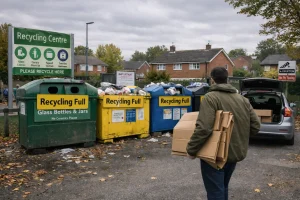
Overflowing bins are not uncommon in busy neighbourhoods. However, most councils, including Reading, consider it illegal to leave waste beside a bin.
To avoid fines, residents should:
- Take the waste back home and try again later.
- Visit another official recycling site nearby.
- Report full bins on the council’s website or waste hotline.
- Avoid placing anything on the ground, even recyclable materials.
Despite public perception, leaving recyclables outside bins is classed as fly-tipping, regardless of good intentions. This case highlights the gap between council rules and common sense understanding, especially for elderly individuals.
What Does This Case Reveal About Council Enforcement Policies?
The Carole Wright case has become symbolic of a wider issue: how UK councils, often working through private enforcement contractors, apply rigid rules with little compassion.
“We’re not against the rules, but this isn’t justice. This is punishment without understanding,” Catherine said.
This incident has sparked conversations about:
- The ethics of outsourcing environmental enforcement
- The lack of discretion shown to vulnerable groups
- The financial motivations behind FPNs
- The need for public education on bin rules
Ultimately, the case forces local authorities to ask: Are we protecting communities, or punishing them?
Conclusion
In conclusion, the £600 fine issued to Carole Wright for placing a single cardboard box beside a full recycling bin has evolved into a powerful national debate. What began as a routine council enforcement action now highlights deeper concerns about how public policies are applied in real-life situations.
While Reading Borough Council acted according to its interpretation of the rules, the case exposes a clear divide between legality and fairness.
It has raised important questions around environmental enforcement, the protection of elderly citizens, the influence of private contractors, and the need for greater empathy in council processes. Ultimately, this case asks not just whether the decision was lawful, but whether it was truly right.
Frequently Asked Questions
Can elderly residents be exempt from fly-tipping fines in the UK?
No, age alone does not exempt someone. However, councils may consider mitigating circumstances if evidence (e.g. medical documentation) is provided.
What counts as proper recycling bin use under council guidelines?
Only waste that fits entirely inside the bin. Leaving waste beside bins is classed as improper disposal, even if it’s recyclable.
Do councils always require evidence before issuing fly-tipping fines?
Most councils require photographic evidence or identifiable waste, such as labels or addresses. However, intent is not usually considered.
What is Kingdom’s role in local waste enforcement?
Kingdom LAS is a private enforcement firm contracted by many UK councils to issue fixed penalty notices and investigate waste offences.
Are fly-tipping fines the same across all UK councils?
No, each council sets its own penalties, but the maximum fixed penalty for minor fly-tipping is £1,000 under UK law.
How long do residents have to respond to fixed penalty notices?
Typically 14 to 30 days, depending on the issuing authority. Failure to respond can result in court action.
Is there public support for reforming fly-tipping enforcement rules?
Yes, growing public concern calls for more discretion, better communication, and fairer treatment, especially for vulnerable residents.