DVLA Banned Number Plates 2026 – Which Registrations Are Being Withdrawn?
 • December 27, 2025
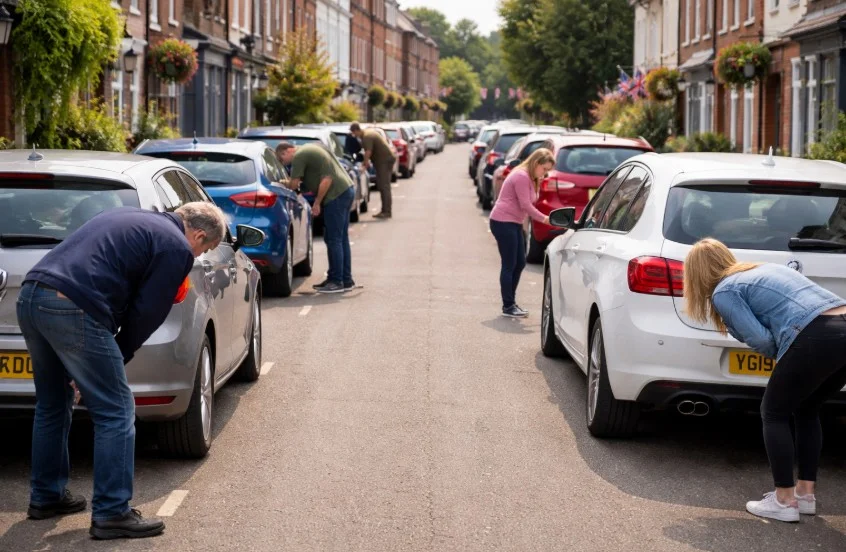
As 2026 approaches, the release of new UK registration plates is drawing attention from motorists planning to register vehicles or purchase personalised plates. Alongside the introduction of the new “26” and “76” identifiers, the DVLA has confirmed an expanded list of banned number plate combinations that will not be issued or legally displayed.
Ahead of the March and September 2026 plate launches, more than 400 registrations have been withheld following the DVLA’s annual review process. These restrictions are based on standards relating to public decency, road safety, and the prevention of offensive, misleading, or sensitive references.
Key points for drivers to note:
-
“26” plates launch in March 2026 and “76” plates in September
-
Over 400 combinations have been banned before release
-
Restrictions include offensive language, political references, and emergency impersonation
This guide explains what has been banned in 2026 and what motorists should check before choosing a custom registration.
Why Does the DVLA Ban Number Plates Each Year?
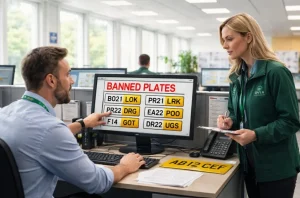
The DVLA holds a responsibility not only to issue vehicle registrations but also to regulate them to ensure they uphold public standards and road safety.
Banned plates typically fall under one or more of the following categories:
- Offensive or explicit language
- Sexual or crude references
- Political or religious content
- References to violence, war, or discrimination
- Mimicking emergency service codes or identifiers
- Plates that could be misunderstood or misread
Each year, a panel of DVLA officials reviews all potential new registrations before they’re made available. The panel’s job is to ensure that no plates slip through that could potentially offend, mislead, or undermine public decency. This process involves both proactive filtering and responses to public complaints or feedback.
Even seemingly harmless combinations may be banned if, when interpreted phonetically or visually, they spell out something inappropriate.
What Are the New Registration Plates for 2026?
2026 brings in two new registration formats that continue the UK’s long-standing biannual update cycle:
- “26” Plates – March Release
These represent new vehicles registered between 1 March and 31 August 2026.
- “76” Plates – September Release
Vehicles registered between 1 September 2026 and 28 February 2027 will carry the “76” mark.
These numbers are placed after the initial two letters, which indicate the region of registration, forming the standard UK format: AA26 AAA
With the release of these new identifiers, demand spikes for custom and personalised plates, often prompting motorists to search for combinations that are clever, meaningful, or humorous. However, not all requests make it past the DVLA’s censorship board.
How Many Number Plates Have Been Banned in 2026?
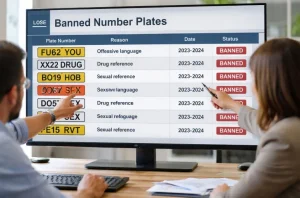
This year, the DVLA has banned a record number of plates, over 436 combinations in total. Compared to previous years, this is a significant rise. In 2025, the list stood at just over 210, showing how the number of problematic or inappropriate submissions has more than doubled.
According to the DVLA, the decision to ban so many plates reflects the growing creativity, sometimes bordering on controversy, seen in applications, especially during times of heightened global tensions or political sensitivities.
What Types of Number Plates Were Banned?
The 2026 banned list reveals a wide spectrum of offensive or inappropriate content. Some combinations are obvious in their intent, while others are subtle or contextually charged.
1. References to War and Global Conflicts
Given the international context, plates referencing ongoing conflicts have been removed. Combinations such as GA26 WAR, RU26 UKR, and YE26 MEN (referring to Gaza, Ukraine, and Yemen respectively) were deemed inappropriate.
2. Sexual and Crude Content
Plates like BJ26 STD, FK26 VAJ, and FU26 GAY were flagged for sexual innuendos, explicit slang, or potentially offensive interpretations.
3. Discrimination and Hate Speech
Some plates hint at discriminatory or hateful phrases, including AS26 FKU, NO26 COP, and FU26 KED, phrases that could incite or offend when viewed in public.
4. Emergency Services Impersonation
Plates like DO26 GGR, EU26 GON, and SH26 GGD bear close resemblance to emergency response identifiers or suggest authority, which can mislead other road users.
Commonly Banned Categories and Examples:
| Category | Example Plates | Reason for Ban |
|---|---|---|
| Conflict/War References | RU26 UKR, GA26 WAR, GO26 RUS | Political sensitivity, current events |
| Sexual or Crude Content | BJ26 STD, FK26 VAJ, FU26 GAY | Offensive slang or suggestive phrases |
| Hate Speech or Discrimination | AS26 FKU, FU26 KED, YE26 MEN | Inciting hatred or social division |
| Religious or Political | NA26 ASU, GA26 NAZ, UK26 ONE | Religious extremism or nationalism |
| Emergency Service Mimicry | DO26 GGR, EU26 GON | Potential to impersonate official services |
Can Drivers Still Buy Custom Plates in 2026?
Yes, drivers can still buy personalised number plates in 2026, even with an expanded banned list in place. Custom registrations remain extremely popular, and the DVLA continues to run official online auctions and direct sales, generating millions each year for the UK Treasury.
However, motorists must understand the rules before purchasing. Custom plates must follow strict legal formatting and cannot contain offensive, misleading, or prohibited combinations. Every registration must be approved by the DVLA before it can be assigned to a vehicle.
Extra caution is also advised when buying through private sellers, as non-compliant plates may later be withdrawn. In such cases, refunds are not guaranteed, particularly when purchases are made outside official DVLA channels.
What Happens If Someone Uses a Banned Plate?
Using a banned or non-compliant number plate is treated as a serious motoring offence in the UK and can lead to swift enforcement action.
- A £1,000 fine from the DVLA or police
- Immediate MOT failure
- Deregistration of the plate without reimbursement
- Potential issues with insurance validity
- Risk of the vehicle being seized
UK law requires number plates to be properly formatted, readable, and free of offensive material. If a vehicle’s plate is tampered with or altered to resemble a banned combination, that too can lead to legal action.
How Does the DVLA Decide Which Plates to Ban?
Each year, a dedicated committee at the DVLA sits down to manually review every potential plate combination in the new series. They rely on:
- Internal policies on offensive content
- Public feedback and complaints
- Phonetic analysis to spot potential misreadings
- Contextual relevance, especially relating to current events
For instance, a plate like GA26 BOM might seem harmless at first glance, but when read phonetically, could be interpreted as a reference to bombing or extremism, especially in certain regions.
The DVLA also has to consider how combinations look in different fonts or spacings, as many offensive words can be disguised through stylisation.
How to Check If a Number Plate Is Banned Before Buying
Before you invest in a private registration, especially from third-party resellers, it’s essential to confirm that your desired combination:
- Isn’t on the DVLA’s banned list
- Complies with formatting rules (font, spacing, reflective colouring)
- Does not mimic existing or emergency service styles
You can verify plates through:
- The DVLA’s official auction portal
- Specialist number plate dealers
- Motoring news sites that regularly update the banned plate list
Taking this extra step can help avoid rejection, legal trouble, and financial loss.
Official vs Unofficial Plate Sellers:
| Platform Type | Examples | Is It Safe? |
|---|---|---|
| DVLA Official | DVLA Auctions, DVLA.gov.uk | Yes – fully regulated |
| Registered Dealers | Reg Transfers, Plates4Less | Yes – if DVLA-approved |
| Private Sellers | eBay, Gumtree, Facebook | Risky – vet carefully |
| Stylised Plate Vendors | “Cool” or “Funny” plate sites | Often illegal/unsafe |
Conclusion
The DVLA’s banned plate list is a clear reflection of its duty to uphold public decency, road safety, and compliance. In 2026, more than 400 number plates have been blacklisted, most of them for reasons tied to sexual innuendo, political references, hate speech, or misuse of symbols.
Drivers looking to personalise their vehicles should proceed with caution and always check the DVLA’s latest guidance before purchasing. Plates that seem humorous or clever may backfire if they cross a legal or ethical line.
FAQs About DVLA Banned Number Plates
Are DVLA banned number plates illegal to own?
Yes, banned plates cannot be legally registered or displayed on vehicles. Using one can result in penalties and deregistration.
How often does the DVLA update its banned list?
Twice a year, before the March and September plate releases.
Can I appeal if my desired plate is rejected?
No formal appeal process exists. DVLA decisions on offensive content are final.
Why are some plates banned for political reasons?
Plates referencing war, conflict, or politically sensitive topics can cause public offence or distress and are thus prohibited.
Does the banned list change by region?
No. The list is national and applies uniformly across the UK.
What font and format are legal for number plates?
Plates must use Charles Wright font and comply with spacing, size, and layout regulations.
Where can I safely buy custom number plates?
Through DVLA auctions, or DVLA-approved dealers only.