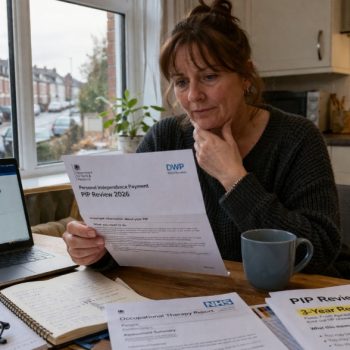
What Are the DWP PIP Reforms in 2026? Key Things Claimants Need to Know
 • December 19, 2025

From November 2026, the UK’s welfare system will undergo significant reform with changes to Personal Independence Payment (PIP) under the Department for Work and Pensions (DWP).
Designed to improve efficiency, fairness, and focus on those with higher needs, the DWP PIP reforms 2026 are expected to affect millions of claimants, though not all will be impacted equally.
This blog breaks down the key components of the 2026 reforms, explaining what’s changing, who is affected, and what claimants need to do now to prepare for this transition.
Whether you’re a current PIP recipient, a future applicant, or a carer or advisor, this guide offers essential insights into one of the most substantial welfare overhauls in recent years.
What Is PIP and Why Is It Being Reformed?

Personal Independence Payment (PIP) is a UK government benefit designed to help individuals with long-term health conditions or disabilities manage the extra costs associated with daily living and mobility challenges.
Managed by the Department for Work and Pensions (DWP), PIP is not means-tested or taxed, making it a vital source of support for many.
Why the Reform Now?
The Government has stated that the system needs to be made more sustainable, simplified, and targeted. There are increasing pressures on the welfare budget, and a growing number of PIP applications, expected to reach 4 million by the end of the decade.
The reforms aim to ensure that support is prioritised for those with the greatest needs while improving the efficiency of the assessment and delivery process.
What Is the New 4-Point Rule Starting in November 2026?
The most widely discussed change is the introduction of a new eligibility threshold for the daily living component of PIP.
From November 2026, new applicants must score at least four points in a single daily living activity, in addition to the existing rule of scoring eight points across several activities.
Why This Change Matters?
Previously, claimants could qualify by accumulating eight points across a range of minor limitations. This allowed individuals with multiple moderate difficulties to receive support.
The new rule changes the focus toward significant limitations in at least one area, thereby tightening eligibility for those with more distributed but less concentrated difficulties.
Who Will This Affect?
This rule only applies to new claims and award reviews after November 2026. Existing claimants are not immediately affected, unless their claim is reviewed or renewed post this date.
Summary Table – Old vs New Eligibility Rule:
| Criteria | Before November 2026 | After November 2026 |
|---|---|---|
| Minimum Points (Daily Living Component) | 8 points across multiple activities | 8 points overall + at least 4 points in one single activity |
| Applies To | All claimants | New claimants & reviewed claims after Nov 2026 |
| Protection for Current Claimants | Not Applicable | Yes, unless reviewed post-Nov 2026 |
Who Will Be Protected from the New PIP Rules?
The reforms include explicit protections for certain groups to ensure stability and prevent unnecessary disruption. Existing PIP claimants will not automatically lose entitlement when the reforms take effect.
Unless their claim is reviewed after November 2026, they will continue under the current rules. Even where reassessments occur, safeguards are in place for vulnerable groups.
People over State Pension age are not routinely fully reassessed and will not be affected by the new eligibility rules. In addition, individuals nearing the end of life will continue to receive fast-track support under existing special rules, with no changes to processing times or award levels.
How Will the Timms Review Change the PIP Assessment Process?

One of the fundamental objectives of the Timms Review is to rethink how assessments are carried out. The review proposes a major shift away from traditional face-to-face evaluations, favouring more medical and documentary evidence.
Assessment Reform Highlights:
- Greater reliance on medical reports from GPs and specialists.
- Reduced in-person assessments, especially for cases where conditions are well documented.
- Emphasis on paper-based or digital submissions, which streamline the process and reduce stress for applicants.
These changes are intended to make the process less adversarial and more respectful of medical realities, especially for those with chronic or lifelong health issues.
What Happens When the Work Capability Assessment Is Scrapped?
The Work Capability Assessment (WCA) has long been a point of contention in the UK benefits system. Used to determine eligibility for sickness-related elements of Universal Credit, the WCA will be phased out by 2028/29.
Integration with PIP
The proposed reforms aim to merge the functions of the WCA into the PIP eligibility system. This means that PIP assessments will not only determine eligibility for PIP itself but also for the additional health-related support in Universal Credit (UC).
Future Eligibility Structure:
| Benefit Component | Pre-2028 | Post-2028 |
|---|---|---|
| PIP Eligibility | Separate from WCA | Integrated with health assessment |
| UC Health Element | Determined by WCA | Determined by PIP eligibility |
| Assessment Type | WCA & PIP (separate) | PIP-based assessment only |
This change simplifies the system, potentially reducing duplication and speeding up access to vital support.
Who Will Be Exempt from Routine PIP Reassessments?
One of the most welcome reforms is the exemption of up to 700,000 people from frequent PIP reassessments. This is expected to dramatically improve the quality of life for individuals with lifelong or degenerative conditions.
Conditions Eligible for Reassessment Exemption
- Progressive diseases such as Parkinson’s or Motor Neurone Disease
- Lifelong severe disabilities
- Terminal illnesses
- Conditions with clear medical confirmation of being unlikely to improve
Key Benefits of This Reform
- Long-term or permanent awards without the need for constant revalidation
- Reduced stress and administrative burden
- Allows DWP resources to be redirected to new or more complex claims
In some cases, awards may become permanent, ensuring ongoing support without unnecessary administrative reviews. This change frees up DWP resources and improves the experience for those who need support the most.
How Will the New Rules Treat Fluctuating and Mental Health Conditions?

Historically, individuals with fluctuating conditions or mental health challenges have struggled within the point-based system. The 2026 reforms propose a more flexible and realistic approach to these cases.
Claimants with conditions such as fibromyalgia, ME/CFS, epilepsy, or mental health disorders will benefit from assessment models that consider long-term functional patterns, not just performance on the day of an interview.
This shift should yield more accurate evaluations, acknowledging that symptoms often vary in intensity over time and may not be visible during a brief assessment.
What Remains Unchanged in the PIP System?
Despite the broad scope of the reforms, many core aspects of PIP will stay the same to maintain stability and continuity for claimants.
- Two components: Daily Living and Mobility remain unchanged.
- Non-means-tested: PIP will still not be affected by income or savings.
- Tax-free structure: Payment remains untaxed.
- Weekly rates: The standard payment amounts are not changing as part of this reform.
The purpose of PIP, to provide extra support for individuals with disabilities or long-term health conditions, also remains unchanged.
These consistencies provide reassurance that the benefit’s fundamental goals are being preserved, even as the process by which eligibility is determined becomes more modern and streamlined.
What Should Claimants Do to Prepare for 2026?
With the changes set to roll out from November 2026, it’s important for current and potential claimants to prepare in advance.
Here are a few key actions:
- Maintain updated medical records: Ensure GPs and specialists have current documentation of your condition.
- Respond promptly to DWP correspondence: Especially regarding reviews or changes to your award.
- Familiarise yourself with new rules: Particularly if you’re considering making a claim in 2026 or later.
- Seek support if unsure: Disability advocacy organisations and legal support can offer guidance through transitions.
Being proactive ensures you are better positioned to secure the support you’re entitled to under the new system.
When Will the PIP Reforms Be Fully Implemented?

The rollout of the DWP PIP reforms 2026 is designed to be gradual and phased, allowing for careful monitoring and refinement. This measured approach aims to avoid sudden changes that could overwhelm the system or leave claimants uncertain about their rights.
Timeline Overview:
- Early 2025: Pilot rollouts and exemption notices begin
- November 2026: Full enforcement of the new 4-point rule for new applicants
- 2028/29: Work Capability Assessment fully scrapped and replaced
This phased timeline gives the Government time to collect feedback and make adjustments where necessary, while giving claimants a clearer view of when and how they may be affected.
What Do Disability Rights Groups and Experts Say?
Initial responses from advocacy groups and experts in the field have been broadly positive. Many have long argued for a more compassionate and efficient system, particularly for individuals with permanent or degenerative conditions.
However, there are concerns about:
- Inconsistent application of exemptions
- Fairness for those with invisible or fluctuating disabilities
- The risk of some groups being unintentionally excluded
Ongoing consultation and monitoring will be critical to ensure the reforms deliver on their promise of fairness and functionality.
Final Thoughts
The DWP PIP reforms 2026 represent more than an update to eligibility criteria, they signify a cultural and administrative shift in how disability support is delivered in the UK.
The emphasis is now on long-term stability, targeted assistance, and medical realism, all while maintaining the integrity of a benefit system that serves millions.
If successful, these reforms could lead to broader welfare restructuring, improved collaboration between health services and the DWP, and a more respectful approach to disability assessments nationwide.
Frequently Asked Questions
What is the 4-point rule and when does it take effect?
The 4-point rule requires new PIP claimants from November 2026 to score at least 4 points in one daily living activity to qualify for the daily living component. It complements the existing 8-point overall rule.
Will I lose my PIP if I’m already claiming before November 2026?
No. Existing claimants are protected under the current system unless their award is reviewed or reassessed after the reform date.
Are face-to-face assessments still required?
In many cases, no. The new system places greater emphasis on medical evidence and digital submissions, reducing the need for in-person evaluations.
What does it mean to be exempt from reassessments?
Claimants with conditions that are lifelong, progressive, or terminal may receive long-term or permanent awards and not be subject to routine reassessments.
How will these reforms affect mental health claimants?
The new system aims to better account for fluctuating and invisible conditions, including mental health disorders, using evidence over time rather than point-in-time assessments.
Can I still apply for PIP if I’m over State Pension age?
Yes, but the new eligibility rule changes do not apply to individuals over the State Pension age, who are not routinely reassessed.
What role will PIP play in Universal Credit after 2028?
PIP eligibility will help determine the extra health-related element in Universal Credit, replacing the current Work Capability Assessment process.