
Scottish Teacher Strike 2026: What the EIS Industrial Action Notice Means?
 • March 10, 2026

Education Alert: 2026
Scottish Teacher Strikes: The 10-Day Countdown
Everything parents and educators need to know about the EIS industrial action notice.
Voted YES
Weekly Cut Sought
Notice Period
The Educational Institute of Scotland (EIS) has officially triggered the countdown to industrial action. This 10-day notice is the final legal hurdle before schools across Scotland face potential closures in mid-March 2026.
The Core Dispute: Why Now?
At the heart of the friction is a 2021 promise to slash classroom contact time by 90 minutes per week. Teachers argue that “patience has ended” as administrative burdens and staff shortages have turned the profession into a pressure cooker.
| Policy Goal | The Benefit | Current Status |
|---|---|---|
| 21hr Teaching Cap | Reduced burnout | Stalled |
| 3,500 New Staff | Better pupil support | In Progress |
| Workload Reduction | Time for marking/prep | Disputed |
The March Forecast
If negotiations between COSLA and the Scottish Government fail, expect strike dates to be announced for the week of March 16, 2026. This poses a significant risk to students entering the critical exam revision phase.
Why Is the Scottish Teacher Strike Back in the Headlines?
The Scottish teacher strike is back in the headlines after Scotland’s largest teaching union, the Educational Institute of Scotland (EIS), issued a 10-day industrial action notice. This warning means teachers across Scotland could strike if negotiations over workload and working conditions fail.
The dispute centres on a 2021 Scottish Government promise to reduce teachers’ classroom time by 90 minutes per week, allowing more time for planning, marking, and administrative work.
Key points behind the strike discussion:
- EIS says progress on reducing workload has been too slow.
- Teachers voted strongly in favour of potential industrial action.
- The dispute highlights wider concerns about teacher workload and retention.
- Talks continue between unions, the government, and local authorities.
If no agreement is reached soon, schools across Scotland could face disruption in the coming weeks.
What Does the EIS Industrial Action Notice Actually Mean?

The announcement of an industrial action notice has created confusion among parents, educators, and policymakers. Many people assume it automatically confirms strike action, but in reality the process is more complex.
Legal Requirement for Issuing a Strike Notice
Under UK trade union laws, unions must provide formal notice before any industrial action can take place. Previously, this notice period was 14 days, but recent changes reduced it to 10 days.
This notice period serves several purposes:
- It allows employers and government bodies time to negotiate with unions.
- It gives schools and local authorities an opportunity to prepare for possible disruption.
- It ensures industrial action follows legal procedures.
In the current dispute, the EIS has issued this notice after a successful ballot of its members supporting strike action.
Difference Between Notice and Confirmed Strike Dates
One of the most important points to understand is that issuing an industrial action notice does not automatically mean strikes will happen.
Instead, it simply means the union now has the legal authority to call a strike if negotiations fail. Specific dates for strike action are typically announced later.
Role of Negotiations During the Notice Period
The notice period is often the most intense stage of negotiations. Government representatives, unions, and organisations such as the Convention of Scottish Local Authorities (COSLA) use this window to attempt a compromise.
EIS General Secretary Andrea Bradley emphasised this approach, stating:
“In issuing these formal notices of the intent to commence industrial action, the EIS is complying with the legal requirement to give notice of such action while keeping our options open.”
If a formal agreement is reached before the notice period ends, strike action can still be avoided.
Why Are Scottish Teachers Threatening Strike Action Over Workload?

Teacher workload has been a major concern in Scotland’s education system for several years.
Many educators argue that the amount of time they spend in front of classes leaves insufficient time for essential responsibilities such as preparing lessons, marking work, and supporting pupils with additional needs.
Teachers say that much of this work often spills into evenings and weekends, contributing to stress and burnout across the profession.
Several key issues have driven the current dispute:
- Excessive classroom contact hours leave limited time for preparation.
- Growing administrative responsibilities, including data reporting and documentation.
- Staff shortages in some schools, which increase workloads for existing teachers.
- Delayed implementation of promised reforms designed to reduce workload.
According to EIS representatives, these pressures have built up over several years without significant improvement.
Andrea Bradley highlighted the frustration felt within the profession:
“With no real sign of delivery of those promises on reducing excessive teacher workload, teachers’ patience is clearly now at an end.”
Teachers have also warned that workload pressures affect not only staff wellbeing but also the quality of education delivered to pupils, as limited preparation time can restrict lesson development and individual support.
What Promises Are at the Centre of the Scottish Teacher Strike Dispute?
At the heart of the Scottish teacher strike dispute are commitments made before the last Scottish Parliament election.
The Scottish Government pledged several reforms designed to improve teachers’ working conditions and strengthen the education system.
The most prominent proposal was a reduction in class contact time, meaning the number of hours teachers spend directly teaching pupils.
The key commitments include:
- Reducing teachers’ maximum class contact time to 21 hours per week.
- Cutting teaching time by around 90 minutes weekly to allow more preparation time.
- Recruiting 3,500 additional teachers to support staffing levels.
- Addressing concerns about teacher unemployment and insecure contracts.
Supporters of these proposals argue they would help tackle teacher workload and improve job satisfaction across the profession.
However, implementation has proven complicated. Local councils and education authorities must ensure that reducing contact hours does not reduce the total learning time available to pupils. This means schools may need additional staff, increasing costs.
Key Policy Commitments Behind the Dispute:
Policy Commitment Intended Benefit Implementation Challenge
Reduce contact time to 21 hours Lower teacher workload Requires additional staffing
Cut class teaching time by 90 minutes weekly More time for planning and marking Budget and scheduling issues
Recruit 3,500 teachers Improve staffing levels Recruitment and funding challenges
Address insecure employment Greater job stability Policy coordination across councils
What Did the EIS Ballot Result Show?
The recent ballot conducted by the Educational Institute of Scotland demonstrated strong support among teachers for industrial action.
Around 60% of union members participated in the vote, surpassing the legal turnout threshold required for strike action under UK law. Among those who voted, 85% supported strike action, while a larger majority backed other forms of industrial action short of a full strike.
This result is particularly significant because an earlier ballot failed to meet the legal turnout requirement, meaning the union previously lacked the authority to organise strikes.
The latest vote has therefore given the union a clear mandate to escalate the dispute if negotiations fail.
For policymakers and education leaders, the ballot result sends a clear signal that teacher frustration over workload issues has reached a critical point.
Could Scottish Schools Really Face Strike Disruption in March?
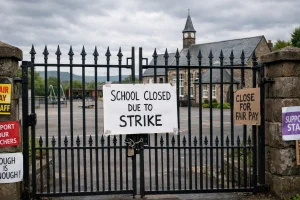
The possibility of a Scottish teacher strike in mid-March has become a major concern for parents and education authorities.
Possible Timeline for Strike Action
Because the EIS has issued a 10-day industrial action notice, strike action could begin soon after the notice period expires if no agreement is reached.
Reports suggest that schools could face disruption as early as mid-March, although specific strike dates have not yet been confirmed.
Impact on Exams and School Schedules
Timing is a key concern. Industrial action could take place during an important period for pupils preparing for national examinations.
Disruptions could affect:
- Classroom teaching schedules
- Revision support for exam candidates
- School timetables and assessments
Education Secretary Jenny Gilruth expressed concern about the potential consequences, stating:
“No one’s interests will be served by industrial action in our schools. This will disrupt children and young people’s learning, particularly in the crucial period leading up to exams.”
Effects on Parents and School Communities
School strikes often create ripple effects beyond the classroom. Parents may need to make alternative childcare arrangements, while school administrators must manage closures or reduced services.
For communities, uncertainty surrounding potential strike dates can create additional challenges for planning and communication.
What Are the Scottish Government and COSLA Saying?
The Scottish Government and COSLA have both emphasised their desire to reach a negotiated settlement that avoids disruption in schools.
Government representatives argue that progress has already been made, including discussions around funding increases and pilot programmes aimed at improving teachers’ working conditions.
Education Secretary Jenny Gilruth said the government remains committed to working collaboratively with unions and local authorities to deliver reforms.
COSLA, which represents Scotland’s local councils, has highlighted the financial implications of reducing teacher contact time. According to council estimates, implementing the policy could cost between £250 million and £310 million annually.
COSLA resources spokesperson Ricky Bell explained:
“Industrial action is in nobody’s interests, and we urge unions to work with Cosla and the Scottish Government to find a solution all parties can agree.”
Local authorities argue that significant funding support will be necessary to implement the proposed reforms without affecting pupil learning.
Can a Deal Still Prevent the Scottish Teacher Strike?

Despite the escalating dispute, there is still a possibility that negotiations could produce a compromise before any strike takes place.
Both the Scottish Government and the EIS have stated that they remain open to dialogue. However, union leaders insist that progress must be confirmed through clear written commitments rather than verbal assurances.
The union’s position is that teachers have waited several years for promised reforms, and further delays without firm timelines are unlikely to satisfy members.
If an agreement addressing workload concerns and funding arrangements can be reached within the notice period, the union could suspend or cancel industrial action.
How Could the Scottish Teacher Strike Affect Pupils, Parents and Schools?
If strike action does go ahead, the effects could extend across Scotland’s education system.
Schools may need to close temporarily or operate with limited staff, potentially disrupting lessons and learning schedules. Parents and carers could face additional challenges arranging childcare during school closures.
Students preparing for exams may be particularly affected, as access to revision support and classroom guidance could be interrupted.
Teachers themselves emphasise that the goal of the dispute is not to disrupt education but to improve working conditions in a way that ultimately benefits pupils.
One teacher involved in the discussions described the situation:
“Teachers want to focus on delivering high-quality lessons, but workload pressures often make that difficult. Addressing these issues would help both staff and students.”
Potential Impacts of the Scottish Teacher Strike:
Group Affected Possible Impact Long-Term Implications
Pupils Missed lessons or disrupted classes Possible impact on exam preparation
Parents Childcare challenges during closures Work schedule disruptions
Schools Timetable changes and staff shortages Pressure on resources
Teachers Increased negotiations with the government Potential workload reforms
Why Does the Scottish Teacher Strike Matter Beyond Scotland?

Although the dispute is centred on Scotland, it reflects wider challenges affecting education systems across the UK.
Teacher recruitment, retention, and workload management remain major policy issues in many regions. Education experts in cities such as London are closely monitoring the dispute because similar concerns have been raised by teaching unions across England.
Workload pressures are frequently cited as a key reason why teachers leave the profession, making reforms in Scotland potentially relevant to broader debates about improving working conditions within the UK education sector.
For policymakers and education leaders, the outcome of the dispute could influence future discussions on funding, staffing, and teacher support.
What Happens Next in the Scottish Teacher Strike 2026 Story?
The coming weeks will likely determine whether Scotland experiences a major teachers’ strike or reaches a negotiated solution.
Key developments to watch include further negotiations between the EIS, the Scottish Government, and COSLA, as well as announcements regarding possible strike dates.
If a binding agreement addressing workload reforms and funding commitments is reached, industrial action could be avoided. However, if talks fail to produce meaningful progress, Scotland’s schools could face one of the most significant education disputes in recent years.
Conclusion
The Scottish teacher strike debate reflects growing concerns about teacher workload and working conditions across Scotland.
While the EIS industrial action notice does not guarantee a strike, it highlights strong frustration among teachers over delayed reforms. Ongoing negotiations between unions, the Scottish Government, and local authorities will determine the next steps.
If talks fail, a Scottish teacher strike in 2026 could become a reality, potentially disrupting schools and affecting students, families, and the wider education sector.
FAQs About Scottish Teacher Strike
What is the Scottish teacher strike about?
The Scottish teacher strike centres on a dispute over teacher workload and the delayed implementation of promised reforms, including reducing classroom contact time.
Who organised the potential strike action?
The Educational Institute of Scotland (EIS), the country’s largest teaching union, organised the ballot that authorised industrial action.
Why are teachers asking for reduced contact time?
Teachers argue that reducing class contact time would provide more hours for lesson planning, marking, and supporting pupils.
When could the strike begin?
If negotiations fail, strike action could potentially begin shortly after the 10-day notice period issued by the union.
What is an action short of a strike?
Action short of strike refers to measures such as refusing certain administrative tasks or working strictly within contracted hours.
How could the strike affect schools?
Schools could experience closures, reduced teaching staff, and timetable changes during strike days.
Can the strike still be avoided?
Yes. If the Scottish Government, COSLA, and teaching unions reach a negotiated agreement before strike dates are announced, industrial action may not occur.