
National Trust Bans Volunteer – What Led to the Sudden Dismissals?
 • January 2, 2026
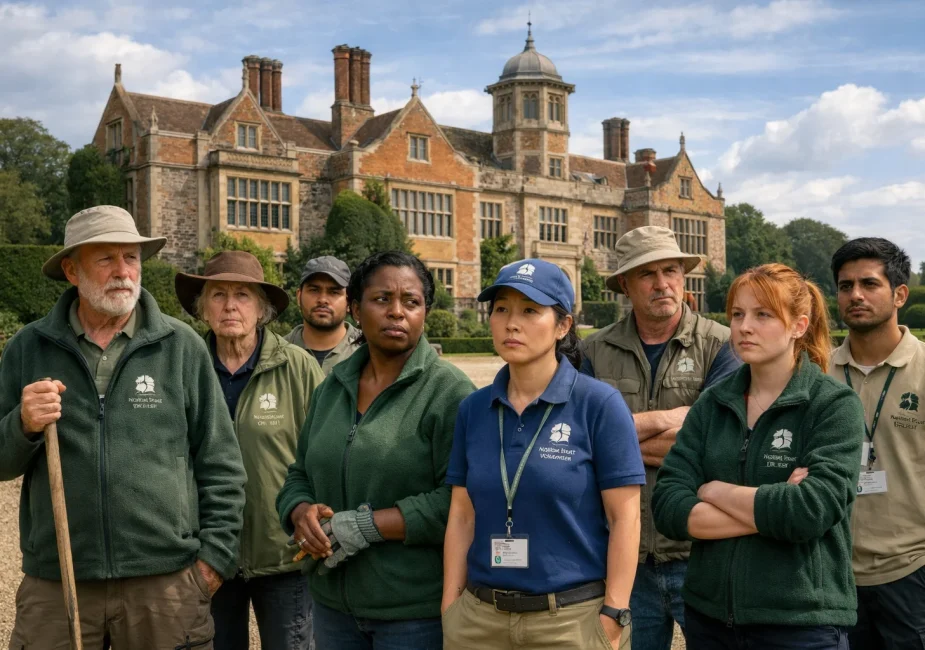
Why are seasoned National Trust volunteers suddenly being banned or dismissed? This question has sparked considerable public debate, especially following a series of controversial incidents involving long-serving volunteers at multiple historic properties.
At the heart of the matter are conflicting views on behaviour, values, and the evolving culture of one of the UK’s most respected heritage organisations.
Key Incidents:
- Andy Jones, a volunteer of over 14 years, was banned after highlighting website errors.
- Thirteen gardeners at Mottistone Manor were dismissed due to alleged values misalignment.
- Around 70 Dunham Massey volunteers had roles paused during a structural review.
These events have triggered discussions on whether the National Trust’s commitment to “modern standards” may be at odds with the dedication and expectations of its volunteers.
Why Were National Trust Volunteers Suddenly Banned?
The National Trust, a cornerstone of UK heritage preservation, depends heavily on its volunteers, over 50,000 people who collectively support site maintenance, conservation education, and visitor services.
However, the recent wave of dismissals and bans has raised concerns about internal policy changes, communication breakdowns, and ideological misalignment.
Several volunteers report feeling undervalued, dismissed without adequate explanation, or even punished for offering constructive feedback. The Trust, on the other hand, maintains that any actions taken stem from serious breaches of its organisational values, with no tolerance for behaviour deemed inappropriate, exclusionary, or non-inclusive.
This tension between individual expression and institutional values is at the centre of the current controversy.
Who Is Andy Jones and Why Was He Banned from Volunteering?
Andy Jones, a 71-year-old former volunteer, had dedicated over a decade to the National Trust across several sites, including Woolbeding Estate and Devil’s Punch Bowl in Surrey. His roles ranged from gardening and site maintenance to guest interaction and membership support.
A Volunteer’s Effort Gone Unrecognised
In 2024, Mr Jones took it upon himself to correct what he described as “thousands of spelling and factual errors” on the National Trust’s website. Over approximately 400 hours, he compiled an extensive document outlining these issues and sent it to the organisation’s Director-General. He received no response.
Frustrated, he followed up with a second email in early 2025. When that too was ignored, Jones sent a strongly worded message to his manager, expressing his dissatisfaction in harsh terms that included inappropriate remarks.
The Trust’s management responded by stating that his comments were “not in line with [their] organisational values,” and that his relationship with the Trust was “irreversibly broken.”
“Still no reply, acknowledgement, let alone thanks from the Oirish Dame on over 400 hours spent on her crappy not fit for purpose website,” – Andy Jones, in his final email to the Trust
Jones later acknowledged the email’s tone was wrong, attributing his emotional state to the stress of a prostate cancer diagnosis. However, the Trust stood firm in its decision, stating that ongoing incidents and inappropriate conduct, not the act of pointing out website errors, led to his dismissal.
What Happened to the Gardeners at Mottistone Manor?
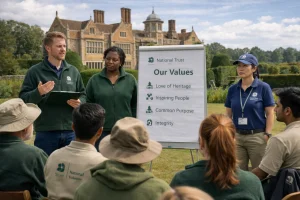
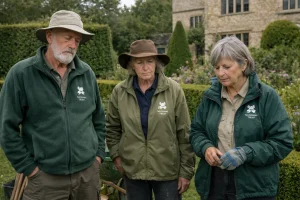
In a separate and equally controversial event, 13 long-serving volunteer gardeners at Mottistone Manor on the Isle of Wight were let go in 2025. The gardeners, some with decades of experience, claim they were dismissed without clear reasons, only being told their “values no longer aligned” with the Trust’s inclusive culture.
1. The Trust’s Explanation
The National Trust stated that a new approach to garden management had been introduced and that volunteers were informed of these changes. According to the Trust, some volunteers opted not to continue under the new framework.
2. Volunteer Rebuttal
Volunteers involved told a very different story. They described feeling betrayed and mistreated, accusing the organisation of deceit and a lack of transparency. One former gardener said:
“With a cold and dismissive click of a send button, over 100 years of gardening skill and hard work were lost to the Trust.”
3. Cultural Alignment or Silencing Dissent?
Critics have questioned whether the claim of “values misalignment” was being used as a vague pretext to remove individuals who were uncomfortable with newer ideologies introduced into the organisation.
Why Were Volunteer Roles Suspended at Dunham Massey?
In early 2024, nearly 70 volunteers serving as park and house guides at Dunham Massey in Cheshire were told that their roles were being “paused” while the organisation reviewed and restructured how conservation education was delivered.
While the Trust described this as a temporary step towards a more conservation-focused volunteer model, many volunteers, some with 10 to 15 years of service, described it as an effective dismissal. No clear timeline for reinstatement was provided, and many felt left in the dark.
The National Trust maintained that no one was “sacked” and that all decisions were in line with future strategic goals. However, this assurance has done little to assuage hurt feelings and growing mistrust.
Case Comparison Table: Key Volunteer Incidents
To better understand the scale and nature of the volunteer controversies, here is a side-by-side comparison of the main incidents:
Location Year Volunteers Affected Trust’s Rationale Volunteer Perspective
Woolbeding Estate 2024–25 1 (Andy Jones) Inappropriate conduct and email language Felt ignored and unfairly banned after offering help
Mottistone Manor 2025 13 gardeners Behaviour misaligned with inclusive values No clarity, accused Trust of dishonesty and disrespect
Dunham Massey 2024 ~70 guides Role paused for review and restructuring Felt dismissed without transparency or proper explanation
What Are the Organisational Values That Led to These Dismissals?
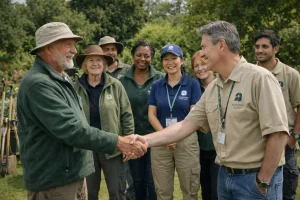
The National Trust has emphasised that it holds its volunteers to the same values as its staff. These values include respect, inclusivity, professionalism, and alignment with modern societal expectations such as diversity, equity, and inclusion (DEI).
While these principles are laudable, questions have arisen around how they are being applied. Are they being used to maintain a respectful environment, or as a filter to eliminate dissenting voices?
Inclusivity and Diversity at the Core
The Trust’s modern strategy includes initiatives such as exploring colonial histories of properties, incorporating DEI training, and promoting wider community engagement.
A Question of Balance
However, critics argue that the Trust has shifted too far from its traditional roots, creating a cultural divide between leadership and long-standing volunteers who may not fully align with every modern initiative.
How Has the Public and Advocacy Groups Responded?
The dismissals have attracted significant media attention and sparked debate among heritage supporters and former volunteers. A prominent voice in the discussion has been a volunteer advocacy group that argues the Trust is losing sight of its core purpose.
Some public supporters of dismissed volunteers feel that the organisation has allowed ideological frameworks to override appreciation for experience and dedication. Online forums and member groups have expressed disappointment in the way the Trust handled these matters. An informative breakdown of these perspectives is available via this detailed media discussion of the Trust’s internal controversies.
How Does the National Trust Plan to Rebuild Volunteer Relationships?
Despite the backlash, the Trust has stated it is committed to creating a welcoming and respectful environment for all volunteers. It has also reiterated its gratitude to those who give their time and passion to support heritage preservation.
To move forward, the organisation may need to:
- Improve communication and feedback mechanisms
- Provide clearer expectations during onboarding
- Offer pathways for conflict resolution
- Embrace diversity of thought, not just identity
These steps are essential if the Trust wants to maintain its invaluable volunteer network and public goodwill.
Volunteer Dismissal Themes Across the Incidents
Theme Incident(s) Noted Details
Lack of communication All three cases Volunteers reported no clear reasoning or transparent processes
Conflict over values Mottistone Manor, Andy Jones Organisational values" cited for exclusions
Volunteer frustration and backlash All three cases Strong public responses and media coverage followed each incident
Cultural shift in heritage work Dunham Massey, Mottistone Manor Introduction of conservation-focused roles and inclusive policy reforms
Trust's response focused on conduct Andy Jones Emphasis on inappropriate language and “irreversible breakdown”
Conclusion
The incidents involving Andy Jones, Mottistone Manor, and Dunham Massey signal more than isolated disagreements, they reflect an institutional identity in transition. While modernising values and cultural inclusivity are necessary and welcome steps, the execution must not alienate those who have built and supported the Trust for decades.
Volunteers are not employees; they are heritage ambassadors, community touchpoints, and unpaid professionals who often contribute their life’s passion. Striking the right balance between internal policy and external respect is crucial.
If the National Trust hopes to carry its mission forward, it must ensure that evolving standards enhance, rather than fracture, its volunteer relationships.
Frequently Asked Questions
How many volunteers has the National Trust dismissed in recent years?
While official numbers aren’t published, media reports suggest dozens across multiple incidents, including around 70 at Dunham Massey and 13 at Mottistone Manor.
Was Andy Jones dismissed only for pointing out spelling errors?
According to the Trust, his dismissal stemmed from inappropriate language used in follow-up emails, not the act of highlighting errors.
What are the ‘organisational values’ mentioned by the National Trust?
These refer to inclusivity, respect, professionalism, and alignment with modern DEI (Diversity, Equity, Inclusion) standards.
What is the role of advocacy groups in this controversy?
Some groups have criticised the Trust for sidelining volunteers with traditional views, accusing it of being ideologically driven.
Are other UK heritage charities facing similar issues?
While not to the same extent, some organisations are experiencing internal culture shifts that challenge traditional volunteer models.
Does the National Trust still value its long-term volunteers?
The Trust maintains that it deeply appreciates all volunteers but expects alignment with evolving values and respectful behaviour.
Can volunteers be banned permanently from National Trust sites?
Yes. In cases deemed to involve severe misconduct or irreparable breakdowns, volunteers can be permanently banned.