Michelin Guide Restaurant Closure: What’s Behind the Unexpected Shutdowns?
 • January 10, 2026
I’ve often marvelled at how a Michelin Guide recognition is seen as the ultimate dream for any restaurant. Yet lately, there’s been a troubling pattern: restaurants that make it into this prestigious guide are shutting down shortly after. At first, this seems counterintuitive. Shouldn’t acclaim mean stability? But the reality is far more complex.
Here’s the truth:
- Michelin recognition doesn’t guarantee profitability.
- Rising costs and staffing issues are crippling even successful kitchens.
- Prestige can bring pressure that isn’t always sustainable.
In this blog, I will explore what’s really behind these surprising closures, with real examples and insights from within the industry.
Why Are Michelin Guide Restaurants Closing So Soon After Earning Accolades?
The recent wave of Michelin Guide restaurant closures across the UK has sparked widespread concern and confusion. Establishments lauded for their culinary brilliance are announcing permanent shutdowns just months after earning their coveted recognition.
These closures aren’t isolated incidents. From Newcastle to Manchester, fine-dining venues that appeared to be flourishing publicly are quietly facing challenges that threaten their survival. This disconnect between critical success and business viability raises important questions: Why now? And why so quickly?
Restaurants like Hide, which opened in October 2024 and gained rapid acclaim for its locally sourced tasting menus, ended operations less than a year later. Similarly, Bangkok Diners Club, celebrated for its inventive Thai dishes, closed shortly after being listed in the Michelin Guide, though it has now relocated.
In both cases, Michelin praise wasn’t enough to overcome the harsh economic realities these restaurants faced behind the scenes. Their stories reflect a broader truth in the industry: accolades don’t pay the bills.
What Makes a Restaurant “Michelin-Worthy” and Is It Sustainable?
To understand why even Michelin-recognised restaurants are closing, it helps to first unpack what the Michelin Guide actually demands.
Being listed, whether starred, bib gourmand, or simply recommended, signals excellence in areas like ingredient quality, culinary technique, flavour balance, consistency, and creativity. While this recognition is a badge of honour, it also sets a benchmark that must be maintained or exceeded, continuously.
Maintaining that level of refinement requires:
- Highly skilled and often large kitchen teams
- Premium, often local or ethically sourced ingredients
- Immaculate presentation and service
- Regular reinvention of menus to stay ahead
But with these demands come high operational costs. The cost of training, sourcing, and staffing increases sharply, particularly in the UK’s current economic climate. For many independent restaurants, the financial and psychological burden of “staying Michelin” begins to outweigh the benefits.
“There’s a level of expectation that comes with the Guide, and with that comes pressure. At some point, it stops being about the food and starts being about survival.” – Former Head Chef at a Michelin Guide-listed venue
In short, while the recognition can elevate a restaurant’s brand, it can also trap them in a financially unsustainable model.
Are Rising Costs to Blame for Michelin-Starred Restaurant Closures in the UK?
Among the most commonly cited reasons behind recent restaurant closures is the rising cost of doing business. The UK’s hospitality industry has been hit hard by multiple economic factors, and Michelin-rated restaurants, with their already narrow margins, are particularly vulnerable. Here’s a breakdown of key cost pressures:
Operating Cost Factors Impacting Michelin Restaurants
Factor Impact on Michelin-Standard Restaurants
Energy Prices High utility costs in commercial kitchens
Ingredient Sourcing Premium, local, and seasonal ingredients are more expensive
Staffing Wages Skilled chefs and front-of-house require higher pay
Rent & Rates Prime locations with high footfall come at a cost
Equipment & Maintenance Specialised tools and upkeep for high-end presentation
These pressures aren’t new, but they’ve been intensified post-pandemic and post-Brexit, with staffing emerging as a major crisis point. Many restaurants are unable to operate at full capacity due to a lack of skilled kitchen and service staff.
One owner explained:
“It wasn’t just about having a full dining room – we needed a full kitchen too. But we couldn’t get the staff, and training them to our standard was nearly impossible with the turnover.”
The economic model simply doesn’t add up for many Michelin-standard venues anymore. Cost increases outpace revenue growth, especially when diners themselves are more cautious with discretionary spending.
Case Studies – What Do Recent Closures Say About the Industry?
The individual stories of recently closed Michelin Guide restaurants reveal the fragility behind the façade of success. While each case is unique, they reflect a consistent theme: critical acclaim doesn’t shield against economic reality.
Hide (Newcastle): Short-Lived Glory
Opening in late 2024, Hide quickly established a name with its bold, intricate tasting menus using local produce. The Michelin Guide praised its “playful, ambitious creations” and service that “makes your visit feel special.”
Yet, in early 2026, the owners announced its closure citing unsustainability. Despite ending the year with a full service and “smiles on our faces,” the pressures behind the scenes proved insurmountable.
“We are extremely proud of the product we created… but 2025 was such a challenging year and unfortunately the business became unsustainable.” – Hide Management Statement
Bangkok Diners Club (Manchester): Creativity with a Relocation
The story of Bangkok Diners Club is less a closure and more a transition. Launched by chefs Ben and Bo, the Thai fusion venue earned praise for its innovation and bold flavours.
However, less than a year after being listed in the Guide, the restaurant closed its location above a Manchester pub and moved operations to a larger venue – Exhibition.
The shift suggests the original setup was too small or too expensive to scale, and the move was driven by the need for a more financially viable model, despite glowing reviews.
Hjem (Hexham): A Celebration of the End
Unlike the other two, Hjem chose to end on a high note. Instead of quietly shutting down, the team hosted a celebratory final service, described as “Hjem’s Last Hurrah”.
Chef Alex Nietosvuori summed up the spirit of their farewell:
“We wanted our final night to feel like a true celebration — not just of what we’ve achieved, but of the people who’ve been part of it.”
These stories show that closure doesn’t always mean failure, but rather a strategic or necessary retreat in the face of changing conditions.
How Do Customers React to Michelin Restaurant Closures?
The emotional response from diners has been one of the most consistent elements across these closures. Social media is flooded with tributes, regret, and nostalgia when these beloved places announce their end.
Customers frequently express:
- Disappointment over losing a local gem
- Appreciation for the dining experience
- Empathy for the staff and owners
One loyal guest commented, “Ah man, what a shame! Fantastic spot, fantastic team. Will be missed!”
Such reactions speak to the deep connections restaurants form with their communities. However, goodwill doesn’t cover fixed costs, and despite full bookings or positive reviews, many Michelin-calibre restaurants simply cannot stay afloat.
This disconnect between emotional support and financial sustainability is a heartbreaking but very real part of today’s hospitality industry.
Is the Michelin Star Still a Viable Goal for Modern Restaurants?
With so many high-profile closures, the question arises: is chasing Michelin recognition still worth it? There was a time when a Michelin star meant packed reservations and prestige. But in today’s market, that accolade can come with immense pressure, to innovate constantly, maintain precision, and deliver excellence every single service.
Some chefs and owners are beginning to question the value:
“Getting into the Guide felt like winning the lottery. Staying in it felt like trying to survive it.” – Anonymous restaurant co-founder
The pressure can lead to burnout, financial strain, and in some cases, an erosion of the joy that made chefs pursue the profession in the first place.
Increasingly, restaurant owners are exploring alternative models:
- Smaller, more casual dining spaces
- Fixed, affordable menus
- Flexibility over formality
These approaches offer more resilience and creative freedom, without the demands of Michelin-level precision.
What’s the Future of Fine Dining and Michelin Recognition in the UK?
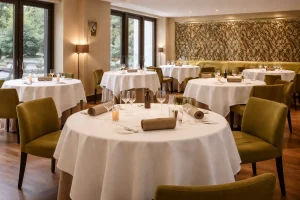
The closures signal a shift not just in individual business models but in the broader landscape of fine dining. The UK’s restaurant industry is evolving , and the Michelin Guide may need to evolve with it.
Here’s a comparative look at traditional fine dining versus modern adaptations:
Changing Landscape of Fine Dining
Traditional Michelin Model Emerging Alternative Models
Multi-course tasting menus Small plates or shared menus
Formal service and dress code Relaxed atmosphere, counter service
White tablecloth environments Industrial or minimalist interiors
Seasonal, premium-only menus Fusion, street-food inspired dishes
Dependence on critical reviews Focus on social media and direct reach
The Michelin Guide has already started to acknowledge alternative styles, recognising pubs, bistros, and modern casual venues. But the tension between recognition and survival remains.
Real-time example:
In 2026, a London-based fine-dining spot, which recently won a Bib Gourmand, launched a pop-up-style street food truck to test new menu items and offset high venue costs. The experiment became so popular it now supplements the main business and draws a younger audience.
This suggests the future may lie in hybrid models, blending high-quality cuisine with adaptable, scalable formats.
Conclusion
In my view, Michelin Guide restaurant closures are not failures in the traditional sense. They’re the result of a system where critical success does not guarantee commercial survival.
These closures reflect an industry struggling under economic pressure, rising expectations, and shifting customer behaviours. As much as we celebrate excellence, we must also question whether the current model of prestige is still viable for most restaurants.
Until the ecosystem adjusts, whether through support structures, flexible models, or a redefinition of what culinary success looks like, we may continue to see more stories like Hide, Bangkok Diners Club, and Hjem. They didn’t close because they weren’t good enough. They closed because sometimes, being “good enough” simply isn’t enough.
Frequently Asked Questions
Why are so many Michelin-rated restaurants shutting down in the UK?
The closures are largely due to rising costs, staffing shortages, and the high pressure of maintaining Michelin standards, which many independent restaurants cannot sustain.
Do Michelin stars increase the cost of running a restaurant?
Yes. To maintain Michelin-level quality, restaurants must invest in top-tier ingredients, equipment, and staffing, significantly raising operational costs.
Is being in the Michelin Guide different from having a Michelin star?
Yes. The Guide includes starred restaurants, Bib Gourmands, and other recommendations. Each category reflects different levels of pricing and excellence.
How do chefs feel about closing award-winning restaurants?
Many express pride in their achievements but admit the emotional and financial toll of sustaining their restaurants under such pressure.
Are independent restaurants more likely to close than chains?
Generally, yes. Independent restaurants lack the financial cushion and scalability that chain models benefit from.
Is there support for struggling fine dining businesses in the UK?
Support exists through government grants and industry groups, but it often falls short of addressing the specific challenges high-end venues face.
Can restaurants return to the Michelin Guide after closing and reopening?
Yes, but they must be reassessed. The Guide typically reviews restaurants anonymously before including them again.