
M20 Kent Vehicle Bridge Closure – What Are the Latest Updates?
 • December 24, 2025
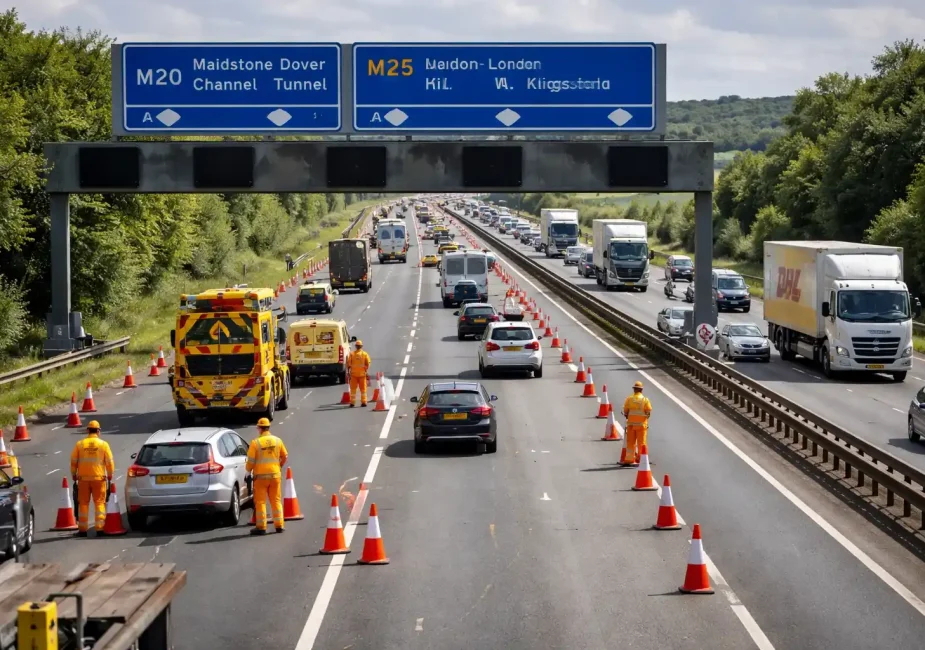
Is the M20 still safe to travel on? That’s the question on the minds of thousands of commuters and freight drivers following a year of recurring closures, incidents and urgent structural repairs. As Kent’s primary motorway connecting London with the Channel Tunnel and Dover, any disruption on the M20 can ripple across the UK’s transport network.
This article provides the latest updates on vehicle bridge closures, critical incidents in 2025, safety measures, and what drivers need to know heading into 2026.
Let’s explore everything currently affecting the M20’s vehicle bridges and what’s being done to improve safety and minimise future disruption.
Is the M20 Bridge in Kent Currently Closed to Vehicles?
As of December 2025, there is no ongoing or permanent closure of any vehicle bridge on the M20 in Kent. However, multiple temporary closures have occurred this year due to serious incidents requiring emergency repairs or inspections.
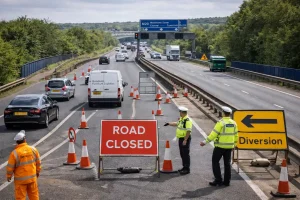
Much of the confusion around closures stems from sudden incidents that led to partial or full motorway shutdowns without long-term warning. These included bridge strikes, joint failures, and structural damage involving both commercial and agricultural vehicles.
While these closures were not long-term, they caused significant disruption and led to heightened monitoring and maintenance across key bridge structures. Most notably, junctions 1 to 3 and 7 to 9 experienced frequent closures, highlighting vulnerabilities in Kent’s infrastructure.
Authorities continue to emphasise that drivers must check real-time updates before travelling through affected areas, as emergency closures can still happen with minimal notice.
What Major Bridge Incidents Have Occurred on the M20 in 2025?
The year 2025 has proven to be one of the most incident-heavy periods for the M20 in recent memory. A series of high-impact events involving bridge structures forced emergency response, full carriageway closures and resurfacing works that disrupted travel and freight movement alike.
These incidents were not isolated, but rather reflective of the increasing pressures on the M20 from heavy traffic volumes and ageing infrastructure. Below is a detailed summary of the most notable events in 2025:
Key M20 Bridge-Related Incidents in 2025:
| Date | Location (Junctions) | Cause | Impact |
|---|---|---|---|
| 18–19 August | J2–J3 (Wrotham) | Tractor fell from A227 bridge | Full closure, resurfacing, emergency repairs |
| 28 August | J8–J9 (Ashford) | Lorry crash and oil spill | Temporary closure, structural inspections |
| 15 September | J7–J8 (Maidstone) | Bridge joint damage | Coastbound closure, urgent replacement work |
| 7 October | J8–J9 (Ashford) | Lorry hit bridge support | One lane closed, overnight bridge repairs |
These incidents have intensified scrutiny from safety authorities, resulting in more frequent inspections and heightened response protocols to protect the integrity of the bridges and the safety of road users.
Why Are There So Many Bridge-Related Closures on the M20?
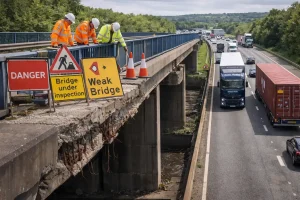
The M20’s location and usage profile make it particularly susceptible to bridge-related disruptions. As a central artery connecting London to the Port of Dover and the Channel Tunnel, it accommodates tens of thousands of vehicles daily, a significant proportion of which are HGVs.
Several factors contribute to the rising number of bridge-related issues on this route:
Structural Strain from Freight Traffic
Heavy goods vehicles cause substantial wear and tear on bridge structures, especially during periods of continuous use. When combined with high axle weights, the strain on expansion joints, barriers, and bridge surfaces increases the likelihood of structural fatigue and damage.
Ageing Infrastructure and Weather Exposure
Many bridge components on the M20 date back decades. Over time, weather conditions such as frost, rain and temperature shifts accelerate the deterioration of materials, particularly at junction points. This degradation often leads to emergency closures to carry out urgent repairs before damage worsens.
Human Error and Oversized Loads
Several 2025 incidents involved vehicle misjudgments. For example, the dramatic tractor fall in August occurred when an agricultural vehicle lost control on the A227 overpass. Lorry drivers have also struck bridge supports due to poorly secured loads or unfamiliarity with local road limitations.
The combination of ageing structures, environmental exposure, and high-impact collisions has made bridge monitoring and maintenance a growing challenge for road authorities along the M20.
Which M20 Junctions in Kent Are Most Affected by Closures?
While the M20 spans a wide stretch of Kent, the most disruption-prone areas in 2025 were concentrated between junctions 1 to 3 and 7 to 9. These areas not only experienced multiple closures but were the focus of some of the year’s most serious incidents.
Disruption Frequency by Junction Segment:
| Junction Segment | Primary Incident Type | Disruption Level (2025) |
|---|---|---|
| J1 – J3 (Swanley to Wrotham) | Tractor fall, bridge closure | High |
| J7 – J9 (Maidstone to Ashford) | Bridge joint failure, lorry crashes | High |
| J4 – J6 (Leybourne to Blue Bell Hill) | Minimal structural issues | Low |
These segments bear the brunt of cross-county logistics and regional freight, increasing their exposure to high-impact incidents. Safety authorities have flagged these areas for continued monitoring and pre-emptive inspections into 2026.
What Safety Actions Are Authorities Taking After These Incidents?
In response to recent incidents on the M20, authorities have ramped up efforts to enhance safety and infrastructure resilience. Immediate actions have included swift deployment of emergency crews and highway engineers to manage closures and carry out urgent repairs.
Following a major review in August, a series of inspections were launched across bridges, focusing on expansion joints, barriers, and structural supports, especially around Wrotham and Maidstone.
To minimise disruption:
- Temporary overnight closures are being used for minor repair works
- Digital monitoring systems are being evaluated for real-time structural assessment
These measures reflect a strategic shift from reactive fixes to proactive maintenance, aiming to reduce emergency closures and build greater public trust in road safety.
Are There Any Long-Term Bridge Repair Plans on the M20?
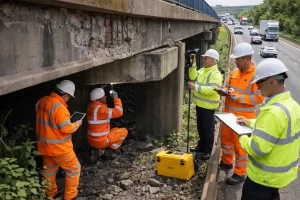
There are currently no confirmed long-term bridge closures on the M20, but recent incidents in 2025 have prompted urgent reviews of its infrastructure. Following the A227 tractor accident, structural engineers conducted a detailed assessment identifying several bridges in need of barrier reinforcements, improved drainage systems, and replacement of worn expansion joints.
While an official repair schedule has not yet been released, overnight lane closures are expected to continue into early 2026 to allow for minor upgrades and maintenance.
These short-term works aim to extend the life of existing structures while comprehensive refurbishment plans are finalised. Authorities are actively reviewing inspection data to prioritise investment, with formal announcements anticipated once project planning and budgeting are completed.
What Are the Best Diversion Routes During M20 Bridge Closures?
When parts of the M20 are closed due to bridge-related incidents, authorities implement diversion routes designed to manage traffic flow efficiently and safely. The choice of diversion depends on the type of vehicle, distance of travel, and extent of closure.
Recommended Routes Based on Journey Type
- Local Drivers: The A20 runs parallel to the M20 and is often the primary alternative route for short trips within Kent. It is supported with temporary signage and adjusted traffic signals during incidents.
- Freight and HGV Drivers: Larger vehicles are better suited to the M2 and A2 corridors, which provide broader lanes and more robust infrastructure. These routes also minimise pressure on rural roads.
- Long-Distance Travel: Motorists heading towards or from London can use the M26 to access the M25, bypassing affected M20 junctions entirely.
Diversion Routes Overview
| User Type | Suggested Route | Reason |
|---|---|---|
| Local Commuters | A20 | Proximity and ease of access |
| HGV & Freight Vehicles | M2 / A2 | Larger capacity for heavy vehicles |
| Long-Distance Drivers | M26 via M25 | Avoids high-risk sections and congested junctions |
Drivers should always follow official signage during active closures, as GPS systems may not account for road safety considerations or temporary traffic orders.
What Should Drivers Do When Travelling on the M20 in Kent?
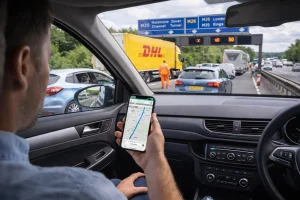
With unpredictable disruptions occurring throughout 2025, drivers must adopt a more proactive approach when using the M20. Preparation is key to avoiding delays or getting caught in emergency closures.
Before starting your journey, it is essential to check live traffic data from trusted sources and remain informed of any active alerts or incidents. Real-time navigation apps can provide rerouting suggestions, but official diversion routes should be prioritised.
In the event of sudden closures, follow diversion signs and avoid unauthorised routes, especially those involving rural backroads not designed for heavy traffic.
Other steps include:
- Keeping a travel essentials kit in the car (water, power bank, first-aid)
- Scheduling trips outside of known freight-heavy hours
- Enabling push notifications for live traffic alerts on your mobile device
By staying informed and prepared, drivers can minimise disruption and travel safely even during high-risk periods.
How Can You Stay Updated About M20 Kent Vehicle Bridge Closures?
Given the speed at which bridge-related incidents unfold, having access to reliable and real-time information is crucial. Several tools and platforms provide timely updates that can help drivers avoid delays and navigate safely.
Use a combination of sources for the most accurate information:
- Official Motorway Traffic Portals: These offer verified updates on closures, diversions, and inspection works.
- Live Navigation Apps: Platforms like Google Maps and Waze integrate real-time reports from other drivers, offering adaptive routing.
- Radio Traffic Reports: Useful during morning and evening commutes when road conditions can change rapidly.
- Social Media Updates: Many traffic agencies provide alerts on platforms like X (formerly Twitter), including incident maps and diversion advice.
Subscribing to notifications or bookmarking trusted traffic pages ensures that you’re always ahead of potential disruptions.
Why Is M20 Bridge Safety a National Priority?
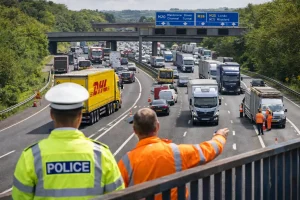
The M20 serves not only Kent but also the entire southeast of England as a major commercial and commuter route. Its position as a connector to Dover and the Channel Tunnel makes it one of the most strategic motorways in the UK transport infrastructure.
Any incident affecting its bridges has the potential to delay freight, interrupt international trade, and disrupt thousands of daily journeys.
The 2025 events, particularly the tractor crash on the A227 bridge, have demonstrated how quickly a single incident can lead to full closures, air ambulance deployments, and regional congestion.
In response, safety has become a top priority. National agencies are reviewing digital monitoring solutions, structural upgrades, and coordinated emergency responses to ensure such incidents are managed more swiftly and prevented where possible.
What Can You Do to Avoid Disruption During M20 Bridge Closures?
While some incidents are unpredictable, drivers can still take several steps to avoid unnecessary delays:
- Plan journeys for off-peak hours
- Monitor live traffic reports before and during travel
- Use official diversion signage over app-suggested routes
- Consider alternative transport for short distances
- Prepare for longer journeys by carrying essentials
These small adjustments can significantly improve your travel experience during periods of high disruption.
Conclusion
Although the M20 currently has no permanent bridge closures, the frequency and severity of incidents in 2025 have made travel less predictable. As safety assessments and minor upgrades continue into 2026, being informed and flexible remains essential.
Drivers are encouraged to rely on verified traffic updates, plan ahead, and cooperate with diversion routes to keep Kent’s roads moving safely and efficiently.
Frequently Asked Questions
Are any M20 bridges fully closed right now in Kent?
No. There are currently no full closures, but temporary shutdowns may occur due to emergency repair work.
How often are M20 bridge structures inspected?
Bridge inspections are conducted regularly, with increased frequency after incidents or when signs of structural fatigue are detected.
Is it safe to use the M20 during holiday travel in Kent?
Yes, but travellers should monitor live updates and avoid peak times to reduce disruption risk.
What happened during the August 2025 tractor bridge incident?
A tractor fell from the A227 overpass near Wrotham, prompting full motorway closure and emergency repairs.
Are overnight closures expected in early 2026?
Yes, overnight maintenance closures are likely to continue for minor repairs and inspections.
Which bridge was damaged in the September 2025 lorry crash?
The incident occurred between junctions 7 and 8, where a lorry struck a bridge joint, causing structural issues.
How can I report dangerous loads or bridge risks on Kent roads?
You can report them to the relevant road safety authority using their hotline or online incident reporting tool.