
New Bin Collection Rules in England 2026 – What Households Must Know
 • December 30, 2025
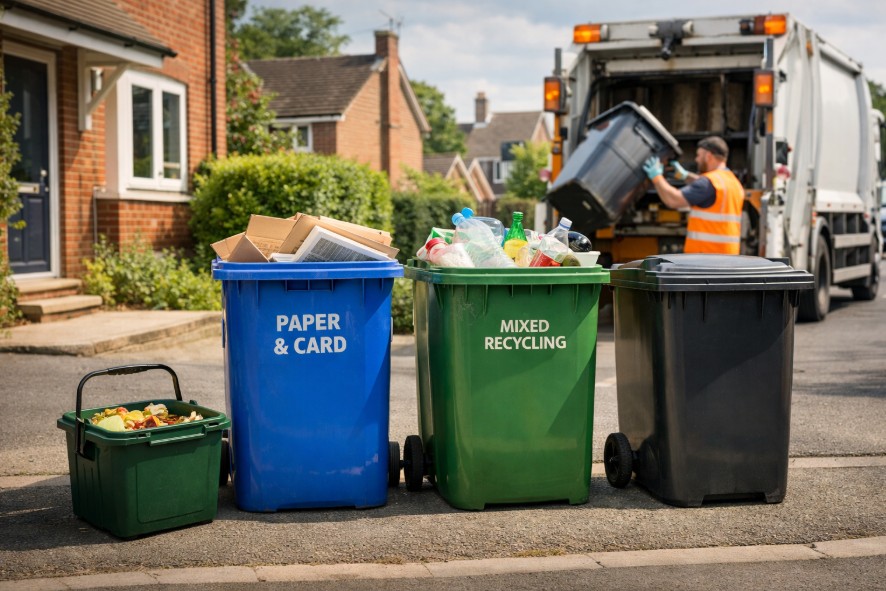
England’s new bin collection rules changed on 31 March 2026 under the government’s “Simpler Recycling” reforms. Households must now separate food waste, paper and card, dry recyclables and general rubbish more consistently than before.
Many councils are introducing extra bins or caddies, weekly food waste collections and less frequent general rubbish collections.
Key changes households now need to know include:
- Weekly food waste collections are now required across England
- Most homes may now need up to four separate bins or containers
- Paper and card must usually be separated from other recycling
- General rubbish collections may move to fortnightly or three-weekly
- Some councils are still rolling out the changes later in 2026
If you live in London or elsewhere in England, it is important to follow your council’s updated guidance, as the new England bin collection rules 2026 are now in force.
What Are the New Bin Collection Rules in England for 2026?
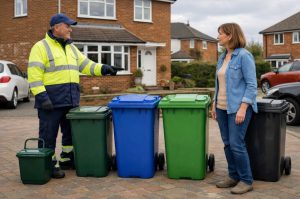
The new England bin collection rules 2026 are part of the government’s nationwide Simpler Recycling policy. The aim is to make recycling consistent across England so that households know exactly what goes in each bin, regardless of where they live.
Before the changes, neighbouring councils often had completely different rules. One council might accept glass and food waste, while another might not. The result was confusion, more contamination and lower recycling rates.
Under the new rules, councils must now collect the same core types of household waste separately. These are food waste, paper and card, dry recyclables such as plastic, metal and glass, and residual rubbish that cannot be recycled.
Circular Economy Minister Mary Creagh said:
“We are ending the bin collections postcode lottery and making it easier for people to recycle wherever they live.”
For many households, the biggest visible difference is the arrival of a new food waste caddy and possibly an extra wheelie bin for paper and card.
When Do the New England Bin Collection Rules Start?
The rules officially came into force on 31 March 2026. Councils across England are now legally required to provide separate collections that match the new Simpler Recycling system.
However, not every council was ready when the deadline arrived. According to BBC reporting, around one in four councils expected delays because they were still waiting for new vehicles, extra staff or funding arrangements.
Some local authorities have been given transitional agreements that allow them to introduce food waste collections later. In a few cases, existing long-term waste contracts mean full implementation may not happen until much later.
The table below shows the national timetable for the changes:
| Date | What Changed |
|---|---|
| March 2025 | Businesses and workplaces began separating waste |
| 31 March 2026 | New household recycling and food waste rules started |
| Throughout 2026 | Councils continue introducing new bins and collection schedules |
| March 2027 | Plastic bags and plastic film collections are expected to expand |
Even if your council is still introducing the new system, you should continue using the service currently provided and follow local instructions carefully.
Why Is England Changing Household Bin Collection Rules in 2026?
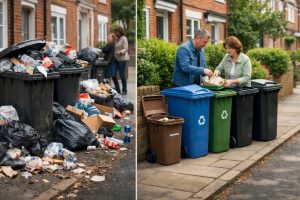
England is updating its bin collection rules to fix inconsistencies in the recycling system. Too much recyclable waste has been going to landfill or being burned, reducing overall efficiency. The new rules aim to create a clearer, more consistent approach across the country.
As Carla Brian, Director of Public Affairs and Partnerships at Biffa, explained:
“Simpler Recycling will give households clear, consistent guidance on what can be recycled wherever they live, making it much easier for people to know which bin to use.”
The key goals of these changes include:
- Improving national recycling rates
- Reducing carbon emissions
- Making waste sorting easier for households
- Supporting the target of recycling 65% of waste by 2035
Another major issue is contamination. When incorrect items are placed in recycling bins, entire loads can be rejected, leading to more waste and higher costs. A standardised system should help improve efficiency across recycling centres.
What Waste Will Households Need to Separate Under the 2026 Rules?
Under the new England bin collection rules 2026, households must now separate rubbish into four main waste streams.
This is one of the biggest changes introduced under Simpler Recycling and is designed to make recycling easier and more consistent across England.
Instead of putting most items into one recycling bin, you now need to sort waste into food and garden waste, paper and card, dry recyclables and residual waste.
Food and Garden Waste
Food waste must now be collected separately every week. Councils are generally providing a small indoor caddy, usually around 5 litres, and a larger outdoor food waste bin of around 23 litres.
You can usually put the following in your food waste caddy:
- Fruit and vegetable peelings
- Leftover meals, bread, pasta and rice
- Meat, fish and bones
- Tea bags, coffee grounds and eggshells
Garden waste is included in the wider Simpler Recycling framework, but many councils still treat it as a separate paid service. If you already pay for a brown garden waste bin, that is unlikely to change.
Paper and Card
Paper and card must usually be collected separately from other recycling because paper can become damaged or contaminated when mixed with glass or food residue.
Typical items that belong in this bin include:
- Newspapers and magazines
- Cardboard boxes
- Junk mail and envelopes
- Cereal boxes and paper packaging
Greasy pizza boxes, wet cardboard and heavily stained paper should still go in general waste.
Dry Recyclables and Residual Waste
Dry recyclables include plastic bottles, metal tins, aluminium cans, cartons and glass jars. These items usually go into your mixed recycling bin, while residual waste is the non-recyclable rubbish that remains after everything else has been separated, such as nappies, pet waste and broken household items.
Claire Shrewsbury from WRAP described the reform as:
“The biggest shake-up in recycling policy in England in twenty years.”
By separating these waste streams correctly, households should find that their general rubbish bin fills up much more slowly.
Over time, this will help councils recycle more, reduce landfill waste and make the new England bin collection rules 2026 easier to follow
Will Every Household in England Need Four Bins?
Not every household will receive exactly four bins, but many will now have four separate waste streams. These are usually:
- Food waste
- Paper and card
- Mixed recycling
- General rubbish
Some councils may provide separate containers, while others may continue using sacks, shared bins or combined recycling systems where space is limited.
Flats and communal properties will also be included in the new rules. Residents in blocks of flats may not receive individual wheelie bins, but they should still have access to separate recycling and food waste facilities.
| Waste Stream | Typical Container |
|---|---|
| Food waste | Indoor caddy and outdoor food waste bin |
| Paper and card | Separate wheelie bin or sack |
| Mixed recycling | Existing recycling bin |
| Residual waste | Black or grey general rubbish bin |
A household in Barnet, for example, may already have separate food waste collections and therefore see very little change. By contrast, a household in Babergh or Mid Suffolk may now receive both a new paper bin and a food waste caddy.
What Can Go in Each Bin Under the New Recycling Rules?
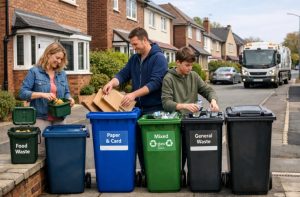
One of the biggest reasons for confusion under the old system was that different councils accepted different materials. Under the new England bin collection rules 2026, the aim is to make bin contents far more consistent.
Knowing what belongs in each bin is now more important than ever because contaminated recycling may not be collected and could even lead to warnings or fines.
What Belongs in the Food, Recycling and Paper Bins?
Knowing what goes in each container is now more important than ever because contamination may lead to bins not being emptied.
| Bin Type | What You Can Put In | What You Cannot Put In |
|---|---|---|
| Food Waste | Peelings, leftovers, meat, bones, tea bags | Packaging, liquids, nappies |
| Paper and Card | Newspapers, boxes, envelopes | Wet paper, greasy pizza boxes |
| Mixed Recycling | Plastic bottles, cans, glass jars, cartons | Polystyrene, PVC, electricals |
| General Waste | Nappies, pet waste, broken items | Recyclables, food waste |
Most councils will also ask households to rinse jars, tins and plastic containers before putting them in the recycling bin.
Paper and cardboard should be kept dry because wet paper is difficult to recycle and can spoil other materials in the same collection.
What Must Stay in the General Waste Bin?
Some items still cannot be recycled under the new system. These include:
- Dog poo and pet waste
- Nappies and sanitary products
- Wet wipes
- Broken crockery and ceramics
- Polystyrene and PVC packaging
Dog poo must always go in the general rubbish bin, securely bagged. It should never go in a recycling or food waste bin because it contains harmful bacteria.
A homeowner in Croydon recently described the change after receiving new bins:
“At first I thought having another caddy would be a hassle, but after a few weeks the black bin was much emptier and there were fewer smells in the kitchen.”
By following the new sorting rules carefully, households should quickly find that recycling becomes simpler and that far less rubbish ends up in the general waste bin
Will Food Waste Be Collected Every Week and General Rubbish Less Often?
Yes. Weekly food waste collection is now one of the main legal requirements under the new England bin collection rules 2026.
At the same time, many councils are reducing how often they collect general rubbish. Some areas continue to collect black bins fortnightly, while others are moving to a three-weekly cycle.
The reason is simple: once food waste, paper and recyclable materials are removed, much less rubbish remains in the general waste bin.
A refuse worker in south-east England explained how this affects households:
“When food is left in the black bin for two or three weeks, that’s when you start getting flies and smells. The new food caddies should stop most of that happening.”
To avoid odours, many councils recommend lining your kitchen caddy with compostable bags or newspaper and emptying it regularly.
What If Your Local Council Is Not Ready by March 2026?
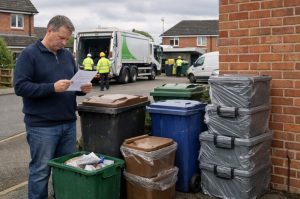
Although the new rules are in force, some councils are still in the process of rolling them out. Around 79 councils have reported delays due to shortages of specialist vehicles, recruitment challenges, and funding issues.
If your council has not yet introduced separate food waste or paper collections, you should not change how you use your bins unless officially advised. Local authorities will provide updates through letters, collection calendars, or information packs explaining when the changes apply in your area.
You may also notice differences between nearby areas, especially in places like London, where boroughs are introducing changes at different speeds.
To stay updated:
- Check your local council website regularly
- Follow official guidance before making any changes
This ensures you avoid confusion and continue disposing of waste correctly.
How Can Households Prepare for the New England Bin Collection Rules Now?
The new England bin collection rules 2026 are now in place, so the best way to avoid confusion is to prepare early and get used to the new system.
Most households will have at least one extra bin or caddy, and some councils are also changing collection schedules. A few simple steps can make the transition much easier.
Make Space for Extra Bins
Many households now need space for at least one extra container. If you have a small front garden, driveway or communal area, think about where the new caddy or wheelie bin will be stored.
Learn Your Council’s New Collection Schedule
Collection days may not change, but some councils are introducing longer gaps between black bin collections. Keep your new collection calendar somewhere visible so you know which bin goes out each week.
Avoid Contaminating Recycling
The easiest way to avoid problems is to rinse containers, flatten cardboard and place items in the correct bin. Small mistakes can contaminate an entire load.
A few practical habits can make the transition easier:
- Rinse cans, jars and plastic containers before recycling
- Use compostable liners in food waste caddies
- Keep paper and cardboard dry
- Check local guidance before recycling unusual items
By preparing now and following your council’s updated instructions, the new recycling system should quickly become part of your normal routine.
Over time, households are likely to produce less general rubbish, experience fewer smells and recycle more effectively.
Conclusion
In summary, the new England bin collection rules 2026 are designed to make recycling simpler, clearer and more consistent for every household.
By separating food waste, paper, recycling and general rubbish correctly, you can reduce landfill waste and avoid problems with missed collections.
While some councils are still rolling out the changes, the new system is now becoming the standard across England. Checking your local council guidance and getting used to the new bins early will make the transition much easier
FAQs About England Bin Collection Rules 2026
Will all councils in England eventually follow the same recycling rules?
Yes. Councils may introduce the changes at different times, but they must all eventually provide the same core waste collections.
Will I receive a new food waste caddy automatically?
Most councils are delivering new food waste caddies and extra bins directly to households. If you have not received yours, contact your council.
Can paper and cardboard still go in the normal recycling bin?
Usually no. Most councils now require paper and card to be separated, although some may still allow mixed collection where space or local systems require it.
Will plastic bags and wrapping be collected?
Not everywhere yet. Most councils are expected to begin collecting plastic film and bags from March 2027.
Which bin should dog poo go in?
Dog poo should always go in the general rubbish bin, never in food waste, garden waste or recycling.
What if I do not have space for more bins?
Councils may offer smaller bins, sacks or shared collection points for properties with limited space.
Can households be fined for using the wrong bin?
Councils can take action if households repeatedly contaminate recycling or misuse bins. In some cases, fines may apply, so it is important to follow the local rules carefully.