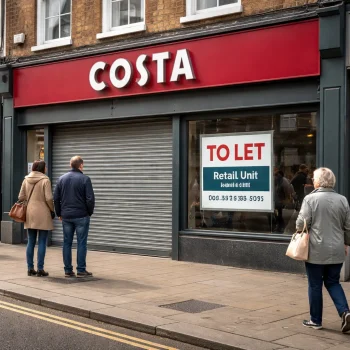
What Is Causing Costa Coffee Losses to Double in the UK?
 • January 2, 2026
Costa Coffee, once a high-street staple and the UK’s largest coffee chain, has seen its financial performance deteriorate rapidly. In just a year, operating losses more than doubled from £5.8 million in 2023 to £13.5 million in 2024, despite a modest rise in sales. The concerning figures raise questions about what is truly behind the coffee giant’s downturn in the UK market.
Key reasons contributing to the losses include:
- Heightened competition from budget and premium rivals
- Economic pressures from inflation and rising operating costs
- Shifts in consumer behaviour and spending patterns
- Stalled takeover efforts by parent company Coca-Cola
This blog explores each of these factors in depth to understand what’s driving Costa’s decline, and whether recovery is possible.
How Severe Are Costa Coffee’s Latest Financial Losses?

Costa’s recent financial figures paint a stark picture. The company’s operating loss widened from £5.8 million in 2023 to £13.5 million in 2024, more than doubling within 12 months. While total sales increased by a marginal 1% to £1.2 billion, the business failed to translate this into profit due to rising costs and stagnant footfall.
To grasp the scale of the decline, it’s worth noting that Costa regularly reported profits between £60 million and £100 million prior to 2021. Its 2024 figures mark the brand’s weakest performance since the post-Covid recovery period, suggesting a deeper operational issue beyond temporary setbacks.
The contrast between increasing revenue and deepening losses suggests that Costa is not suffering from falling demand but rather from an inability to manage its cost structure in today’s economic climate.
Who Are Costa Coffee’s Biggest Competitors in the Current Market?
Costa Coffee now operates in one of the most competitive café markets in the UK, where value-led chains and experience-driven brands are rapidly reshaping consumer preferences.
Budget Rivals Gaining Ground
Over recent years, Costa has seen significant market share erosion due to the rise of cut-price competitors. Brands like Greggs, McDonald’s, and Pret A Manger have all expanded their coffee offerings, often bundling them into affordable meal deals that appeal to cost-conscious consumers.
These chains benefit from broader foot traffic and diversified product offerings, giving them an advantage when consumer wallets are tight. McDonald’s in particular has successfully integrated its McCafé concept across UK locations, often undercutting Costa’s pricing.
Premium and Indie Chains Capturing Experience-Driven Consumers
On the other end of the spectrum, Costa is facing increased competition from boutique and premium coffee chains. Emerging players such as Blank Street, Black Sheep Coffee, and Gail’s are not just offering coffe, they’re delivering an elevated brand experience.
These brands appeal to younger consumers, particularly Gen Z, with unique drinks (e.g., flavoured matcha lattes), better-designed stores, and a more “independent” aesthetic. This presents a challenge for Costa, which is often perceived as a more corporate or middle-of-the-road option.
Has the UK Coffee Market Reached “Peak Costa”?

The idea of “Peak Costa” refers to the possibility that the brand may have reached its maximum potential in the UK market. With over 2,700 locations across the UK and Ireland, Costa’s sheer scale may now be working against it.
Retail analysts suggest that Costa is now more exposed than its competitors to fluctuations in footfall, particularly on the high street. As city centres experience fewer shoppers due to hybrid work models and changes in commuter behaviour, Costa’s performance is especially vulnerable.
Store Over-Saturation
Costa’s aggressive expansion strategy, once a strength, may now be limiting its agility. With outlets on almost every major high street, shopping centre, and transit hub, the brand is struggling to maintain profitability per store.
Brand Fatigue
Many consumers now view Costa as the default or safe option rather than an exciting destination. In contrast, newer coffee chains offer novel experiences and a more dynamic image that aligns with modern customer values around lifestyle, sustainability, and authenticity.
What Economic Pressures Are Affecting Costa’s Profit Margins?
One of the most significant contributors to Costa’s rising losses is the set of economic headwinds currently affecting the entire hospitality sector.
Inflation remains stubbornly high, particularly for food and beverage businesses. The cost of Arabica coffee beans has surged dramatically, now priced at around $4 (£3) per pound, more than double the rate in late 2023. This has forced many coffee retailers to raise prices just to maintain margins.
In addition to raw materials, Costa is grappling with higher operating costs:
- Labour expenses: The UK’s rising National Living Wage, along with increased National Insurance contributions, has added pressure to staffing budgets.
- Utility costs: Energy bills for commercial properties have spiked in the past two years, affecting all high-street retailers.
- Lease and rental agreements: Legacy store leases in prime locations continue to demand high rents, squeezing margins further.
All of these factors mean that even small increases in sales do not offset the disproportionately high costs of running operations across thousands of UK outlets.
Why Is Costa Coffee Struggling Despite Higher Sales?

Costa’s revenue rose by 1% year-on-year, reaching £1.2 billion. However, this slight boost in sales was not enough to compensate for its soaring operating expenses. This contradiction raises an important question: why can’t Costa turn sales into profits?
Several dynamics are at play. First, the marginal revenue growth suggests that the brand is not attracting significant new customer segments. Instead, it is likely relying on a loyal base, many of whom may be reducing their average spend or visiting less frequently.
Second, Costa appears to be lagging in product innovation. While competitors are introducing seasonal beverages, subscription models, and diversified menu options, Costa’s offerings have remained relatively static. This lack of novelty reduces its appeal in an increasingly competitive marketplace.
Is Costa Coffee Still Competitive on Pricing?
Coffee pricing has become an essential part of the competition among UK chains. Despite perceptions of Costa as a mid-range option, recent price comparisons show that its drinks are not always the cheapest.
Coffee Price Comparison (2024):
Beverage Costa Coffee Starbucks Pret A Manger Caffè Nero
Medium Cappuccino £4.10 £4.85 £4.00 £4.00
Medium Latte £4.10 £4.85 £4.00 £4.00
Flat White £3.99 £4.30 £4.00 £4.10
Chai Latte £4.15 £5.45 £4.25 £4.55
Medium Americano £3.50 £4.40 £3.70 £3.45
The table illustrates that while Costa is cheaper than Starbucks, it is more expensive than Pret and Caffè Nero on several drink categories. This pricing strategy may be misaligned with its current brand position, particularly when value-for-money is increasingly important to consumers.
What Role Has Coca-Cola Played in Costa’s Struggles?
Coca-Cola acquired Costa Coffee in 2018 for £3.9 billion, intending to expand its portfolio into hot beverages and capitalise on the global coffee boom. However, this vision has not materialised as expected.
In mid-2024, Coca-Cola began exploring the sale of Costa, reportedly valuing it at just £2 billion. Talks with TDR Capital, a UK-based private equity firm, have stalled due to pricing disagreements. This highlights the lack of investor confidence in Costa’s current performance and future potential.
In a candid remark, Coca-Cola CEO James Quincey admitted that the Costa acquisition had “not quite delivered” and was “not where we wanted it to be from an investment hypothesis point of view.”
This underperformance has also been reflected in Coca-Cola’s wider earnings, with a 3% drop in global coffee sales largely attributed to Costa’s results in the UK.
For readers interested in more details on Coca-Cola’s decision to explore selling Costa, you can review the Financial Times report on Coca-Cola’s failed Costa takeover negotiations.
Are Consumer Habits Driving Costa Coffee’s Decline?
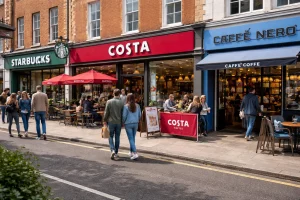
Modern consumers are more value-conscious and experience-driven than ever before. This dual trend poses a unique challenge for legacy brands like Costa, which often occupy a middle ground that no longer appeals strongly to either camp.
Younger consumers, in particular, are gravitating towards brands that align with their values, authenticity, sustainability, and unique in-store experiences. This demographic is also more likely to discover and support independent coffee shops that offer something beyond a standard flat white.
Meanwhile, budget-focused shoppers are bypassing Costa in favour of cheaper, more convenient alternatives. In this climate, Costa must either reimagine its value proposition or risk being squeezed from both ends of the market.
Can Costa Coffee Recover from Its Financial Setbacks?
Recovery is possible, but only if Costa adapts strategically. There are several routes the company might explore:
- Reposition the brand to better appeal to younger, experience-driven customers
- Streamline operations by closing underperforming stores
- Invest in menu innovation, adding plant-based options and customisable drinks
- Focus more aggressively on international markets, where brand fatigue may be less pronounced
- Reassess pricing strategy to improve competitiveness
Costa’s future may also depend on whether Coca-Cola decides to reinvest in revitalising the brand or proceeds with a sale. A new owner could bring a fresh perspective and renewed focus, but only if the underlying issues are addressed.
Conclusion
Costa Coffee’s losses in 2024 are not the result of a single misstep but rather a convergence of factors. Intense competition, economic pressures, outdated brand positioning, and changing consumer expectations have all contributed to its financial slump.
Unless Costa takes decisive action either under Coca-Cola’s leadership or a new owner, the company may continue to see declining relevance in the UK’s dynamic coffee landscape. However, with the right strategic changes, there is still room for Costa to reclaim its place as a market leader.
Frequently Asked Questions
Why are Costa Coffee’s losses increasing despite higher revenue?
The company’s operating costs, including labour, rent, and commodity prices, have risen faster than its revenue. A modest sales increase has not been sufficient to offset these growing expenses.
How much did Coca-Cola pay for Costa Coffee?
Coca-Cola acquired Costa Coffee for £3.9 billion in 2018 but is now looking to sell it for closer to £2 billion due to underperformance.
Who are Costa Coffee’s main rivals in the UK?
Key competitors include budget chains like Greggs and McDonald’s, as well as premium or boutique brands like Gail’s, Black Sheep Coffee, and Blank Street.
What’s meant by “Peak Costa” in the UK market?
It refers to the notion that Costa has expanded as far as it can in the UK and is now facing diminishing returns due to market saturation and changing consumer habits.
Are Costa’s prices higher than competitors?
Costa is generally more expensive than Pret and Caffè Nero for most drinks, but cheaper than Starbucks. This price positioning may not reflect sufficient perceived value for many customers.
Is Coca-Cola planning to sell Costa Coffee?
Yes, Coca-Cola has explored selling Costa, with private equity firm TDR Capital as a potential buyer. However, negotiations have hit a stumbling block over the sale price.
How has inflation affected UK coffee chains like Costa?
Rising costs of goods, especially coffee beans and labour, have significantly impacted margins for coffee chains, making it harder to remain profitable without increasing prices.