UK Civil Service Pay Rise 2026 – Latest Updates and When Will the New Pay Rates Start?
 • March 12, 2026

2026 Fiscal Briefing
The UK Civil Service is entering a critical window as 2026 Pay Remit Guidance approaches. Recent breakthroughs, particularly the Home Office’s multi-year deal, have set a new precedent for salary uplifts and workforce reform.
Home Office Peak
For 2026/27 Cycle
PCS Ballot
Voting Deadline
National Target
PCS Minimum Claim
Strategic Insights: The 2026 Pay Landscape
The Cabinet Office is expected to release the 2026/27 Pay Remit Guidance in mid-Spring. However, the Home Office has already moved ahead with a landmark three-year deal. This package offers 5.5% for 2026–27, significantly outperforming the previous standard baseline of 3.25%.
| Civil Service Grade | 2026 Est. Salary (National) | Status |
|---|---|---|
| Administrative Officer (AO) | £30,920 | Pending Ballot |
| Executive Officer (EO) | £36,000 | Negotiating |
| Grade 7 | £51,000 – £64,000 | Under Review |
Implementation Timeline
Most departmental pay increases for 2026 will be backdated to 1 July 2025. If the current Home Office PCS ballot (ending March 30) passes, arrears are expected to hit payslips as early as May 2026.
Is the UK Civil Service Pay Rise for 2026 Confirmed Yet?

As of March 2026, the UK civil service pay rise for 2026 has not been fully confirmed across all government departments. Instead, individual departments continue negotiating pay settlements within limits set by government pay guidance.
Each year, the Cabinet Office releases Civil Service Pay Remit Guidance that outlines the average pay increase departments can offer staff.
For the 2025–26 financial year, departments were allowed an average rise of 3.25%, with an additional 0.5% flexibility for addressing issues such as low pay or retaining specialist skills.
The guidance for 2026–27 is expected later in spring 2026, so many departments are waiting before finalising pay decisions.
A Home Office spokesperson noted:
“The three-year pay deal we have been negotiating with trade unions follows a detailed assessment of pay and conditions across the department.”
This reflects a wider trend across government, where departments are increasingly seeking longer-term pay agreements to provide more certainty for staff and improve workforce planning.
What Was the Civil Service Pay Award for 2025-26?
To understand expectations for the civil service pay rise 2026, it is important to look at the previous pay settlement for the 2025–26 financial year.
The government accepted recommendations from the Senior Salaries Review Body and issued official guidance allowing departments to provide moderate salary increases.
Key elements of the 2025–26 pay framework included:
- Average pay awards of up to 3.25% across departments
- An additional 0.5% flexibility pot for addressing pay anomalies
- Specific provisions for recruitment and retention in high-skill roles
This framework aimed to balance public sector budget constraints with the need to maintain a competitive workforce.
Civil Service Pay Framework 2025-26
| Pay Element | Details |
|---|---|
| Standard Pay Award | Up to 3.25% average increase |
| Flexibility Allowance | Additional 0.5% available |
| Implementation | Typically aligned with departmental settlement dates |
| Target Areas | Low pay, recruitment and retention challenges |
Although the award represented an increase compared with previous years, some unions argued it did not fully keep pace with inflation or rising living costs.
FDA Assistant General Secretary Lauren Crowley commented:
“While we welcome the decision to honour pay review body recommendations, this year’s civil service pay award still falls short of inflation.”
These concerns are one of the reasons unions are pushing for higher increases in the 2026 pay round.
What Is the Latest Update on the Home Office Pay Deal for 2026–27?
The most concrete development in the civil service pay rise 2026 discussion is a proposed three-year pay deal within the Home Office, which could set a precedent for other departments.
Key details of the proposed three-year pay deal:
The agreement would introduce a structured pay increase across three financial years:
- 6% pay rise for 2025–26
- 5.5% increase for 2026–27
- 4% increase for 2027–28
The deal is currently subject to a ballot among members of the PCS union, which ran between 9 and 30 March 2026.
Changes to Terms and Conditions
In return for higher pay increases, the agreement also includes changes to employment conditions. These changes are designed to ensure the deal remains cost-neutral overall for the department.
Some proposed adjustments include:
- Transition to modernised employment terms from July 2026
- Reforms to certain allowances and benefits
- Reduction of agency workers and conversion to permanent roles
- Adjustments to working hours and leave arrangements
The package also includes improvements in family-related benefits such as extended maternity and paternity leave provisions.
Example pay rates under the proposal
| Grade | National Pay Rate | London Pay Rate |
|---|---|---|
| Administrative Officer (AO) | £30,920 from July 2026 | £34,920 |
| Executive Officer (EO) | £36,000 from 2027 | £40,000 |
| Administrative Assistant (AA) | £14.36 per hour rising to £15+ | Higher London uplift |
The PCS union has described the proposal as one of the most significant pay improvements offered to the department in recent years.
When Will the New Civil Service Pay Rates Start in 2026?

A key question surrounding the civil service pay rise 2026 is exactly when new pay rates will begin. In practice, the start date can vary significantly depending on the department and the terms of any negotiated settlement.
Most civil service pay awards follow the financial year cycle, meaning salary adjustments often take effect around April or later in the year. However, individual departments may implement pay increases at different times depending on when negotiations are finalised.
Several factors influence the start date:
- Departmental pay negotiations
- Cabinet Office pay remit guidance
- Union consultations or ballots
- Payroll implementation schedules
In some cases, new salary levels are introduced later in the year but backdated to the official settlement date, meaning employees receive a lump-sum payment covering the difference.
Typical Pay Increase Timeline
| Stage | Expected Timing |
|---|---|
| Cabinet Office Pay Remit Guidance | Spring each year |
| Department negotiations | Spring to summer |
| Implementation of new pay rates | Mid-year in many departments |
| Backdated payments | Often paid once agreements are finalised |
Because of these variations, civil servants in different departments may see pay changes applied at different times.
Will All Civil Servants Receive the Same Pay Rise in 2026?
One common misconception is that every civil servant receives exactly the same pay increase each year. In reality, pay awards can vary significantly across departments and grades.
Although the central government sets the overall pay policy, departments have the flexibility to structure their own pay settlements within that framework. This means that pay increases may differ depending on job role, department, and geographic location.
Several factors influence how much an individual civil servant receives:
- Department-specific negotiations
- Pay band or grade level
- Regional pay differences, including London weighting
- Position within the salary range
For example, employees at the lower end of a pay band may receive larger increases to address pay compression or minimum wage pressures.
This is particularly relevant in 2026 as the National Living Wage is expected to rise to £12.71 per hour, which may affect the lowest civil service grades.
How Does the Senior Civil Service Pay Framework Affect 2026 Pay Awards?
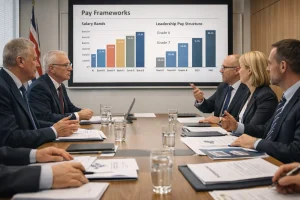
The Senior Civil Service (SCS) operates under a different pay framework from most civil service roles. Instead of departmental negotiations, SCS salaries are set centrally based on recommendations from the Senior Salaries Review Body (SSRB).
This independent body reviews senior public sector pay and advises the government on appropriate salary adjustments.
Current SCS Pay Structure
For the 2025–26 pay round, the government accepted the SSRB recommendation that all eligible SCS members should receive a 3.25% consolidated increase to base pay. This increase was applied across the senior leadership grades from 1 April 2025.
Senior Civil Service Pay Bands
| Pay Band | Minimum Salary | Maximum Salary |
|---|---|---|
| SCS Pay Band 1 | £81,000 | £117,800 |
| SCS Pay Band 2 | £100,000 | £162,500 |
| SCS Pay Band 3 | £130,000 | £208,100 |
These ranges came into effect from 1 April 2025 and apply across the entire civil service.
Future SCS Pay Review
The government has also indicated that a fundamental review of the SCS pay framework may take place for the 2026–27 pay round.
The aim is to address recruitment and retention challenges, particularly in specialist roles such as digital transformation and major project delivery.
A Cabinet Office official noted:
“The upcoming review will consider how the Senior Civil Service pay framework can better support leadership capability across government.”
Any reforms emerging from this review could influence pay levels for senior officials in the coming years.
How Does the Civil Service Pension Increase in 2026 Affect Employees?
Alongside salary discussions, many civil servants are also interested in pension changes scheduled for 2026. Civil service pensions are adjusted annually based on inflation figures, ensuring that retirement benefits maintain their purchasing power.
From 6 April 2026, civil service pensions are set to increase by 3.8%, reflecting the Consumer Price Index (CPI) figure recorded in September 2025.
Although this adjustment benefits pensioners and future retirement income, it is important to understand that pension uprating is separate from salary increases.
For employees still working in the civil service, pension contributions will continue to be calculated based on their current salary and pension scheme rules.
Why Are Unions Pushing for Larger Civil Service Pay Rises in 2026?
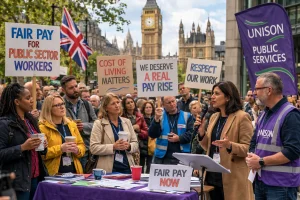
Trade unions representing civil servants have argued that higher pay increases are needed to address long-term wage stagnation across the public sector.
Many union representatives point to several ongoing challenges:
- Inflation reducing real-terms pay
- Recruitment difficulties in specialised roles
- Retention problems in areas such as digital and technology
- Competition from higher private-sector salaries
One union representative stated:
“Civil service salaries continue to fall behind comparable roles in the wider labour market.”
This argument has become particularly prominent as government departments attempt to recruit staff with skills in data, cybersecurity, artificial intelligence, and digital services.
Some unions are also advocating for the creation of an independent pay review body covering all civil service grades, which they believe would make pay decisions less political.
What Should Civil Servants Expect Next for the 2026 Pay Round?
Looking ahead, several developments are likely to shape the outcome of the civil service pay rise 2026 negotiations.
In the coming months, the Cabinet Office is expected to publish official pay remit guidance for the 2026-27 financial year. This document will set the overall framework that departments must follow when determining salary increases.
After the guidance is released, departments will typically begin finalising negotiations with trade unions. These discussions can lead to either standard pay settlements or more complex multi-year deals like the Home Office proposal.
A Civil Servant’s Perspective
While official announcements and negotiations often dominate the headlines, the civil service pay rise 2026 has a direct impact on the everyday lives of government employees.
During research for this article, a civil servant shared that many staff across departments are closely following the ongoing pay discussions.
“Everyone is waiting to see what happens with the new pay deal. If the rise goes through, it could finally make a noticeable difference for many of us.”
This perspective reflects the wider sentiment among civil servants who are watching the 2026 pay negotiations carefully, hoping the final outcome better reflects rising living costs and workplace responsibilities.
Civil Service Pay Rise 2026 Overview
| Category | Latest Update | Increase | Start Date |
|---|---|---|---|
| Civil Service Pay Award 2025–26 | Confirmed | 3.25% average | 2025 |
| Home Office Pay Deal | Proposed | 5.5% for 2026–27 | Linked to July 2025 settlement |
| Senior Civil Service | Confirmed | 3.25% increase | April 2025 |
| Civil Service Pensions | Confirmed | 3.8% increase | April 2026 |
Overall, while the civil service pay rise 2026 is still evolving, several developments indicate that pay negotiations are becoming more flexible and department-specific.
Multi-year deals, union pressure, and workforce challenges are all shaping how government departments approach salary increases.
As new guidance is released and negotiations progress, civil servants across the UK will gain clearer answers about when new pay rates will begin and how much their salaries might increase.
Conclusion
The civil service pay rise 2026 remains a developing issue, with final decisions still dependent on Cabinet Office guidance and ongoing departmental negotiations.
While the wider civil service settlement has not yet been confirmed, proposals such as the Home Office’s multi-year pay deal highlight the direction future pay awards could take.
Civil servants should watch for updates in spring 2026, when official pay remit guidance and departmental agreements are expected to clarify pay increases, implementation dates, and whether any rises will be backdated.
FAQs About Civil Service Pay Rise 2026
Will the civil service pay rise 2026 be backdated?
Yes, some departmental pay settlements may be backdated to the official implementation date once negotiations are finalised.
Does the Home Office pay deal apply to all civil servants?
No. The proposed three-year deal currently applies only to Home Office staff and does not automatically extend to other departments.
When will the Cabinet Office publish the 2026-27 pay remit guidance?
The guidance is usually published in the spring, which means it is expected sometime during spring 2026.
Are London civil service salaries higher than national rates?
Yes. Many civil service roles include a London weighting allowance, meaning salaries in London are typically several thousand pounds higher than national rates.
Can departments offer pay increases above the government remit?
In some cases, departments may negotiate higher increases through flexible multi-year agreements, provided they remain within budget constraints.
How are civil service pay bands structured?
Civil service salaries are organised into grades and pay bands that define minimum and maximum salary levels for each role.
Does inflation influence civil service pay decisions?
Yes. Inflation is a major factor considered during negotiations, particularly when unions argue for higher pay rises to protect employees’ purchasing power.