
Why Millions of UK Pensioners Are Now Forced to Use Food Banks?
 • June 16, 2026

A growing number of UK pensioners are turning to food banks due to a widening gap between fixed retirement incomes and soaring essential expenses like energy bills, council tax, and food inflation.
While the Triple Lock provides annual increases, a distinct “support gap” leaves millions of retirees who possess small private pensions ineligible for safety nets like Pension Credit but unable to manage living costs.
This financial pressure has turned pension sustainability into a major political battleground, highlighted by debates surrounding the Makerfield by-election and the future of retirement safety nets.
Key Takeaways:
- The Support Gap Crisis: Retirees like Maria Fuccio face severe hardship because modest private pensions disqualify them from Pension Credit, leaving them trapped above the welfare threshold but below a baseline standard of living.
- The Triple Lock Under Fire: The mechanism guarantees pension increases based on inflation, average wage growth, or a flat 2.5%. However, critics argue it creates public funding pressures and raises questions of intergenerational fairness.
- Political Flashpoints: Ahead of the crucial Makerfield by-election, political figures like Andy Burnham are fighting to protect the Triple Lock manifesto pledge against a growing faction of backbench MPs calling for its removal.
- Advocacy Demands: Grassroots campaign groups, including Silver Voices led by Dennis Reed, demand that the Triple Lock remain untouched until the basic State Pension climbs to a true adequacy standard of £350 per week.
- Global Systemic Failure: The strain on fixed-income households is mirrored internationally; for example, in New Zealand, acute funding crises leave 50% of food rescue organizations facing closure.
Why Are More UK Pensioners Turning to Food Banks in 2026?
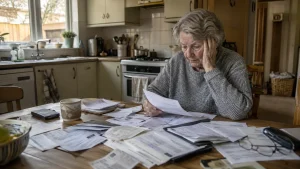
Behind the macro-economic data are millions of real-life struggles. Take the case of Maria Fuccio, a 69-year-old former social worker from Hampshire. Despite working for three decades in public service and disability-related sectors, she now relies on local food banks to survive.
Fuccio receives the new UK State Pension of £241.30 per week, alongside a tiny private pension. Because of that private pension, she is trapped in a “support gap”; she earns too much to qualify for the government’s Pension Credit top-up, yet far too little to cope with soaring council tax, energy bills, and grocery costs.
“The state pension barely keeps up with the cost of living,” Fuccio notes, warning that political moves to alter current protections feel less like cradle-to-the-grave care and more like “hasten to the grave.” Her situation highlights an escalating reality: the UK pension is failing to provide a basic standard of living.
Food banks were traditionally associated with unemployment or temporary financial crises. However, charities and community organisations increasingly report supporting retired individuals who have worked throughout their lives but now find their incomes stretched by inflation and higher household bills.
For pensioners living solely on the State Pension or relying on modest retirement savings, even relatively small increases in monthly expenses can create financial difficulties.
When necessities such as heating, groceries, and council tax consume most of a household budget, some older people have little choice but to seek external support.
What Is Driving Financial Hardship Among Pensioners?
Several factors have contributed to growing financial challenges among older households. Unlike working-age individuals who may have opportunities to increase earnings, most pensioners depend on fixed incomes that offer limited flexibility when costs rise rapidly.
Food inflation has remained a major concern in recent years. Everyday essentials such as bread, milk, meat, vegetables, and household products have become significantly more expensive compared with pre-pandemic levels. At the same time, energy prices have placed additional pressure on household budgets.
Healthcare-related expenses can also affect pensioners. Although the NHS provides extensive support, many retirees still face costs associated with mobility aids, home adaptations, transport, and other age-related needs.
For some households, these combined pressures create a situation where financial resources become increasingly stretched despite careful budgeting.
Why Is the State Pension No Longer Enough for Many Retirees?
The State Pension serves as the foundation of retirement income for millions of people. However, whether it provides sufficient financial security depends largely on an individual’s circumstances, living arrangements, and additional income sources.
Many pensioners supplement their State Pension with workplace pensions, personal savings, or investments. Others rely almost entirely on state support. For this latter group, increases in household expenses can have a particularly significant impact.
Rising Living Costs and Fixed Incomes
Inflation affects everyone, but it can be especially challenging for pensioners. Older people often spend a greater proportion of their income on necessities such as food, heating, and healthcare-related expenses.
When inflation rises faster than expected, household budgets become increasingly difficult to manage. Although pension increases provide some protection, there can still be periods when costs rise more rapidly than incomes.
Sarah, a retirement policy researcher, explained: “Many people assume pension increases automatically solve financial hardship. In reality, rising household costs can outpace income growth, leaving some pensioners struggling despite annual pension rises.”
The Growing Gap Between Pension Income and Household Expenses
The challenge for many retirees is not necessarily a lack of income alone but the widening gap between income and essential spending requirements.
| Essential Expense | Impact on Pensioners |
|---|---|
| Food and groceries | Higher weekly shopping costs reduce disposable income |
| Energy bills | Increased heating expenses affect household budgets |
| Council tax | Represents a significant fixed monthly cost |
| Housing costs | Rent and maintenance costs continue to rise |
| Transport | Public transport and fuel costs affect mobility |
| Healthcare-related expenses | Additional costs may arise despite NHS support |
For pensioners with limited savings, these expenses can consume a substantial portion of monthly income, leaving little room for unexpected costs.
How Do Food Banks Help Pensioners Facing Financial Difficulties?

Food banks provide emergency assistance to individuals and families who cannot afford sufficient food. They typically distribute food parcels containing essential items designed to help households through short-term financial difficulties.
For pensioners, food banks can provide temporary relief during particularly challenging periods. This support may become necessary following unexpected bills, seasonal increases in heating costs, or broader economic pressures affecting household finances.
Many food banks also offer additional services beyond food assistance. These may include financial guidance, benefit advice, referrals to specialist organisations, and support in accessing available government assistance programmes.
Importantly, many pensioners report feeling reluctant to seek food bank support. Some view it as a last resort after exhausting other options, reflecting the emotional impact financial hardship can have on older individuals.
Why Are Energy Bills and Council Tax Creating Additional Pressure?
Energy costs remain one of the most significant concerns for many pensioners. Older adults often spend more time at home and may require warmer living conditions due to health considerations.
During colder months, heating costs can increase substantially. Even with government support schemes and winter assistance programmes, some pensioners continue to struggle with energy affordability.
Council tax also represents a fixed expense that cannot easily be reduced. Unlike discretionary spending, these payments must be met regardless of changing financial circumstances.
The combined effect of food costs, energy bills, and council tax can place considerable pressure on retirement incomes, particularly for single-person households.
The Triple Lock Under Fire: Definition, Debates, and the Risk of Pensioner Poverty
The triple lock is a government commitment designed to protect the value of the State Pension over time.
The policy was introduced to reverse decades of pension income stagnation and ensure retirement incomes keep pace with real-world living costs. Supporters argue it provides vital financial stability and shields older people from high inflation.
Under this mechanism, pension payments increase annually by whichever metric is highest:
- Inflation
- Average earnings growth
- A flat 2.5%
The Sustainability Debate: Public Cost vs. Fairness
The debate surrounding the future of the triple lock has intensified as the government faces ongoing fiscal pressures.
The core arguments are split into two lines:
- The Case for Reform: Critics and policy analysts argue that maintaining the system indefinitely places an unsustainable strain on public finances and taxpayers.
Some focus on “intergenerational fairness,” suggesting that resources allocated to these guaranteed pension increases could be better directed toward younger generations who face severe housing affordability and employment challenges. - The Case for Retention: Many pensioner groups, economists, and charities strongly reject this framing. They argue that the debate should not pit the young against the old, as both generations face genuine, simultaneous economic pressures.
Could Ending the Triple Lock Increase Pensioner Poverty?
Campaigners warn that if the triple lock is removed and replaced with a less generous formula, pension incomes will grow more slowly than living costs.
Over time, this shifts the financial burden directly onto retirees:
- Eroded Purchasing Power: Lower annual increases mean a pension will buy fewer everyday essentials each year.
- Increased Poverty Risk: A less supportive formula will drastically increase the risk of pensioner poverty for the millions of retirees who rely on the State Pension as their primary or sole source of income.
Organizations like Silver Voices emphasise that the UK State Pension remains modest compared to average earnings.
They argue that instead of discussing its removal, policy discussions should focus on extending the protection into the 2030s until the pension climbs to a truly adequate living standard
Why Do Some Pensioners Miss Out on Financial Support?
One of the less discussed aspects of pensioner hardship is that not all retirees qualify for government assistance programmes.
Eligibility rules often depend on household income, savings, and other financial circumstances. This means some pensioners may earn slightly too much to receive support but still find themselves struggling with everyday expenses.
This situation is sometimes referred to as the “support gap,” where individuals fall outside eligibility thresholds despite experiencing financial pressure.
Understanding these eligibility rules is important because they can significantly influence a pensioner’s overall financial situation.
Pension Credit Eligibility Challenges
Pension Credit is designed to help older people on lower incomes. It can provide additional financial support and unlock access to other benefits.
However, many eligible pensioners do not claim Pension Credit. Reasons may include lack of awareness, uncertainty about eligibility, or reluctance to seek assistance.
Increasing awareness of available support remains a key objective for many charities and advocacy organisations.
The Impact of Small Private Pensions on Benefit Access
A small private pension can improve retirement income, but it may also affect eligibility for certain means-tested benefits.
This creates a complex situation for some retirees. While additional pension income can be beneficial, it may reduce access to support programmes designed to assist those on lower incomes.
| Factor Affecting Eligibility | Potential Impact |
|---|---|
| State Pension income | Considered during assessments |
| Private pension income | May affect entitlement levels |
| Household savings | Can influence eligibility |
| Housing circumstances | May affect support calculations |
| Other benefits received | Taken into account during assessments |
As a result, some pensioners find themselves receiving limited support despite facing genuine financial challenges.
How Widespread Is Pensioner Poverty in the UK?

Pensioner poverty remains a significant policy concern despite improvements in retirement income over recent decades.
While many retirees enjoy comfortable retirements supported by workplace pensions and savings, others continue to experience financial insecurity. Factors such as housing costs, health conditions, family responsibilities, and limited savings can all contribute to hardship.
Importantly, pensioners are not a uniform group. Financial circumstances vary widely depending on employment history, pension arrangements, and personal circumstances.
The ongoing debate therefore centres not only on average pension incomes but also on protecting those most vulnerable to economic shocks.
How Does the UK State Pension Compare With Average Earnings?
A key aspect of the current debate is the relationship between pension income and average earnings.
Campaigners often argue that pension income should represent a reasonable proportion of average wages to ensure financial security during retirement.
The following table highlights the broader discussion:
| Measure | Importance |
|---|---|
| State Pension level | Core retirement income for millions |
| Average earnings | Benchmark for living standards |
| Inflation rate | Determines purchasing power |
| Household costs | Reflect real-world affordability |
| Pension increases | Help maintain income value |
Supporters of stronger pension protections believe that improving this relationship is essential for reducing pensioner poverty over the long term.
What Support Is Available for Pensioners Struggling With Living Costs?
A variety of support measures are available to help pensioners manage financial pressures.
| Support Scheme | Purpose |
|---|---|
| Pension Credit | Additional income support for eligible pensioners |
| Housing Benefit | Assistance with housing costs |
| Council Tax Reduction | Help with council tax bills |
| Winter support programmes | Assistance with heating expenses |
| Local authority support | Emergency and community assistance |
| Food banks and community groups | Short-term emergency support |
Understanding available support can make a significant difference for pensioners experiencing financial difficulties. Charities often encourage older people to check their eligibility regularly, as circumstances and entitlements can change over time.
Why Does the Food Bank Debate Matter for the Future of Retirement in Britain?
The debate surrounding a pensioner using food banks extends beyond immediate financial concerns. It raises broader questions about retirement security, social support systems, and how society protects vulnerable individuals.
As the UK population ages, ensuring adequate retirement incomes is likely to remain a major policy issue. Discussions about the State Pension, the triple lock, and support programmes will continue shaping the financial wellbeing of future generations.
The experiences shared by pensioners facing hardship serve as a reminder that retirement policy has real-world consequences affecting millions of people across the country.
A Global Crisis: How Food Bank Infrastructure is Failing Worldwide?

The strain on fixed-income households is not unique to the United Kingdom. A parallel crisis is unfolding globally, perhaps most visibly in New Zealand, illustrating that the breakdown of food security safety nets is an international epidemic.
While UK pensioners struggle to buy food due to fixed income limitations, the very charities they rely on are facing systemic collapse across the globe.
In New Zealand, a recent survey conducted by the Aotearoa Food Rescue Alliance (AFRA) revealed that 50% of food rescue organisations fear they will be forced to close within the next six months due to skyrocketing operational costs, erratic government funding, and a dwindling volunteer base.
Structural Differences: UK Safeguards vs. NZ Policy Vacuum
While the UK has institutionalised mechanisms like the triple lock to adjust incomes (however imperfectly), countries like New Zealand operate without a national policy framework.
- The Operational Nightmare: Just as UK retirees face soaring fuel costs, international food rescues are being crushed by the fuel crisis. It is becoming too expensive for volunteers to drive food distribution vehicles or even travel to charity warehouses.
- The Funding Cliff: In New Zealand’s recent Budget, the government allocated $8 million in baseline funding with an additional, temporary $7 million for community food providers leaving charities with zero financial certainty past 2027.
Gavin Findlay, CEO of the New Zealand Food Network, points out the irony: “We are a food nation yet we don’t have any structure or policy or strategy around how our food is managed… people are turning to our sector just to get a hand up.”
Ultimately, whether it is a pensioner in Hampshire turning to a local larder or a solo-income family in Hawke’s Bay relying on a community food basket, the root cause is identical. Governments worldwide are treating emergency food charity as a permanent fix for systemic economic failure, rather than implementing long-term, guaranteed income and food security strategies.
Conclusion
The growing discussion about pensioners using food banks reflects wider concerns about living costs, retirement income, and financial security in later life.
While the triple lock has helped protect State Pension payments from inflation and earnings fluctuations, many retirees still face pressure from rising food prices, energy costs, and household bills.
The debate over whether to maintain or reform the triple lock remains highly significant because it affects the financial stability of millions of older people. Regardless of future policy decisions, ensuring pensioners can afford basic necessities will remain a crucial challenge for governments, campaign groups, and society as a whole.
FAQs
Can pensioners claim benefits if they already receive the State Pension?
Yes. Receiving the State Pension does not automatically prevent someone from qualifying for additional support. Depending on income and circumstances, pensioners may also be eligible for benefits such as Pension Credit, Housing Benefit, or Council Tax Reduction.
How many pensioners currently experience food insecurity in the UK?
The exact number varies depending on how food insecurity is measured. However, charities and advocacy groups continue to report concerns about older people facing financial hardship and needing assistance with food and essential household costs.
What is the difference between the old State Pension and the new State Pension?
The old State Pension applied to people who reached pension age before the introduction of the new system. The new State Pension generally has different eligibility rules and payment structures, although individual entitlement depends on National Insurance contributions.
Does receiving a private pension affect entitlement to Pension Credit?
Yes. Private pension income is considered when calculating eligibility for Pension Credit. However, receiving a private pension does not automatically mean someone will be excluded from support.
Are food banks only used by unemployed people?
No. Food banks support a wide range of people, including workers, families, disabled individuals, and pensioners. Financial hardship can affect households in many different circumstances.
How can pensioners reduce household costs during periods of high inflation?
Many pensioners review household budgets, compare energy tariffs, check benefit eligibility, and seek support from local organisations. Small savings across multiple areas can sometimes help manage rising expenses more effectively.
What changes to pension policy are currently being discussed in the UK?
Discussions continue around the future of the triple lock, long-term pension affordability, and broader retirement income reforms. These debates focus on balancing pensioner protection with wider public spending priorities.
Where can older people seek financial advice and support?
Pensioners can obtain guidance from charities, local authorities, benefit advisers, and independent financial professionals. Seeking advice can help identify support schemes and ensure all available entitlements are being claimed.