TG Jones Administration Risk Rises Amid 150 Store Closures
 • May 11, 2026
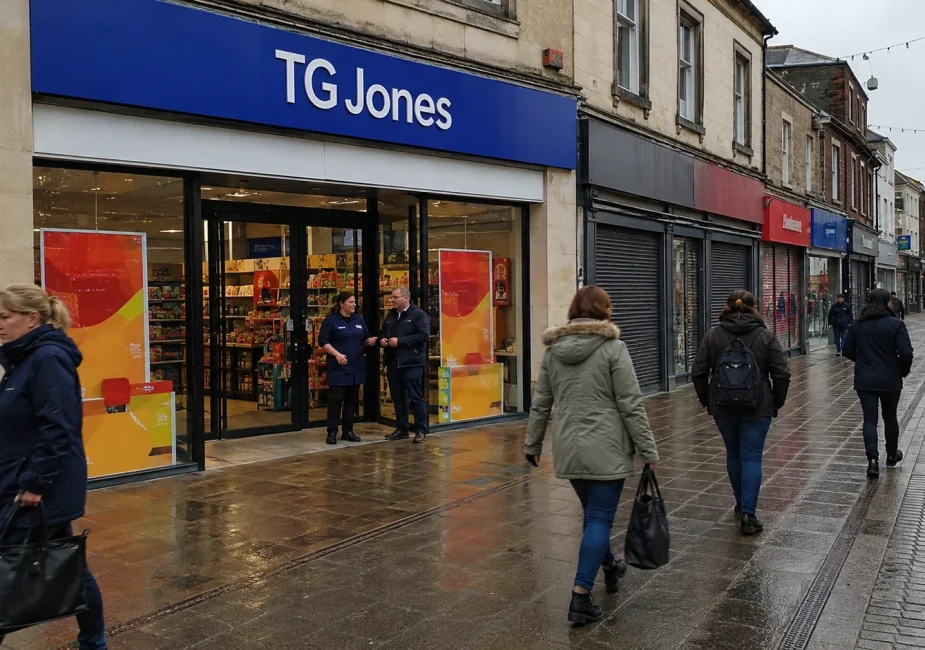
The growing TG Jones administration risk has become one of the biggest retail stories affecting the British high street in 2026.
The retailer, formerly known as WHSmith’s high street division, is facing mounting financial pressure as creditors prepare to vote on a major restructuring proposal that could result in up to 150 store closures across the UK.
If the rescue package fails to gain approval before 31 July, the company could enter administration.
Key highlights:
- Modella Capital is proposing a £35 million rescue injection
- Up to 150 stores potentially closing
- Concerns over job losses and declining footfall
- A High Court hearing is scheduled for 29 June
- The rebrand from WHSmith to TG Jones is affecting customer awareness
The situation highlights wider pressures facing Britain’s retail sector, particularly among traditional high street chains struggling with rising costs and changing shopping habits.
Why Is TG Jones Administration Risk Increasing?

TG Jones administration risk has increased after the retailer warned lenders and creditors that administration could become unavoidable unless its restructuring plan is approved by 31 July.
The business is facing mounting financial pressure as conditions across the UK retail sector remain challenging.
Several factors are contributing to the company’s difficulties, including:
- Rising wages and operational costs
- Higher National Insurance contributions
- Ongoing cost-of-living pressures are reducing consumer spending
- Declining high street footfall
- Growing competition from online retailers
Unlike travel-focused WHSmith stores in airports and railway stations, the high street business has struggled with changing shopping habits and lower customer traffic.
“The UK high street is undergoing structural change rather than a temporary downturn,” said one retail restructuring analyst.
The situation has also raised wider concerns about the future of traditional UK high streets, especially in smaller towns that rely heavily on major retail chains.
What Has Happened to TG Jones Since the WHSmith Rebrand?
The transition from WHSmith high street stores to TG Jones was intended to mark a new chapter under different ownership. However, the rebrand appears to have created additional challenges.
Modella Capital acquired WHSmith’s high street division for around £40 million, while WHSmith retained its profitable travel retail business, which operates more than 1,200 stores globally.
TG Jones has argued that the “forced name change” reduced customer recognition and public awareness.
Many shoppers strongly associated the WHSmith brand with familiarity and convenience on British high streets. Replacing a brand with more than 200 years of history created confusion for some consumers.
Retail Branding Impact Comparison
Factor WHSmith Brand TG Jones Brand
Customer familiarity Extremely high Limited
High street recognition Established for decades Newly introduced
Brand trust Strong legacy reputation Developing
Public awareness Nationwide Lower visibility
Although the company hoped to modernise its retail image, analysts believe losing a well-known brand may have weakened customer loyalty during an already difficult trading period.
Could 150 TG Jones Store Closures Save The Retailer?

The proposed closure of up to 150 stores forms a central part of the company’s survival strategy. According to reports, TG Jones currently operates around 480 locations, although eight stores have already closed during the early stages of restructuring.
Planned Store Reduction Across The UK
The closures are designed to reduce operating costs and remove underperforming branches from the retailer’s portfolio. Like many traditional chains, TG Jones has been carrying stores with declining profitability for several years.
The restructuring proposal reportedly focuses on:
- Reducing rent liabilities
- Improving cash flow
- Concentrating operations in stronger locations
- Streamlining staffing costs
- Strengthening long-term sustainability
Many retail experts believe downsizing may be necessary if the company wants to avoid collapse entirely. However, large-scale closures could also reduce the retailer’s national presence and weaken customer accessibility.
Which Locations Could Be Most at Risk?
Although the company has not released a confirmed closure list, analysts expect weaker locations outside major city centres to face the highest risk.
Stores in lower-footfall shopping centres and smaller town centres may be particularly vulnerable.
Store risk indicators:
Risk Factor Potential Impact
Declining footfall Reduced sales
High rental costs Lower profitability
Weak local demand Increased closure likelihood
Nearby online competition Customer loss
Ageing retail parks Lower visitor numbers
The company is expected to prioritise retaining stores in busy urban areas where footfall remains relatively stable. Nevertheless, closures may significantly affect local economies and employment across multiple regions.
The proposed reductions reflect broader trends already visible across Britain’s struggling retail landscape.
What Does The £35 Million Rescue Plan Include?
Modella Capital’s proposed rescue package involves injecting approximately £35 million into TG Jones to stabilise the business. The funding is intended to support ongoing operations while the retailer restructures its estate.
The proposal also reportedly includes negotiations with landlords regarding rent reductions and temporary rent holidays. Such arrangements have become increasingly common among distressed retailers attempting to lower fixed costs without immediate administration.
The rescue plan aims to achieve several objectives:
- Restore short-term liquidity
- Reduce loss-making locations
- Improve operational efficiency
- Rebuild profitability
- Prevent administration proceedings
However, creditors and landlords must approve the proposal for it to proceed. Without sufficient support, the company may struggle to maintain the funding levels required to continue trading.
“Retail restructurings are now heavily dependent on landlord cooperation,” noted a commercial property consultant. “Without rent flexibility, many chains simply cannot survive current trading conditions.”
The rescue package therefore represents more than a financial injection. It is also a test of whether stakeholders believe TG Jones has a viable future on the British high street.
Why Do Creditors and Landlords Matter in the TG Jones Restructuring?
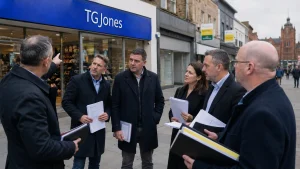
Creditors and landlords play a major role in determining whether the TG Jones restructuring plan succeeds. Under UK restructuring rules, enough creditors must approve the proposal before it can move forward. Without sufficient support, the company could face administration.
Many landlords are reportedly being asked to accept lower rents or temporary rent reductions to help keep stores open. For property owners, this creates a balance between maintaining tenants and protecting long-term rental income.
Retail landlords across the UK have already faced rising vacancy levels since the pandemic, making empty units financially damaging for shopping centres and town centres.
Creditors will also assess whether restructuring offers better financial returns than administration, where losses could be much greater for all parties involved.
What Role Will the High Court Hearing Play?
A High Court hearing scheduled for 29 June could prove decisive for the future of TG Jones. The court will examine the proposed restructuring plan after creditors vote on the proposal.
How Does the Court Approval Process Work?
Under UK restructuring law, the court can approve arrangements designed to help struggling businesses avoid administration. The hearing will assess whether the proposal is fair and commercially viable.
The process generally involves:
- Creditor voting procedures
- Court examination of financial evidence
- Assessment of business viability
- Review of stakeholder impact
If approved, the restructuring plan could become legally binding.
Creditor Voting and Possible Legal Outcomes
Reports suggest the company may consider using a legal mechanism known as a “cram-down”. This allows courts to approve restructuring plans even if some creditor groups oppose the arrangement, provided certain conditions are met.
Possible outcomes include the following:
Scenario Likely Result
Creditors approve the plan. Restructuring proceeds
Court approves cram-down Plan may still proceed
Proposal rejected Administration risk rises
Funding unavailable Potential insolvency
The hearing could therefore determine whether TG Jones continues trading or moves closer towards administration proceedings.
The outcome will also be closely monitored by other retailers facing similar financial pressure.
How Has the Cost-Of-Living Crisis Hit TG Jones?
The cost-of-living crisis continues to affect retailers across the UK, and TG Jones appears particularly exposed to reduced discretionary spending. Many households are prioritising essential purchases over stationery, gifts, books, and impulse products commonly sold in high street stores.
At the same time, retailers face growing operational costs. Wage increases, higher employer taxes, and rising utility expenses have created substantial pressure on profit margins.
Footfall outside major city centres also remains below pre-pandemic levels in many areas. Consumers increasingly rely on online shopping for convenience and price comparison, further reducing physical store traffic.
“Consumer behaviour has permanently shifted in several retail categories,” explained one market analyst. “Traditional high street operators must adapt far more aggressively than before.”
The combination of lower spending and higher costs has created a difficult environment for businesses with extensive physical store networks.
Why Has the WHSmith Name Change Become a Problem?
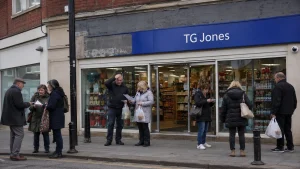
The TG Jones rebrand has become one of the most discussed aspects of the company’s financial difficulties. WHSmith had built strong recognition on British high streets over many generations, making the sudden transition to TG Jones challenging for many customers.
Many shoppers reportedly did not realise TG Jones was the continuation of WHSmith’s high street business, which may have weakened customer confidence and repeat visits.
Key Rebranding Challenges:
- Loss of a well-known and trusted brand identity
- Reduced customer familiarity on the high street
- Confusion among shoppers after the name change
- Weaker brand loyalty during difficult trading conditions
- Increased pressure during an already uncertain retail market
The situation highlights how difficult large-scale retail rebranding can be, especially during financial uncertainty. Analysts believe the rebrand may eventually become a case study in the risks of replacing long-established retail brands.
What Could the TG Jones Administration Mean for Staff and Jobs?
If the restructuring fails, the administration could place thousands of jobs at risk across the retailer’s store network. Even if the rescue package succeeds, job losses are expected as part of the proposed closures.
Retail Job Loss Concerns Across Britain
The UK retail sector has already experienced significant workforce reductions in recent years. Automation, online competition, and declining footfall have all contributed to lower staffing requirements.
Potential employment concerns include:
- Redundancies in closed stores
- Reduced working hours
- Lower recruitment levels
- Increased pressure on remaining staff
Communities heavily dependent on retail employment may feel the strongest impact.
Impact On Local High Streets and Communities
Beyond direct job losses, store closures can also affect neighbouring businesses. High street retailers often generate shared footfall that supports cafes, independent shops, and local services.
The closure of multiple stores could therefore contribute to wider economic decline in affected town centres. Smaller communities may struggle to attract replacement tenants quickly, leading to increased vacancy rates.
Despite these concerns, some analysts argue that controlled restructuring may still provide a better outcome than full administration and widespread liquidation.
How Does TG Jones Reflect Wider UK High Street Problems?
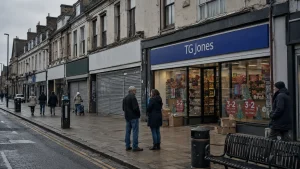
The difficulties facing TG Jones mirror broader challenges affecting the UK retail sector. Since the pandemic, many chains have struggled to rebuild consistent profitability amid changing consumer habits and rising operating expenses.
Traditional high streets now compete directly with online marketplaces offering lower overheads and faster convenience. Physical retailers also continue to face business rates pressures that many industry figures consider outdated.
Several well-known retailers have entered restructuring or administration processes over recent years. Analysts believe more chains could follow unless broader economic conditions improve.
The TG Jones situation highlights how vulnerable traditional retailers remain, even when backed by investment firms and restructuring support.
What Happens Next for TG Jones Before 31 July?
The coming weeks will likely determine the future of the retailer. Creditors must first assess whether the restructuring proposal provides a realistic path towards stability.
If the High Court approves the plan and sufficient stakeholder support is secured, TG Jones could begin implementing store closures and operational changes before the July deadline.
However, failure to gain approval could rapidly increase administration risk. The company has already indicated that funding pressures may become unsustainable if the restructuring is delayed.
For now, the business remains in a race against time to secure support and avoid collapse.
TG Jones Administration Risk: Key Facts at a Glance
The following table highlights the most important details surrounding the growing TG Jones administration risk and the company’s ongoing restructuring plans.
Key Point Current Position
Former brand WHSmith high street shops
Current owner Modella Capital
Rescue funding Around £35 million
Possible closures Up to 150 stores
Current estate Around 480 stores
Deadline risk 31 July
Court date 29 June
Main threat Administration if plan fails
The situation continues to evolve as stakeholders prepare for key restructuring decisions.
Conclusion
TG Jones administration risk reflects the growing pressures affecting the UK retail industry. Rising operating costs, changing consumer habits, weaker high street footfall, and economic uncertainty have created major challenges for traditional retailers.
The company’s proposed restructuring plan could help improve long-term stability, but its success depends on support from creditors, landlords, and the courts.
While the possible closure of up to 150 stores may reduce financial pressure, it also highlights the serious difficulties facing the business. The coming months will be critical for both TG Jones and the future of the British high street.
Frequently Asked Questions
What is administration in the UK retail sector?
Administration is a legal process where an external administrator takes control of a struggling business to protect creditors and attempt recovery or asset sales.
Why are UK high street retailers struggling in 2026?
Retailers face rising costs, weaker consumer spending, online competition, and lower footfall in many town centres.
How do store closures affect local economies?
Closures can reduce employment, lower footfall for nearby businesses, and increase vacant commercial units in town centres.
What happens to gift cards and returns during administration?
Policies often change during administration, and customers may face restrictions on returns, refunds, or gift card usage.
Can landlords reject a retail restructuring plan?
Yes, landlords can oppose proposals, although courts may sometimes approve restructuring through legal mechanisms such as a cram-down.
How important is brand recognition in retail recovery?
Strong brand recognition helps retailers maintain customer trust, loyalty, and repeat footfall during difficult trading periods.
Are more British retailers expected to close stores this year?
Many analysts expect further closures as retailers continue adapting to economic pressures and changing consumer behaviour.