Gateshead Michelin-Listed Restaurant SIX Rooftop Closes | What Went Wrong?
 • February 4, 2026
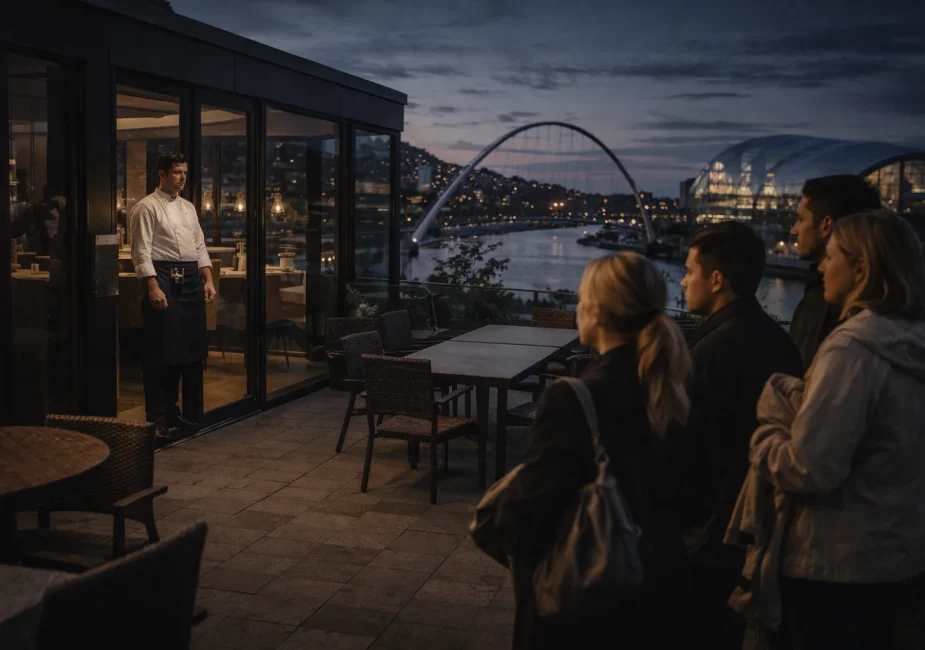
🚨 SIX ROOFTOP CLOSURE – 2026 UPDATE
📊 Quick Check: Despite a major relaunch in March 2024 and Michelin Guide recognition in 2024/25, the venue was unable to recover from economic pressures.
⚠️ Important Note: All upcoming bookings have been cancelled. Customers with deposits or valid gift vouchers will be contacted and refunded.
The closure of SIX Rooftop adds to a growing list of high-profile hospitality losses in the North East, including Peace and Loaf, Hjem, and Sapori. Experts suggest that the Michelin listing alone could not offset economic strain.
Closure Summary: An acclaimed restaurant with over 16 years of service closed despite accolades and investment, underscoring the fragility of the UK’s fine dining sector in today’s economic climate.
- Closure Date: 1 February 2026
- Owned By: Pneuma Group (acquired in 2023)
- Relaunch: March 2024 after major investment
- Awards: Michelin Guide 2024/25, Two AA Rosettes
- Refunds Offered: Deposits and gift vouchers
This notice summarises the key developments and implications of the closure for customers, staff, and the wider hospitality sector in the UK.
What Was SIX Rooftop and Why Was It So Highly Regarded?
When I first heard that SIX Rooftop, the acclaimed restaurant nestled atop the Baltic Centre for Contemporary Art in Gateshead, had announced its immediate closure, I was genuinely taken aback. This wasn’t just any restaurant; this was a venue that had become synonymous with elegant fine dining in the North East.
Since opening in 2009, SIX has built a strong local following, known for its modern British cuisine, sustainably sourced ingredients, and breathtaking views over the River Tyne.
It wasn’t just the food that drew people in; it was the experience. The ambience, the staff, and the location all played into what many considered to be one of Gateshead’s most iconic venues.
In April 2024, SIX Rooftop achieved a significant milestone: it was officially listed in the Michelin Guide, a recognition that added to its already impressive accolades, including two AA Rosettes and an OpenTable Diners’ Choice Award.
Who Owned SIX and What Was Their Vision for the Restaurant?
In 2023, SIX was acquired by the Pneuma Group, a Middlesbrough-based company known for owning the award-winning games developer Double Eleven. The acquisition brought renewed optimism to the restaurant’s future. Pneuma invested heavily in the venue, aiming to modernise the space and refresh its identity without compromising its essence.
The restaurant reopened to the public in March 2024 under the branding SIX Rooftop, with an updated menu celebrating seasonal local produce and sustainability. The relaunch was well-received, and the dining experience reflected a refined, more modern interpretation of British cuisine.
It looked as though SIX was poised for long-term success.
Why Did a Michelin-Listed Restaurant Have to Shut Down So Suddenly?
The sudden closure of SIX Rooftop caught many by surprise, especially given its prestigious Michelin Guide listing and recent reinvestment. However, a closer look at the restaurant’s official statement and broader industry context reveals a combination of challenges that made the business unsustainable.
Here’s a summary of the key reasons behind the immediate closure:
| Factor | Details |
|---|---|
| Rising Operational Costs | Significant increases in energy bills, ingredient prices, and staffing costs. |
| Economic Climate | The UK hospitality sector is facing a broader downturn due to inflation and reduced spending. |
| Sustained Financial Losses | Losses had accumulated over time, making continued operation financially unfeasible. |
| Customer Price Sensitivity | Management avoided raising prices to protect customers, which squeezed profit margins. |
| Failed Recovery Post-Relaunch | Despite a relaunch in March 2024, revenues didn’t reach a sustainable level. |
| Immediate Decision to Close | Closure was made effective 1 February 2026, with refunds promised for bookings and vouchers. |
Despite their best efforts, SIX Rooftop stated that the “cumulative effect has now become unstable”, confirming that even Michelin-recognised restaurants are vulnerable in the current climate.
The restaurant issued a statement across its social media channels, explaining the rationale behind the decision:
“Like many in the hospitality sector, we’ve absorbed increasing costs for as long as we could, rather than pass the full impact on to our guests, but the cumulative effect has now become unstable.”
How Did the Public and Customers React to the Closure?

The public reaction was swift, emotional, and heartfelt. As someone who has dined at SIX before, I could deeply relate to the sense of loss many locals expressed.
On social media, comments poured in:
“Genuinely gutted. The food was excellent and the staff were always friendly and welcoming.”
“Very sad. Iconic venue. Someone will snap it up, surely?”
“Hands down best restaurant for quality while still maintaining a good portion size! Plus, lovely views.”
These weren’t just passive diners; they were loyal patrons who had celebrated birthdays, anniversaries, and important moments at SIX.
Some people raised concerns about unredeemed vouchers, but the restaurant addressed these head-on, promising full refunds.
The final public note also extended thanks to past and present staff, whose “talent, hard work and passion shaped SIX Rooftop and everything it stood for.”
What Impact Has the Closure Had on the Local Hospitality Scene?
The closure of SIX Rooftop is just one in a growing trend of high-profile restaurant shutdowns across the North East.
Other notable recent closures include:
- Peace and Loaf in Jesmond, founded by MasterChef finalist Dave Coulson, shut its doors in September 2025 after 12 years
- Sapori in Gateshead, which ceased trading only weeks before SIX
- Zapatista’s Dalton Park branch
- Hjem in Hexham, a Michelin-starred restaurant, which hosted its final event – “Hjem’s Last Hurrah” – on New Year’s Eve
Even celebrated names such as Ophelia, The Earl of Pitt Street, and Horticulture in Newcastle and Whitley Bay closed last year.
It’s a clear signal: the North East hospitality scene is under serious pressure, despite pockets of culinary excellence and customer loyalty.
Is the Michelin Listing Still Relevant or Protective in Today’s Economy?
This is the question many of us are now asking. Traditionally, being listed in the Michelin Guide was considered a marker of both prestige and security. But the closure of SIX highlights a hard truth: recognition does not guarantee profitability.
In fact, maintaining the standards required to stay on the list often demands high-quality ingredients, expert staff, and extensive training, all of which come at a cost. And in the current economic climate, even that kind of excellence can’t offset declining footfall or inflated operational expenses.
The value of a Michelin listing is still real, but it no longer provides the financial buffer many once assumed it did.
What Can Other Restaurants Learn from SIX’s Closure?
If there’s one takeaway from SIX Rooftop’s story, it’s that even excellence has limits in an unstable market. But there are key lessons other restaurants can draw from this:
- Operational sustainability must come first: Long-term success depends on balancing ambition with financial realism.
- Transparency matters: SIX handled its closure responsibly, issuing refunds, thanking staff and customers, and communicating clearly.
- Adaptability is crucial: As consumer behaviour shifts, restaurants must stay agile, exploring more flexible pricing, dynamic menus, and new dining formats.
SIX did many things right, but ultimately, market forces prevailed.
Where Does Fine Dining Go from Here in the UK?
With inflation, rising rent, and energy prices pushing restaurants to the brink, it’s fair to ask: what is the future of fine dining in the UK?
I believe we’re on the cusp of a new dining era, one that merges quality with accessibility, and experience with value. The rigid lines between casual and fine dining are starting to blur. We may see more:
- Tasting menus with flexible pricing
- Pop-up experiences
- Collaborations between chefs and local producers
- Smaller venue concepts with lower overheads
Fine dining isn’t disappearing, it’s evolving. But if the closure of SIX Rooftop has shown us anything, it’s that prestige alone is no longer enough.
Recent Notable Restaurant Closures in the North East
The closure of SIX Rooftop is part of a broader trend that reflects the increasing pressure on the UK’s hospitality sector, particularly in the North East.
Over the past two years, several respected and long-standing restaurants have been forced to shut their doors due to rising costs, economic uncertainty, and shifting customer habits.
Below is a summary of some of the most notable recent closures in the region:
These closures highlight a growing trend: even the most acclaimed and established venues are not immune to the challenges facing today’s hospitality landscape. For many, it’s no longer about prestige or popularity; it’s about survival in an unpredictable market.
Conclusion
The shuttering of SIX Rooftop marks the end of an era, not just for the restaurant, but for what it represented. It stood for creativity, community, and culinary passion. But it also highlights the fragility of the hospitality industry, even at its highest levels.
As someone who has watched the North East’s food scene flourish, this loss hits hard. But it also calls on us, diners, entrepreneurs, and policymakers, to rethink how we support and sustain the industry.
A Michelin listing, while prestigious, is no longer a shield. Adaptability, financial discipline, and community connection are the true ingredients for survival in today’s hospitality landscape.
Frequently Asked Questions
What does it mean for a restaurant to be listed in the Michelin Guide?
It indicates the restaurant meets high standards for food quality, consistency, and experience, but doesn’t guarantee profitability or long-term survival.
How do economic factors like inflation affect high-end restaurants?
Rising costs for ingredients, energy, and staff wages significantly reduce profit margins, making it harder for premium venues to stay viable.
Can a Michelin listing guarantee a restaurant’s success?
No, while it enhances reputation, it doesn’t shield a restaurant from financial challenges, market shifts, or reduced consumer spending.
What happens to staff when a fine dining restaurant closes?
They often face job loss but may be quickly rehired by other venues, especially if they have Michelin-level experience.
Are customers entitled to refunds for gift vouchers after a closure?
Yes, in most cases. SIX Rooftop specifically stated that all valid gift vouchers would be refunded and provided contact instructions.
How common are restaurant closures in the UK right now?
Increasingly common, particularly among independent and fine dining establishments due to rising costs and reduced consumer spending.
What are the signs a restaurant is struggling financially before it closes?
Signs may include reduced operating hours, fewer menu options, slower service, or visible cost-cutting measures.