

Government Response to Pavement Parking: How It Affects UK Roads?
 • January 9, 2026
•
1 Comment
• January 9, 2026
•
1 Comment
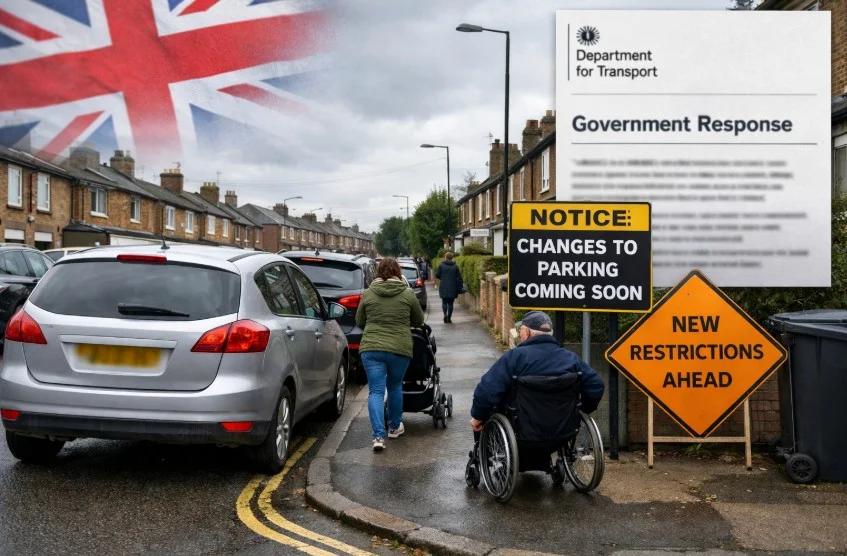
I have watched the debate surrounding pavement parking evolve over several years, often wondering when the Government would finally turn public frustration into meaningful action.
With the newly announced response and the shift towards devolving powers to local councils, that moment has arrived. At the core of this change is a single goal: ensuring pavements across England are safe, accessible, and fit for everyone. Yet, with this progress comes a number of questions about enforcement, fairness, and consistency.
The following points stand out clearly:
- Councils are being given far greater authority to control pavement parking
- A national ban has not been introduced
- Enforcement will depend heavily on local ambition and resources
This blog takes a closer look at what these decisions mean for communities, for drivers, and for the future of UK streets.
What Sparked the Government’s Action on Pavement Parking?
The recent update stems from a 2020 public consultation titled Pavement Parking: Options for Change, which collected over 15,000 responses from individuals, councils, charities, and businesses.
A resounding 81% of individuals and 96% of organisations stated that pavement parking was a significant issue in their communities. Respondents described it as a daily barrier, causing dangers for people with disabilities, obstructing parents with pushchairs, and forcing pedestrians into the road.
The lack of prior nationwide legislation, except in London and more recently in Scotland, highlighted the inconsistencies in enforcement. Campaigners, such as those representing disability rights and pedestrian safety, have long argued for clearer, stronger legislation.
After years of delay, the government’s 2026 plan is being described as a compromise between sweeping reform and localised governance.
How Has the Government Chosen to Handle Pavement Parking?
The Department for Transport (DfT) has confirmed that instead of a national ban, local transport authorities (LTAs) will be given the power to prohibit pavement parking in their jurisdictions. This devolved approach is intended to allow councils to tailor decisions based on local road layouts, pedestrian volumes, and community needs.
“Local leaders know their communities best, so they are in the strongest position to meet local needs effectively.” – Lilian Greenwood, Minister for Local Transport
Why No Nationwide Ban?
The government weighed several options, including an outright ban. However, it argued that a “one-size-fits-all” approach wouldn’t accommodate the complexities of different localities. Some narrow streets, particularly in residential areas, rely on partial pavement parking to maintain traffic flow.
A secondary legislation is due to be introduced in 2026, allowing civil enforcement officers to act where there’s unnecessary obstruction of the pavement. This power will complement existing Traffic Regulation Orders (TROs) and make enforcement less bureaucratic than current systems.
What Role Will Local Authorities Play Under the New Rules?
Under the new model, councils in England will have two key enforcement tools:
- Introduce Local Bans: Councils can prohibit pavement parking in specific zones or boroughs based on community feedback and road conditions.
- Enforce Against Obstruction: Even without a TRO, councils can penalise motorists causing “unnecessary obstruction” using the new legal powers from 2026.
These powers apply to both Strategic Authority (SA) areas and non-SA areas. In SA areas, the power sits with the strategic body (like combined authorities). Elsewhere, it rests with unitary authorities or county councils.
Enforcement Mechanism:
| Enforcement Type | Current (Pre-2026) | Post-2026 Plan |
| London | Full ban with civil penalties | Unchanged |
| Rest of England (TRO-based) | Requires complex application per street | Simpler authority-wide enforcement allowed |
| New Obstruction Rule | Not yet enforceable | Enforceable via secondary legislation |
This revised system eliminates the cumbersome and reactive process of implementing TROs for every street, making enforcement faster and more scalable.
Are the New Pavement Parking Rules Consistent Across the UK?
Unlike Scotland, which introduced a nationwide pavement parking ban in 2019 and enforced it by 2023, England has opted for a localised system. London already enforces a ban, with fines ranging from £60 to £130, while other areas are still catching up.
| Region | Policy Status | Year Enforced | Authority in Charge |
| Scotland | Nationwide Ban | 2023 | Local Councils |
| London | Full Ban | Existing | Transport for London |
| England (Rest) | Devolved to Councils | From 2026 | LTAs, SAs, Unitary Councils |
While this may provide flexibility, critics argue it introduces confusion for drivers, particularly those travelling between boroughs with different rules.
“How an approach based on making powers available locally will work for non-local drivers remains a concern.” – Ruth Cadbury, Chair, Transport Committee
What Are the Main Concerns Raised by Charities and Campaigners?
Many charities and accessibility advocates have welcomed the government’s action but insist it doesn’t go far enough. Groups like Living Streets, Guide Dogs, and RNIB argue that only a national ban can truly ensure safety and consistency.
“Pavement parking endangers lives of the most vulnerable.” – Catherine Woodhead, Living Streets
Key Concerns Include
- Inconsistent enforcement: Some councils may not act decisively, leaving vulnerable people exposed.
- Political will: Local leaders may deprioritise enforcement due to budget constraints.
- Exemptions: Worry that streets granted exemption may still pose danger to pedestrians.
Real-Life Impact
Susanne, a parent of a 15-year-old wheelchair user, reported that moving from England to Scotland transformed their daily experience:
Overnight, the pavements were emptied of cars, the change really was quite dramatic. Such stories underline the tangible benefits of clear and consistent policy.
How Are Drivers and the Public Responding to These Changes?
Public opinion largely supports the new approach, though there’s a split between calls for local enforcement and national rules.
Key Stats from Surveys:
| Opinion | Percentage |
| Support new rules (general) | 83% |
| Favour national ban | 42% |
| Prefer localised authority | 41% |
| Oppose changes | 13% |
The RAC, which surveyed 1,709 drivers, found that 66% see pavement parking regularly near their homes, with 44% stating pedestrians are often forced into the road as a result.
“No pavement user should be made to walk or wheel into the road because of someone else’s inconsiderate parking.” – Rod Dennis, RAC
While drivers appreciate that some flexibility is needed for narrow streets, there’s growing consensus that problem areas must be tackled decisively.
How Could the Government Improve Pavement Parking Policy Further?
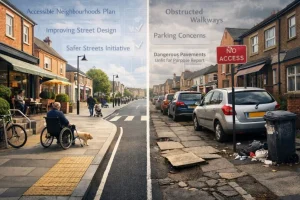
Although the policy provides a framework for action, long-term success depends on several additional factors:
- Clear statutory guidance for councils on enforcement best practices.
- Dedicated funding for councils to employ more civil enforcement officers.
- Education campaigns to inform the public about changing rules.
- Periodic review of implementation to measure progress and compliance.
Moreover, some campaigners are urging the government to align this reform with national strategies like Vision Zero, which aims to eliminate traffic-related deaths.
What Are the Broader Implications for UK Road Safety?
The new pavement parking powers form part of a broader national rethink on road safety. The Government has proposed a long-term strategy that addresses multiple travel behaviours, from drink-driving limits to eyesight testing.
Road safety measures under active consideration:
| Measure Proposed | Primary Objective | Possible Impact Timeline |
| Lowering drink-drive limits in England/Wales | Reduce alcohol-related collisions | Within several years |
| Alcolocks for offenders | Prevent repeat breaches | Being explored |
| Mandatory eye tests for older drivers | Identify unsafe driving early | Under consultation |
| Expanded enforcement powers | Improve safety for vulnerable pedestrians | From 2026 onwards |
Pavement accessibility may seem like a niche issue compared with drink-driving or speeding. Yet blocked pavements represent a daily safety risk, especially in densely populated urban areas. Every incident involving a pedestrian forced into the road becomes part of the wider culture of casual risk on UK streets.
Conclusion: Is the Government’s Response Enough?
The government’s decision to empower local councils marks a significant policy shift in how England addresses pavement parking. While it enables more responsive action and removes bureaucratic hurdles, the lack of a unified national framework risks inconsistent application and enforcement.
As councils prepare to implement these powers from 2026, the success of the policy will depend on political commitment, adequate funding, and public awareness.
The changes are a step forward, but many stakeholders argue they fall short of offering the level of protection needed for the most vulnerable road users. A truly safe and accessible UK road network may still require a more coordinated national effort in the years to come.
Frequently Asked Questions
What is pavement parking and why is it a concern?
Pavement parking occurs when vehicles are parked partially or fully on pedestrian walkways. It obstructs movement, especially for wheelchair users, parents with pushchairs, and visually impaired individuals.
Are there any areas in the UK with a full ban on pavement parking?
Yes, Scotland introduced a nationwide ban in 2019, enforced in 2023. London also has an existing full ban on pavement parking.
How can local councils enforce pavement parking bans?
From 2026, councils in England will have legal powers to enforce bans and issue fines using civil enforcement officers without relying solely on TROs.
What are the penalties for pavement parking?
In areas with enforcement, penalties typically range from £60 to £130, though the fine may be halved if paid promptly.
Why didn’t the government implement a national ban?
The government believes local authorities are better positioned to decide on pavement parking rules based on the specific needs and geography of their communities.
How does pavement parking impact people with disabilities?
It often forces individuals using wheelchairs or guide dogs into the road, increasing risks and limiting independence and confidence when navigating their environment.
When will the new powers be implemented?
The secondary legislation is expected to be in place by 2026, allowing councils across England to enforce pavement parking rules.



[…] The question focuses on a particular legal safety requirement, so it should not be interpreted as a complete list of every vehicle component that must be maintained. Other parts of the car can still affect whether the vehicle is safe and roadworthy. […]